


The Art of Simple Eating: Minimalist Strategies for Saving Money and Time
- jennifercorkum
- Oct 2
- 4 min read
Introduction: Why Meal Planning Feels Overwhelming
Meal planning is one of those things everyone knows they should do—yet so many of us struggle with it. We write ambitious shopping lists, pin endless recipes, and tell ourselves, This week I’ll cook every meal at home. By Wednesday, though, we’re staring at mismatched ingredients and ordering takeout.
Why is it so hard? Because most of us overcomplicate it. We think meal planning means coming up with seven different dinners, three new lunch ideas, and a breakfast rotation worthy of Instagram. But in reality, we don’t need that much variety to eat well.
Enter the minimalist approach. By focusing on simplicity, repetition, and intentional shopping, you can create a meal system that saves money, reduces stress, and still leaves room for flavor and flexibility.
The Minimalist Grocery List: Essentials Only
The foundation of minimalist meal planning is a grocery list built around essentials. Instead of filling your cart with one-off ingredients for elaborate recipes, stock up on versatile foods that serve multiple purposes.
Pantry Staples:
Grains: rice, oats, pasta, quinoa
Legumes: beans, lentils, chickpeas
Canned goods: tomatoes, tuna, coconut milk
Basics: olive oil, vinegar, spices
Fresh Staples:
Vegetables: carrots, onions, spinach, broccoli
Fruits: bananas, apples, seasonal produce
Proteins: eggs, chicken, tofu
Why This Works Financially:
Buying basics in bulk lowers cost per meal
Fewer specialty items = fewer wasted dollars
Staples stretch across multiple recipes, making them high-value purchases
With a core list like this, you can build dozens of simple, nourishing meals without overspending.
Rotate a Small Set of Meals
One of the biggest money-saving strategies is to stop chasing variety every night. Minimalist meal planning relies on a rotation of 10–12 meals you actually enjoy.
Why repetition saves money:
You buy the same staples each week, cutting costs and reducing waste.
Familiar meals are quicker to prepare, so you’re less tempted by takeout.
You build cooking confidence, which lowers stress.
Examples of a minimalist meal rotation:
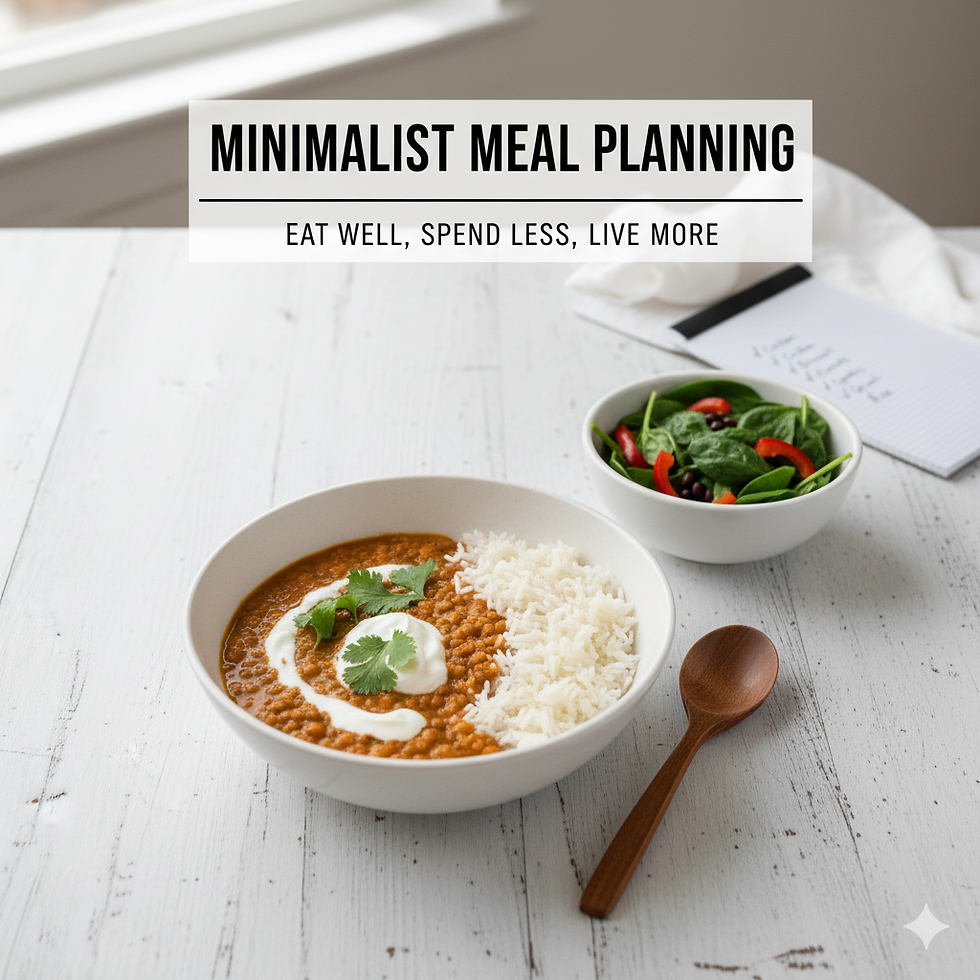
Lentil curry with rice
Veggie stir-fry with tofu
Pasta with marinara and spinach
Black bean tacos
Chicken and roasted vegetables
Homemade soup with bread
You can swap proteins or veggies to keep things fresh without reinventing the wheel.
Batch Cooking and Leftovers: A Minimalist’s Secret Weapon
Cooking once and eating twice (or three times) is one of the most underrated money-saving strategies.
Batch Cooking Ideas:
Cook a big pot of beans or lentils on Sunday → use in soups, salads, tacos
Roast a tray of vegetables → serve with rice, add to pasta, or blend into soup
Prepare a double portion of soup or chili → freeze half for a future meal
Financial Impact:
Batch cooking reduces energy costs (one oven session vs. three), cuts food waste (you use everything you prep), and saves you from last-minute takeout orders when you’re tired.
Smart Shopping Habits
Minimalist meal planning extends to how you shop. A few intentional habits can transform your grocery budget:
Shop with a strict list – and stick to it.
Buy store brands – they’re often identical in quality but 20–30% cheaper.
Shop seasonally – strawberries in June are affordable; in January, not so much.
Use the “per unit” rule – always check cost per ounce/pound to find true value.
Avoid “aspirational” groceries – don’t buy kale if you never eat kale.
By focusing on utility and intentionality, you can walk out of the store with a cart full of food that’s both useful and affordable.
How Minimalism Cuts Hidden Costs
We often underestimate the hidden costs of disorganized meal planning:
Takeout dependency: The average American household spends over $3,000 a year eating out. Cutting just one weekly takeout order could save $1,000 annually.
Food waste: U.S. households throw away about 30% of purchased food. Minimalist meal planning shrinks this number dramatically.
Impulse buys: Extra snacks or “fun” ingredients add up quickly. A minimalist list reduces temptation.
Think of meal planning not as a diet but as a budgeting tool. Each dollar saved in your kitchen is a dollar you can put toward debt payoff, investing, or experiences that actually bring joy.
A Week of Minimalist Meal Planning (With Cost Breakdown)
Here’s what a week might look like for a family of two, based on average U.S. grocery prices:
Monday: Lentil curry with rice – $4 total
Tuesday: Veggie stir-fry with tofu – $6 total
Wednesday: Pasta with marinara and spinach – $5 total
Thursday: Black bean tacos – $6 total
Friday: Homemade soup with bread – $7 total
Saturday: Roasted chicken and vegetables – $10 total
Sunday: Leftover night – $0 extra
Weekly total: ~$38 for dinners (that’s about $2.70 per person per meal). Compare this to seven nights of takeout at $20–$40 each, and the savings speak for themselves.
Minimalism as Freedom, Not Restriction
Some people fear that minimalist meal planning means bland food or eating the same thing forever. But in truth, minimalism creates freedom.
Freedom from the stress of endless decisions
Freedom from wasted money and cluttered kitchens
Freedom to enjoy food without guilt
Instead of chasing variety for its own sake, you choose meals that truly satisfy you—financially, nutritionally, and emotionally. Minimalism is about subtraction, yes, but it’s subtraction that adds up to more of what matters.
Conclusion: The Beauty of Simple Eating
Minimalist meal planning is more than a cost-cutting tactic—it’s a way to simplify life. By sticking to a small set of meals, focusing on versatile staples, and shopping with intention, you can cut hundreds of dollars from your monthly food budget while still eating well.
Remember: the goal isn’t perfection. Start with one or two strategies—batch cooking, a shorter grocery list, or a simple meal rotation. Over time, these small changes add up to lasting habits that save money and reduce stress.
Minimalism reminds us that less truly is more. And when it comes to eating, “less” means more savings, more time, and more peace of mind around your table.


Comments