


Rethinking Wealth in a Warming World Minimalism in the Age of Climate Change – Part 1
- jennifercorkum
- Oct 8
- 4 min read
Introduction
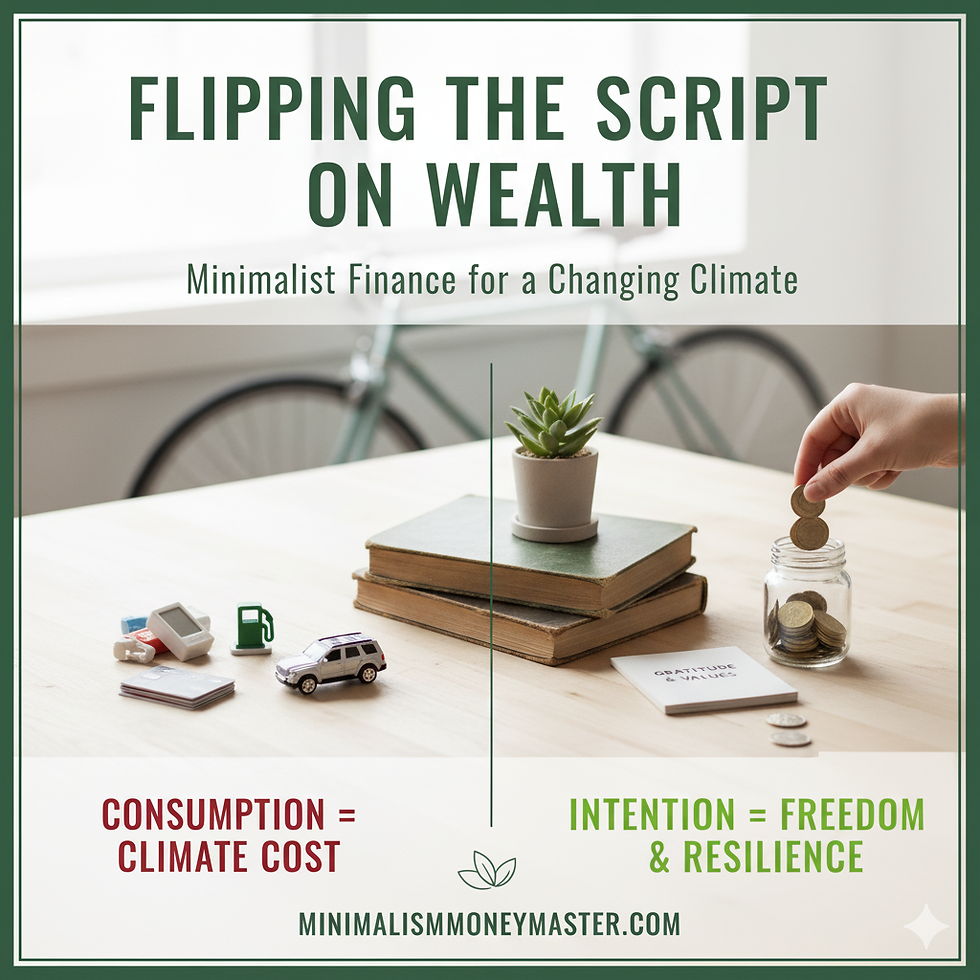
The climate crisis has changed the way we think about nearly everything—from how we travel, to what we eat, to where we live. But one area that still lags behind is how we define wealth and success. For decades, society has tied financial prosperity to accumulation: more possessions, bigger homes, faster cars, and an endless appetite for “more.” Yet in the age of climate change, this definition feels increasingly out of step.
Minimalism offers a different approach. By focusing on financial freedom, intentional spending, and ecological awareness, minimalist finance reframes wealth in a way that aligns with both personal well-being and planetary health.
The Link Between Consumption and Climate Change
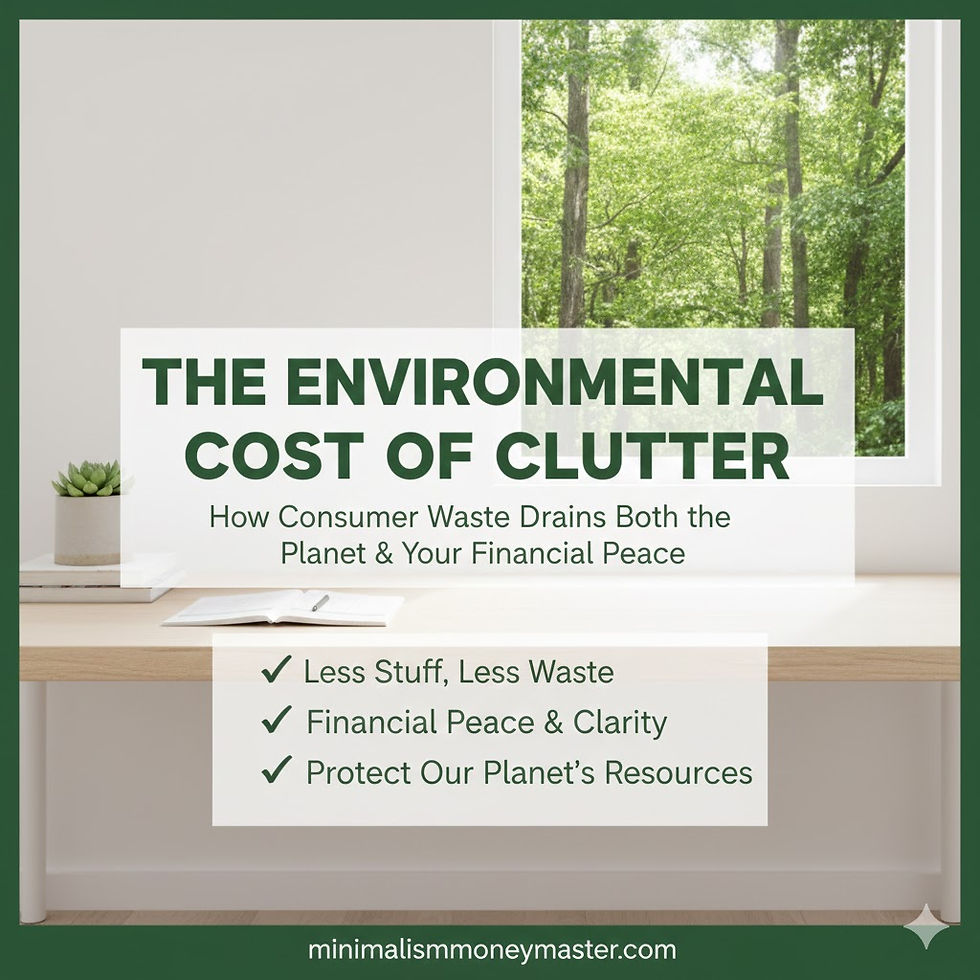
We can’t talk about climate change without talking about consumption. Every object we buy—whether it’s a plastic gadget or a luxury SUV—has a carbon footprint that begins long before it arrives at our doorstep. Manufacturing, global shipping, packaging, and eventual disposal all burn energy and release emissions.
While many people recycle or buy “eco-friendly” products, the bigger truth is this: the most sustainable purchase is often the one we never make. The hidden cost of “cheap” products is particularly high. Low prices usually signal shortcuts in production, outsourced pollution, and fragile durability. A $10 fast-fashion shirt may feel affordable, but it is often woven with fossil fuels, water waste, and exploitative labor. When that shirt wears out in a few months, we spend again—on both money and the planet.
Minimalism as a Climate Response
Minimalism isn’t just about having clean countertops or fewer shoes in the closet. It’s about reducing the demand that fuels climate change in the first place.
Owning less reduces production pressure. If millions of people chose to buy fewer, higher-quality goods, industries would be forced to adapt to lower demand for throwaway items.
Money becomes a tool, not a trophy. Instead of chasing status through possessions, minimalists prioritize security, freedom, and experiences that align with values.
Carbon footprints shrink naturally. Smaller homes, fewer vehicles, and conscious consumption lead to lower energy use without requiring sacrifice of comfort or joy.
In this way, minimalism is both a personal lifestyle and a quiet act of climate activism.
Redefining Wealth in a Minimalist Context
Minimalism challenges the traditional financial narrative. Wealth is not measured by what sits in your garage or closet—it’s measured by your ability to live freely and intentionally.
Wealth as time. A minimalist saves money by cutting excess spending, which often translates into fewer working hours, less stress, and more control over daily life.
Wealth as freedom. Financial independence, however modest, allows people to relocate if climate threats arise, change jobs, or invest in meaningful projects.
Wealth as alignment. Spending reflects values. By choosing sustainable purchases over status purchases, we invest in a future we actually want to live in.
In a warming world, traditional markers of wealth—like oversized houses or luxury travel—come at an environmental cost that feels increasingly unsustainable. Minimalist wealth, by contrast, prioritizes resilience.
Practical Steps to Align Finances with Climate Consciousness
Minimalism is not abstract philosophy—it’s a set of practical, everyday decisions that ripple outward. Here are three steps to begin aligning your financial life with climate resilience:
Audit Your Spending for Climate Alignment
Review recurring expenses. Are you paying for subscriptions, memberships, or gadgets that add little value to your life but carry environmental costs?
Ask yourself: Does this purchase support my financial independence and the planet, or does it create more clutter and waste?
Invest in Sustainable Choices
Consider renewable energy at home, even small steps like efficient LED lighting or better insulation.
Swap car trips for public transit, biking, or car-sharing where possible. Each choice compounds into both financial and carbon savings.
Buy secondhand whenever possible—thrifted clothing, refurbished electronics, used furniture. You save money and reduce demand for resource-intensive manufacturing.
Shift from Status Purchases to Value Purchases
Instead of buying the latest phone or trendy décor, invest in items designed to last: repairable shoes, multipurpose tools, durable cookware.
Value doesn’t mean expensive—it means useful, timeless, and aligned with your values.
Minimalism and Emotional Wealth
It’s worth noting that minimalism also brings emotional clarity. Climate news can feel overwhelming, leaving many with eco-anxiety. But focusing on what you can control—your finances, your consumption, your habits—creates a sense of empowerment.
When we spend intentionally, we buy fewer regrets. When we reduce clutter, we free mental space. When we align money with values, we create harmony between our inner lives and the outer world. That emotional wealth matters just as much as the financial kind.
Case Study: A Minimalist Shift in Action
Take the example of downsizing a home. Moving from a 2,000-square-foot house to a 1,200-square-foot space doesn’t just save on rent or mortgage payments. It cuts utility bills, reduces the amount of furniture and décor needed, and lowers heating and cooling demand. The extra cash flow can be redirected into investments, savings, or community support—all while slashing emissions.
This is the essence of minimalist finance: small lifestyle shifts that multiply financial freedom and climate resilience simultaneously.
Conclusion
Minimalism is not about deprivation; it’s about resilience. In an era of climate change, the old definition of wealth—endless accumulation—no longer serves us. Instead, wealth can mean time, freedom, alignment with values, and a lighter footprint on the Earth.
By adopting a minimalist financial mindset, we reduce stress, save money, and contribute to a sustainable future. We don’t need to sacrifice comfort to live in harmony with the planet. We just need to redefine what “enough” means.
Minimalism in the age of climate change isn’t just a philosophy. It’s a blueprint for thriving—financially, emotionally, and ecologically—in a world where less truly is more.

Comments