


Practical Minimalist Money Habits That Accelerate Financial Freedom
- jennifercorkum
- Oct 6
- 4 min read
Introduction: Why Habits Matter More Than Income
Most people believe financial freedom is out of reach because they don’t earn enough. But in reality, the difference often lies not in how much you earn—but in how you spend and manage what you already have.
Minimalism teaches us that living with less isn’t sacrifice—it’s liberation. When applied to money, it becomes a system of habits that simplify finances, boost savings, and shorten the road to financial independence.
Here are the minimalist money habits that can transform your financial life.
1. Spend With Intention, Not Impulse
Minimalist finance begins with a simple rule: every dollar should serve a purpose.
Before each purchase, ask:
Does this align with my values?
Will this bring lasting satisfaction—or just short-term dopamine?
If I didn’t buy this, how much closer would I be to financial independence?
Practical step: Try a 24-hour rule for non-essential purchases. If you still want it tomorrow, it’s worth reconsidering. Most of the time, the urge fades, and your money stays in your pocket.
2. Budget Simply and Stick to It
Forget overcomplicated spreadsheets with 50 categories. Minimalist budgeting is about clarity, not micromanagement.
Two simple systems work well:
The 50/30/20 Rule (Minimalist Style):
50% Needs (housing, food, utilities)
30% Wants (intentional, not impulsive)
20% Savings/Investments (minimum—boost higher if you can)
The Zero-Based Budget: Give every dollar a job, so nothing gets wasted.
Minimalists often combine the two: clear percentages with intentional spending choices.
3. Cut the Noise: Subscriptions & Recurring Expenses
Subscription creep is one of the biggest wealth leaks today. Netflix, Spotify, delivery apps, software—you name it.
Minimalist habit: audit your subscriptions every 3 months.
Keep only what you truly use and value.
Cancel duplicates (do you really need three streaming platforms?).
Replace recurring costs with free or low-cost alternatives.
Tip: Use a finance tracking app that highlights recurring charges—you’ll be shocked at what slips under the radar.
4. Embrace the Power of “One”
Minimalism thrives on the rule of “one”: one good pair of shoes, one reliable laptop, one quality jacket. Multiples not only cost more—they dilute value.
Apply this to finances:
One main credit card with good rewards (instead of juggling five).
One primary bank account and one investment account.
One debt payoff strategy (snowball or avalanche), not switching endlessly.
The habit of “one” reduces decision fatigue, lowers costs, and keeps you financially focused.
5. Automate Savings and Investments
Minimalism values simplicity, and nothing is simpler than automation.
Set up automatic transfers:
From paycheck to savings before you touch it.
From checking to investment accounts each month.
Toward debt repayment until it’s gone.
This habit makes discipline unnecessary—your money grows in the background while you live your minimalist life.
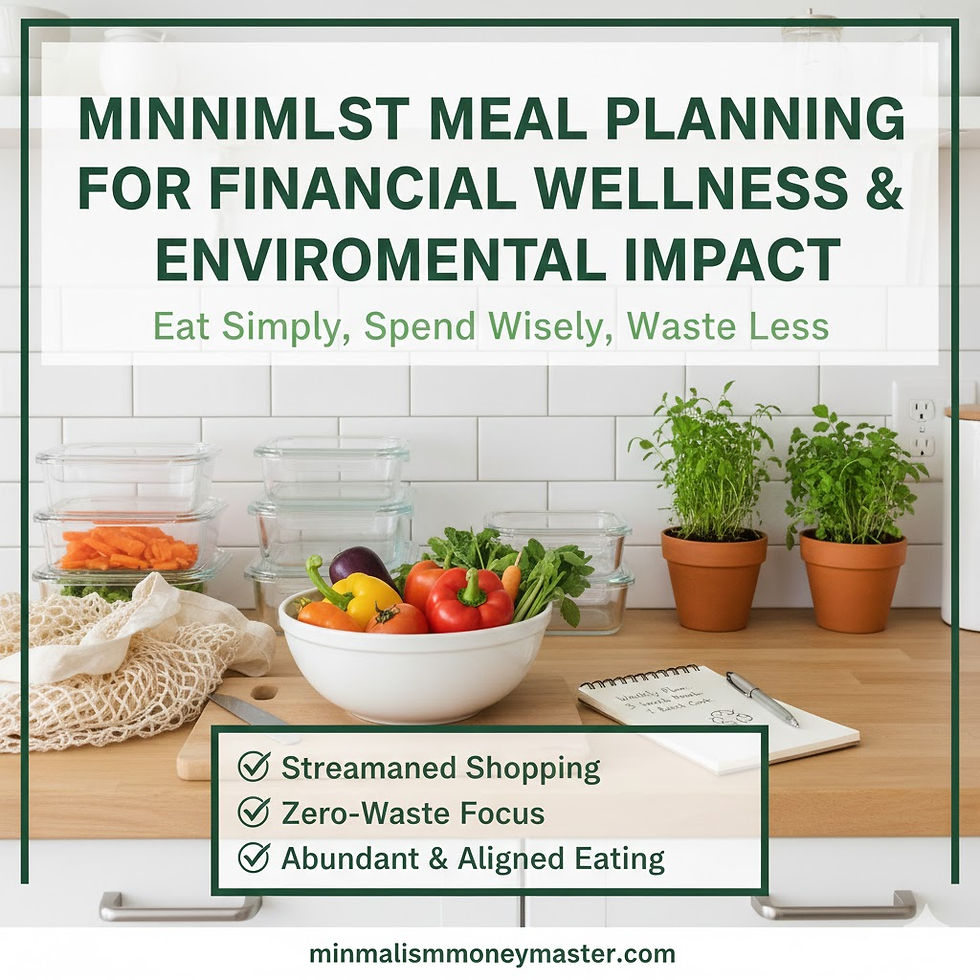
6. Cook More, Consume Less
Eating out regularly is one of the stealthiest wealth drains. Minimalists choose cooking not just for health, but for financial freedom.
Habit swap:
Prep 3–4 staple meals each week.
Cook once, eat twice—batch cooking saves both time and money.
Treat dining out as a special event, not a default.
Savings potential: Cutting restaurant meals from 5 to 2 times a week could save thousands per year—money that accelerates FI.
7. Buy Quality, Buy Less
Minimalism doesn’t mean buying the cheapest option—it means buying the right option once. A $200 jacket that lasts 10 years is cheaper (per use) than five $50 jackets that fall apart.
Adopt the habit of cost per use thinking. If it lasts, serves you well, and aligns with your values, it’s worth it. Everything else? Skip it.
8. Declutter Regularly and Monetize the Excess
Minimalist living pairs perfectly with financial independence when you turn clutter into cash.
Sell unused clothes, gadgets, or furniture online.
Use the “one in, one out” rule to prevent new clutter.
Funnel decluttering profits straight into investments.
This habit not only clears space—it accelerates your financial goals.
9. Track Net Worth, Not Just Spending
Minimalists value progress over perfection. Instead of obsessing over every receipt, track your net worth (assets minus liabilities) monthly or quarterly.
Why? Because financial independence isn’t about perfection in budgeting—it’s about growing your overall financial picture. Seeing steady progress reinforces your minimalist habits.
10. Redefine Entertainment
Minimalism reimagines fun without high costs. Instead of expensive weekends, consider:
Hiking, biking, or nature walks.
Free local events, concerts, or workshops.
Game nights or potlucks with friends.
The habit here: seek joy in simplicity. Entertainment doesn’t have to drain your financial independence fund.
11. Build a “Minimalist Emergency Fund”
Every minimalist financial plan needs a safety net. The habit:
Aim for 3–6 months of living expenses in a simple savings account.
Keep it separate, untouched except for true emergencies.
This fund gives you peace of mind and keeps you from going into debt when life throws curveballs.
Case Study: From Chaos to Minimalist Habits
Take Sarah, a professional earning $80,000 a year. She felt broke despite her salary. After adopting minimalist money habits—canceling $200 in unused subscriptions, cooking at home more often, automating $1,500 monthly into investments—her savings rate jumped from 5% to nearly 30%.
Within three years, Sarah built a six-figure investment portfolio, reduced her stress, and felt in control of her future. The habits—not the income—made the difference.
How These Habits Shorten the Path to FI
Every habit above does one of three things:
Cuts unnecessary expenses (lowering your FI target).
Boosts savings and investments (shortening your timeline).
Simplifies decision-making (freeing mental energy).
Together, they create a compounding effect: each habit supports the others, and financial independence becomes not just a dream but a daily practice.
Conclusion: Build Freedom One Habit at a Time
Financial independence isn’t achieved overnight—it’s built through consistent, intentional habits. Minimalism gives you the framework: simplify, focus, align with your values.
By spending less on what doesn’t matter and automating more toward what does, you accelerate your journey toward freedom.
Remember: financial independence through minimalism isn’t about having less—it’s about needing less, so you can live more.



Comments