


Minimalist Parenting Hacks: Simplifying Family Meals and Food Budgets
- jennifercorkum
- Oct 1
- 3 min read
Feeding a family is one of the biggest stressors parents face—planning meals, managing picky eaters, juggling grocery bills, and resisting the lure of convenience foods. Add the chaos of after-school hunger and busy evenings, and meals can easily become overwhelming. But from a minimalist finance perspective, simplifying food routines can save time, reduce waste, and ease budget pressures while still keeping kids nourished. Here’s how minimalist parenting principles can transform family meals into a calmer, more intentional experience.
Simplify Meal Planning: Less Variety, More Routine
Meal planning doesn’t have to be complicated. In fact, having fewer choices often makes life easier.
Hack #1: Create a rotating meal schedule. Instead of reinventing dinner every week, build a 2–3 week rotation of go-to meals your family enjoys. This eliminates decision fatigue, streamlines grocery shopping, and makes budgeting predictable.
Hack #2: Adopt theme nights. Simple categories like “Meatless Monday,” “Taco Tuesday,” or “Soup Sunday” provide structure without stifling variety. Kids know what to expect, and parents can shop efficiently.
Hack #3: Plan meals around budget-friendly staples. Focus on beans, rice, oats, pasta, and seasonal produce. These stretch further, cost less, and reduce the temptation to overspend on convenience foods.
By narrowing choices, you make food planning manageable and cost-effective.
Streamline Grocery Shopping: Buy Less, Waste Less
Overbuying groceries leads to wasted food and wasted money. Minimalism teaches us to shop with intention.
Hack #4: Shop with a list. Always write down exactly what’s needed for your weekly meals. Stick to the list to avoid impulse purchases.
Hack #5: Buy in bulk wisely. Stock up on pantry staples like oats, pasta, and frozen veggies that won’t spoil quickly. Avoid bulk buying perishable items unless you know they’ll get used.
Hack #6: Embrace seasonal, local produce. Seasonal fruits and vegetables are often cheaper, fresher, and more nutritious. Farmers’ markets and co-ops can offer great deals without the packaging waste.
Shopping intentionally ensures your money goes further while reducing food waste.
Simplifying Family Mealtime Routines
Even with the best planning, dinnertime can still feel chaotic. Minimalist routines bring order back to the table.
Hack #7: Batch cook and freeze. Prepare soups, sauces, or casseroles in bulk. Freeze extras for busy nights to avoid costly takeout.
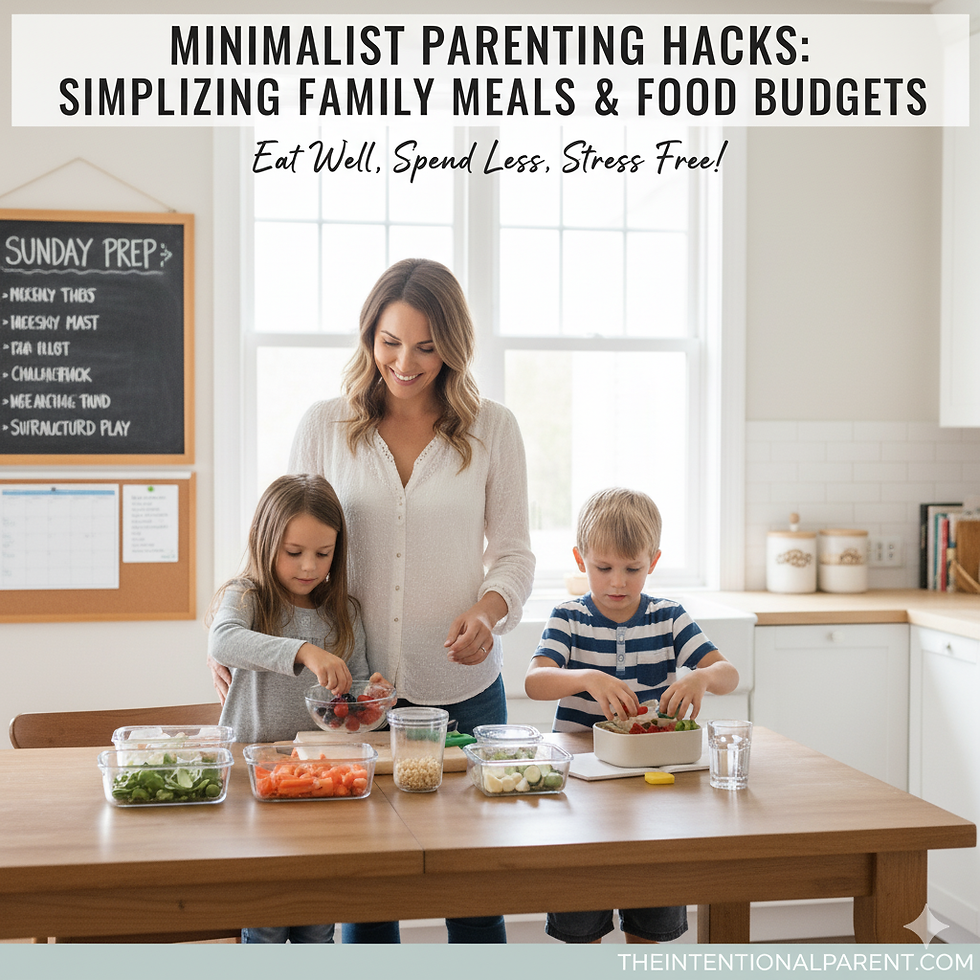
Hack #8: Prep snacks ahead. Wash and portion fruit, veggies, and nuts into containers. When kids come home hungry, healthy grab-and-go snacks are ready—no stress, no expensive packaged foods.
Hack #9: Share responsibility. Assign age-appropriate tasks to kids, like setting the table or chopping veggies. This teaches responsibility and lightens the parental load.
When mealtime runs smoothly, evenings feel calmer and family connections deepen.
Minimalist Lunches: Stress-Free and Budget-Friendly
Packing lunches every day can feel like a chore, but a minimalist approach makes it easier.
Stick to a formula. For example: one protein, one fruit, one veggie, and one fun item. No need to overthink.
Invest in reusable containers. Bento boxes reduce packaging waste and help with portion control.
Batch prep. Prepare sandwiches, boiled eggs, or wraps in bulk and store them for quick assembly.
Simplifying lunches not only reduces stress but also keeps costs lower than relying on cafeteria meals or takeout.
Financial Benefits of Simplified Eating
Minimalist meal planning has a direct financial impact:
Lower grocery bills. Buying fewer, versatile ingredients stretches budgets further.
Less food waste. Intentional shopping means less spoiled produce and fewer forgotten pantry items.
Reduced takeout. Prepped meals at home replace last-minute expensive takeout runs.
These savings compound over time, allowing families to redirect money toward savings goals, debt payoff, or memorable experiences together.
Teaching Kids Minimalist Food Values
Meal routines are also a chance to instill lifelong values in children:
Mindful eating. Encourage kids to slow down and appreciate their food.
Gratitude. Talk about where food comes from and the effort it takes to prepare meals.
Reducing waste. Teach kids to take what they’ll eat and save leftovers for later.
When kids learn to value simplicity and respect food, they grow into mindful adults who understand the link between eating, budgeting, and sustainability.
Conclusion
Minimalist parenting doesn’t mean bland meals or boring routines—it means simplifying food choices to bring calm, health, and financial freedom. By streamlining meal planning, grocery shopping, and family mealtime, you reclaim time, reduce waste, and save money. Most importantly, you create opportunities to connect with your family around the table.
In a world of endless options and fast-paced dining, choosing simplicity might just be the tastiest hack of all.


Comments