


From Scarcity to Freedom: Minimalist Finance as an Antidote to Rising Costs
- jennifercorkum
- Oct 9
- 3 min read
Introduction
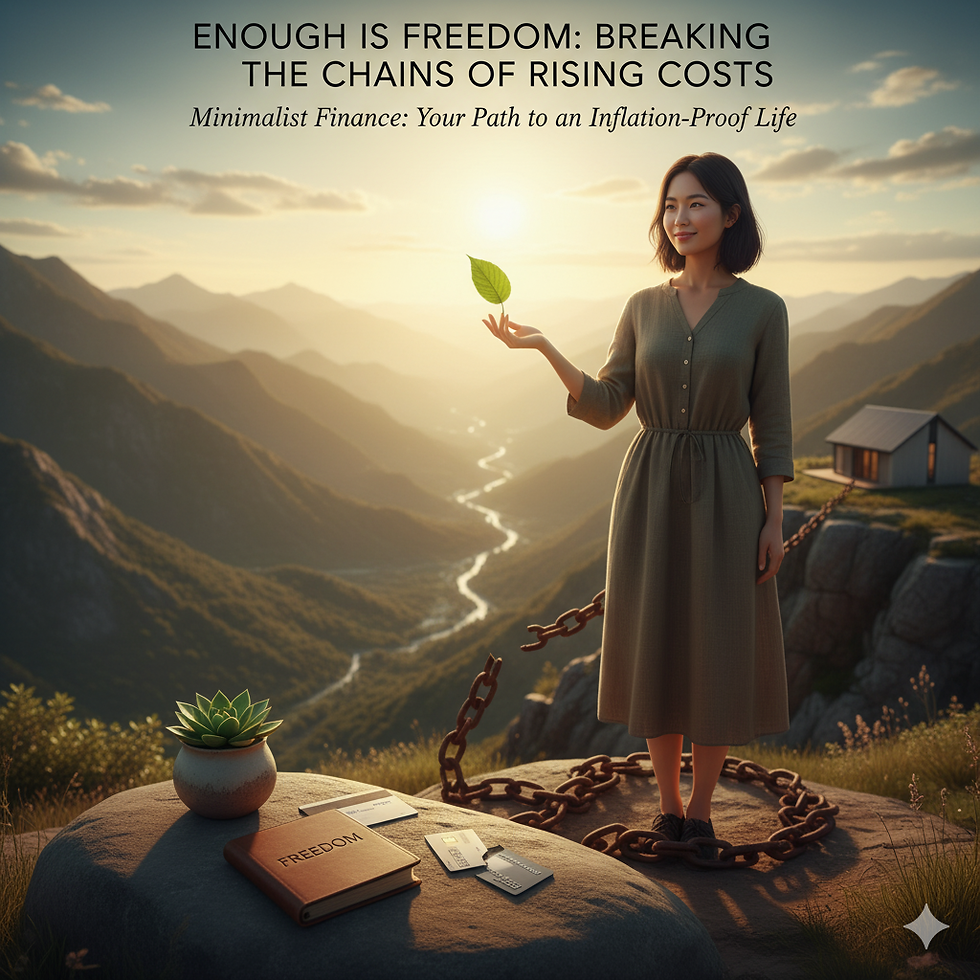
For many people, rising costs of living feel like chains tightening around their freedom. As rent, food, and transportation climb higher, it’s easy to feel trapped in a cycle of working harder just to survive. Scarcity, in this context, feels suffocating.
But minimalism offers a radical reframe. Instead of seeing scarcity as a limitation, minimalists embrace it as a path to freedom. By intentionally choosing “enough” instead of endlessly chasing “more,” we loosen inflation’s grip on our lives. Minimalist finance is not about punishment or sacrifice—it’s about designing a life so resilient and intentional that rising costs lose their power.
Scarcity vs. Abundance: A Minimalist Lens
Traditional thinking equates scarcity with lack. If you have less, you’re missing out. But minimalism asks us to rethink abundance. True abundance isn’t about owning more—it’s about needing less.
Fewer possessions mean more clarity.
Fewer expenses mean more financial breathing room.
Fewer commitments mean more time.
Rising costs highlight the fragility of consumer-driven abundance. Minimalist finance shifts the focus to freedom—the kind that inflation can’t take away.
How Minimalist Finance Builds Freedom
1. Time Freedom
When your lifestyle requires less money, you no longer need to work endless hours. Even modest income covers your needs. This flexibility grants you the freedom to pursue passion projects, spend time with family, or simply breathe easier.
2. Geographic Freedom
Minimalists aren’t tethered to expensive cities or oversized homes. With fewer possessions and lower overhead, relocating to a more affordable area—or even embracing digital nomadism—becomes realistic.
3. Psychological Freedom
Perhaps the greatest freedom is mental. Inflation triggers fear and scarcity thinking in many households. Minimalists, however, cultivate peace of mind by knowing their needs are modest and sustainable.
Building a Minimalist Freedom Framework
Minimalist finance isn’t a rigid formula—it’s a framework for resilient living:
Essentials-first budgeting: Cover food, housing, and health. Every other expense must justify its presence.
Debt avoidance: Debt locks you into obligations that rising costs amplify. Minimalists avoid it wherever possible, or pay it down quickly.
Emergency funds: A minimalist lifestyle stretches savings further. What would cover three months of expenses in a conventional lifestyle could last six months—or longer—when costs are low.
Value-based spending: Instead of cutting everything, minimalists spend freely on what matters most, while cutting ruthlessly elsewhere.
Practical Examples of Minimalist Freedom
Housing: Choosing a smaller, energy-efficient home not only lowers rent or mortgage costs but also shields you from utility inflation.
Wardrobe: A capsule wardrobe of versatile, high-quality items eliminates the endless chase of fast fashion.
Shared resources: Libraries, tool co-ops, and ride-sharing replace costly ownership models. Why own everything when you can borrow or share?
Technology: Holding onto devices longer, repairing instead of upgrading, keeps you immune to rising retail costs.
These shifts aren’t about deprivation—they’re about reclaiming freedom from the constant pull of “more.”
The Freedom to Say No
Rising costs often pressure people into saying yes: yes to overtime, yes to side hustles, yes to financial stress. Minimalism restores the ability to say no.
No to a bigger house you don’t need.
No to a car loan that eats your paycheck.
No to a job that consumes your health just to fund a consumer-driven lifestyle.
Minimalist finance doesn’t just save money—it buys autonomy.
Why Rising Costs Validate Minimalism
Ironically, inflation and rising costs prove the minimalist philosophy right. Consumer dependence makes households fragile. The bigger the lifestyle, the harder it is to sustain when prices rise.
Minimalism provides an antidote: stability rooted in simplicity. By needing less, you shield yourself from the economic storms that send others scrambling. Rising costs stop being a personal crisis and become just another external event—something you’re prepared to weather.
Conclusion: Enough is Freedom
Scarcity, when chosen, becomes power. Minimalist finance transforms the rising cost of living from a source of fear into a catalyst for liberation. By embracing intentional scarcity, you gain freedom—freedom of time, place, mind, and choice.
In a culture obsessed with “more,” minimalism reminds us that enough is not only sufficient—it’s abundant. Rising costs may continue, but the minimalist path ensures that your freedom does too.

Comments