


Family Minimalism and the Environment: How Decluttering Saves More Than Money
- jennifercorkum
- Oct 4
- 4 min read
Minimalism is often talked about in terms of personal freedom and financial savings. But there’s another equally powerful benefit—family minimalism helps the planet. By living with less, consuming more intentionally, and teaching your children to value experiences over stuff, you’re not only protecting your wallet—you’re also reducing waste and leaving behind a healthier environment for the next generation.
In a world drowning in excess, minimalism isn’t just a lifestyle choice. For families, it can be an act of financial wisdom and environmental responsibility.
Decluttering With Purpose
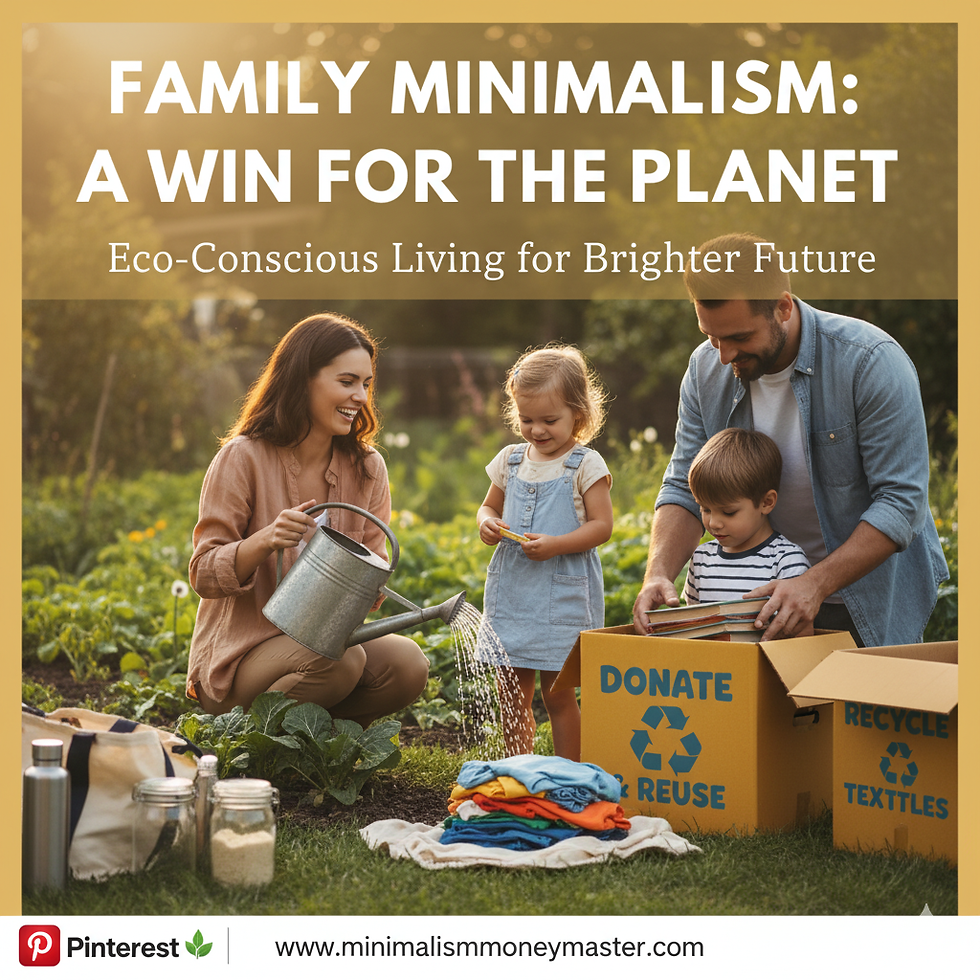
Decluttering is the entry point for many families exploring minimalism. But decluttering doesn’t mean simply tossing everything into garbage bags and sending it to the landfill. Done right, it becomes an eco-conscious practice that extends the life of your belongings.
The Three Paths of Purposeful Decluttering
Donate: Gently used toys, clothing, or furniture can find new homes with families who need them. Many local charities, shelters, and thrift stores welcome quality items.
Sell: From online marketplaces to garage sales, selling unwanted goods keeps items in circulation and helps recoup some of your financial investment.
Recycle: Electronics, textiles, and household materials can often be recycled through community programs, keeping harmful waste out of landfills.
This approach saves space, simplifies your home, and minimizes environmental harm—all while teaching kids the importance of stewardship.
How Minimalism Reduces Family Consumption
Minimalism naturally pushes back against consumer culture, which thrives on convincing families they “need” more—more toys, more clothes, bigger houses, faster gadgets. By embracing family minimalism, you choose conscious consumption, which has huge environmental benefits.
Fewer Purchases = Smaller Carbon Footprint
Every new product requires raw materials, energy for production, and fuel for shipping. By buying less, your family directly reduces demand for these processes.
Quality Over Quantity
Minimalist families often invest in durable, long-lasting items rather than cheap, disposable ones. Not only does this save money in the long run, but it also reduces waste. A single high-quality backpack might last through multiple children, while five cheap ones end up in the trash.
The Power of “Enough”
Minimalism teaches families to recognize when they have enough. Enough toys. Enough clothes. Enough gadgets. Choosing “enough” over “more” is one of the simplest ways to protect the planet.
Sustainable Habits Families Can Embrace
Family minimalism and eco-friendly living go hand in hand. Here are some practical ways to blend the two:
1. Buy Secondhand
From toys to clothing, secondhand shopping reduces demand for new production and keeps items in circulation. Many kids barely wear out their clothes before outgrowing them, making thrift shops, swaps, and hand-me-downs goldmines.
2. Choose Reusable Over Disposable
Replace single-use products with reusables:
Water bottles instead of plastic ones.
Cloth napkins instead of paper.
Lunch containers instead of plastic bags.
These swaps save money month after month while dramatically reducing household waste.
3. Practice Conscious Gifting
Encourage extended family and friends to gift experiences or consumables instead of clutter. Museum memberships, art supplies, or cooking kits create joy without adding waste.
4. Simplify Transportation
Where possible, opt for walking, biking, or carpooling as a family. Fewer car trips mean lower gas costs and fewer emissions.
5. Teach Repair Skills
Instead of immediately replacing broken toys or gadgets, try fixing them. Kids who learn repair skills develop resourcefulness and respect for what they own.
Teaching Kids Environmental Stewardship Through Minimalism
One of the greatest benefits of family minimalism is how it shapes children’s values. Kids growing up in a minimalist household see firsthand that happiness doesn’t come from constant consumption.
They learn gratitude: By owning fewer but more meaningful items, children develop a deeper appreciation for what they have.
They learn creativity: Fewer toys often lead to more imaginative play. A cardboard box can become a rocket ship, while an outdoor walk sparks endless discovery.
They learn responsibility: When kids understand the environmental impact of waste, they’re more likely to care for their belongings and think twice before discarding.
Minimalism is one of the best ways to raise eco-conscious kids who understand their choices matter.
The Financial and Environmental Double Win
What makes family minimalism so powerful is how it benefits both your wallet and the world.
Fewer Purchases = Lower Expenses: Every unnecessary item you skip is money saved.
Quality Over Quantity = Long-Term Savings: Buying durable items may cost more upfront but saves money by avoiding constant replacements.
Reusable Choices = Monthly Savings: Cloth napkins, refillable bottles, and secondhand clothes reduce recurring expenses.
Smaller Spaces = Lower Bills: A decluttered family often realizes they don’t need a bigger house. Smaller living spaces use less energy and cost less to maintain.
Minimalism creates a loop of savings. You consume less, which helps the environment, and in turn, your reduced expenses free up money for what truly matters—family experiences, financial freedom, or investments in your future.
Overcoming the “Eco-Guilt” of Decluttering
A common hesitation families face is eco-guilt: the worry that decluttering creates more waste. Here’s the truth: the waste has already been created. The real environmental impact comes from reducing what you bring in moving forward.
Decluttering is a first step. Conscious consumption is the long-term solution. When your family learns to buy less, choose better, and value experiences, you break the cycle of endless accumulation.
Conclusion: Minimalism as a Legacy for the Planet
Family minimalism is about more than clean spaces and balanced budgets. It’s about creating a lifestyle that honors your family’s needs today while protecting the planet for tomorrow.
When you choose to declutter responsibly, buy less, and live intentionally, you’re not just saving money—you’re modeling sustainability. You’re teaching your children that happiness is found in experiences, gratitude, and connection, not in overstuffed closets or endless shopping trips.
In the end, family minimalism is a gift with ripple effects far beyond your home. It saves your finances, simplifies your life, and helps ensure that the world your children inherit is one where resources are valued, not wasted.
Minimalism isn’t just financial freedom—it’s environmental stewardship. And when practiced as a family, it becomes a legacy worth leaving.

Comments