


Declutter Your Kitchen, Declutter Your Budget: The Minimalist Cook’s Guide
- jennifercorkum
- Oct 2
- 4 min read
Minimalist cooking isn’t about depriving yourself or living with an empty fridge. It’s about intention—keeping only what you use regularly, stocking versatile staples, and creating a space that supports your financial and health goals.
Think of your kitchen as a toolbox for saving money. The simpler and more functional it is, the easier it becomes to cook at home, avoid takeout, and stretch every grocery dollar.
Essential Tools Only
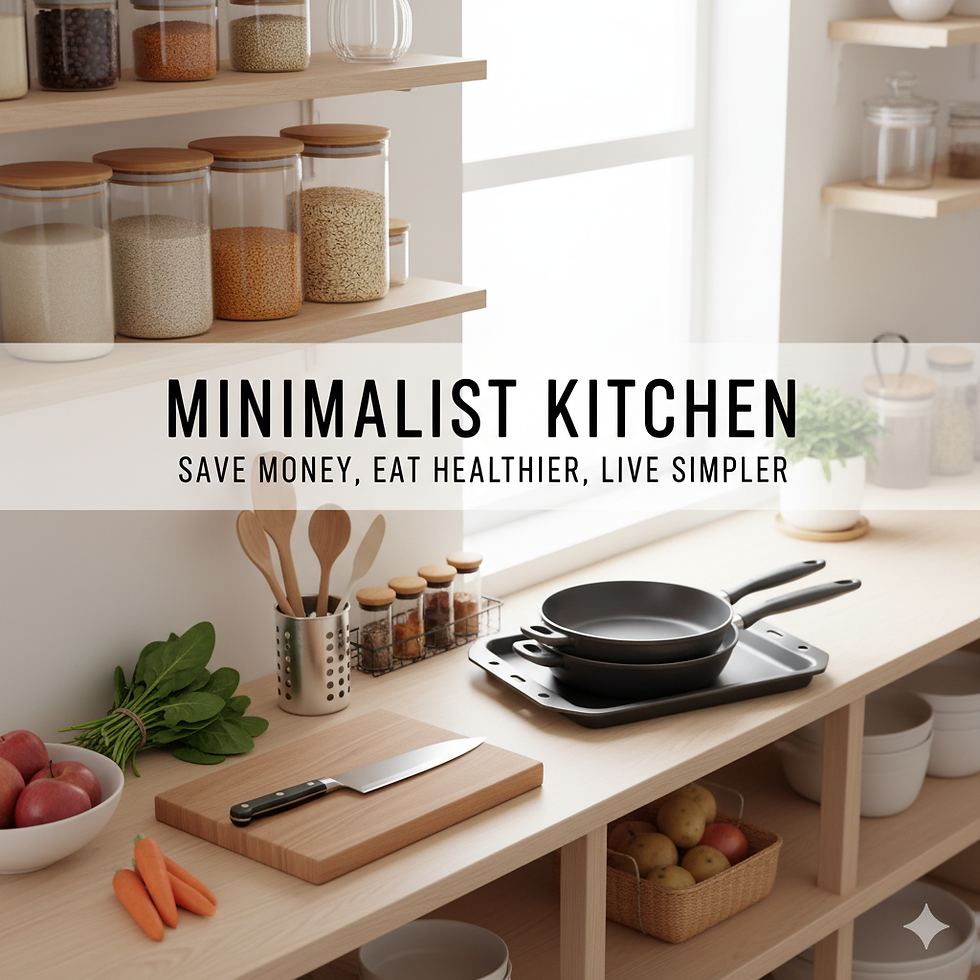
You don’t need a drawer full of single-purpose gadgets to cook great meals. In fact, the opposite is true—most kitchens only need a handful of versatile tools:
Chef’s knife (sharp and reliable)
Cutting board
Large skillet or sauté pan
Medium saucepan
Large pot (for soups, pasta, batch cooking)
Sheet pan (for roasting vegetables or one-pan dinners)
Wooden spoon, spatula, and ladle
Measuring cups/spoons
Optional but useful if you cook often: a blender, slow cooker, or Instant Pot.
That’s it. With this short list, you can cook 95% of everyday meals. The financial win? You avoid buying (and replacing) unnecessary gadgets like garlic presses, avocado slicers, or bread makers that collect dust.
Pantry Essentials for Stretching Your Budget
A minimalist pantry focuses on multipurpose items that can form the backbone of dozens of meals. Here’s a streamlined list:
Grains & Carbs
Rice, oats, pasta, tortillas
Bread or flatbread (store-bought or homemade)
Proteins
Beans, lentils, chickpeas
Eggs
Canned tuna or salmon
Peanut butter
Vegetables & Fruits
Onions, carrots, spinach, broccoli
Bananas, apples, seasonal fruit
Frozen vegetables for convenience
Flavor Boosters
Olive oil or cooking oil
Vinegar, soy sauce, hot sauce
Salt, pepper, basic spice set (garlic powder, chili flakes, cumin, cinnamon)
With these staples, you can build countless meals without needing to shop every day—or splurge on prepackaged items.
Why Minimalist Pantries Save Money
Less Waste: Every item has multiple uses, so nothing sits untouched until it expires.
Lower Bills: Staples like rice, beans, and oats are among the cheapest and most filling foods.
Quick Meals = Less Takeout: Having go-to ingredients ready reduces the temptation to order out.
Less Clutter = Less Stress: A clean, organized pantry makes it easier to stick to your plan.
Cutting “Gadget Costs”
Kitchen gadgets are one of the sneakiest ways people overspend. The average household buys specialty appliances that end up used once or twice—think waffle makers, air fryers, bread machines.
Instead of chasing the latest gadget trend, stick to your core cooking style. If you rarely bake, you don’t need a stand mixer. If you live alone, you probably don’t need an industrial blender.
By resisting gadget purchases, you free up money for high-value items: a sharp knife, durable cookware, or better-quality ingredients. Minimalism says: buy less, but buy better.
Minimalist Cooking Techniques
With a streamlined kitchen, focus on cooking techniques that maximize flavor while minimizing effort and expense.
One-Pot Meals
Soups, stews, curries, and chilis. One pot = less cleanup, fewer ingredients.
Sheet-Pan Dinners
Toss protein and vegetables with oil and spices, roast for 30 minutes. Done.
Batch Cooking
Cook big portions of grains, beans, or proteins and repurpose them all week.
Mix-and-Match Bowls
Grain + protein + veggies + sauce. Endless variations, minimal planning.
These methods reduce stress and decision fatigue while keeping meals affordable and tasty.
Organizing for Efficiency
Minimalism isn’t just about what you own—it’s about how you arrange it. An efficient kitchen saves you both time and money.
Clear countertops: Keep only daily-use items (like your knife block or cutting board) visible.
Group pantry items: Store grains, beans, and canned goods together so you see what’s available.
Use clear containers: Helps prevent duplicates and keeps food fresher.
Rotate stock: Place older items in front so nothing gets wasted.
A well-organized kitchen encourages cooking at home, which is one of the fastest ways to cut food spending.
Example: Minimalist Meal Plan Using Pantry Staples
Here’s a simple, budget-friendly week of dinners using just the essentials:
Monday: Lentil soup with bread
Tuesday: Black bean tacos with salsa
Wednesday: Stir-fried rice with vegetables and eggs
Thursday: Pasta with garlic, spinach, and olive oil
Friday: Sheet-pan chicken with carrots and potatoes
Saturday: Veggie curry with rice
Sunday: Leftover “clean-out” night
Cost per dinner for two people: ~$5–7. That’s $35–$49 for the whole week—less than one restaurant meal for two.
Your Kitchen as a Money-Saving Tool
Most people think budgeting starts with spreadsheets or bank apps. But your kitchen may be the most powerful budgeting tool you own. When it’s uncluttered, intentional, and stocked with the right staples, you naturally spend less without feeling restricted.
Minimalist cooking turns your kitchen into a financial ally. Instead of draining your wallet with unused gadgets and wasted food, it helps you create nourishing meals at a fraction of the cost of eating out.
Conclusion: Simplify to Save
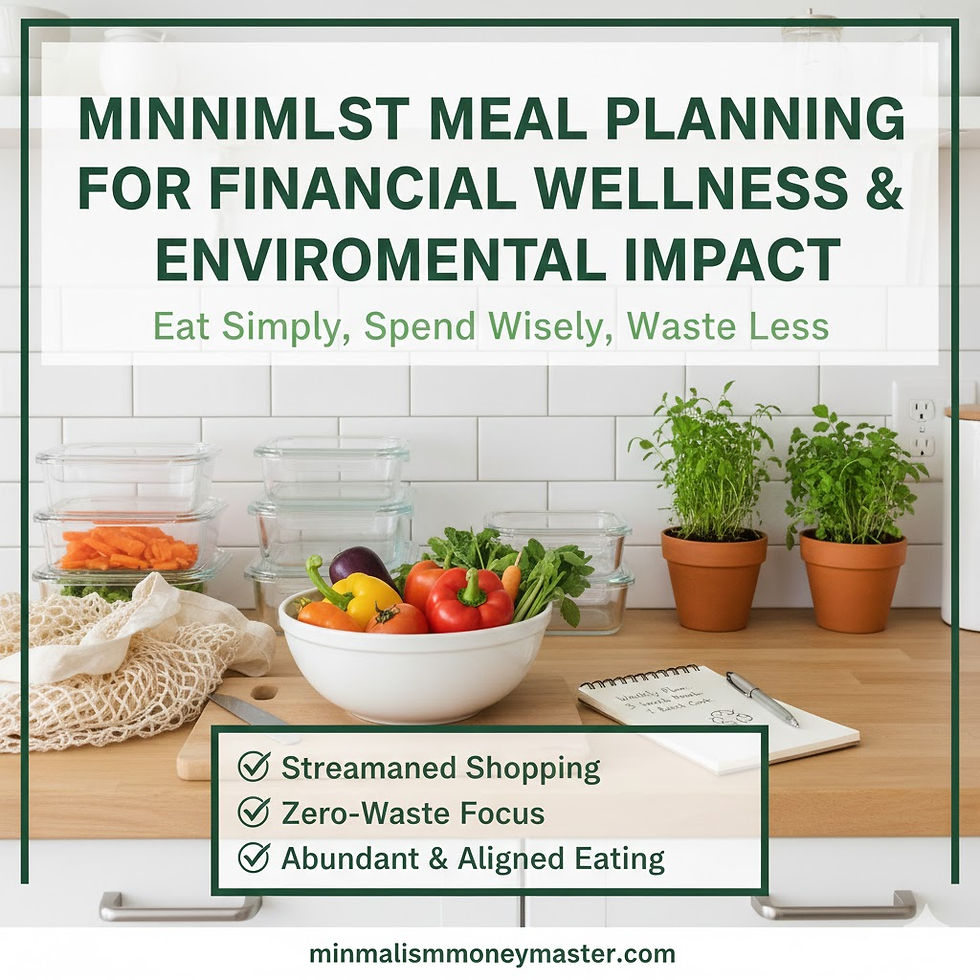
Minimalist meal planning isn’t just about what’s on your plate—it’s also about the space you cook in. By cutting clutter, focusing on essentials, and mastering a few simple cooking techniques, you can transform your kitchen into a place that supports both your financial goals and your well-being.
Decluttering your kitchen is more than an organizing project—it’s a money-saving strategy. Fewer tools, fewer ingredients, and fewer decisions lead to more savings, more health, and more peace of mind.
In the end, the minimalist cook’s guide is simple: own less, waste less, spend less—and enjoy more.


Comments