


7 Minimalist Daily Routines to Declutter Your Home and Your Wallet
- jennifercorkum
- Oct 5
- 3 min read
Clutter doesn’t just live in overstuffed closets or messy counters—it shows up in our finances too. From forgotten subscriptions to impulse purchases, “financial clutter” can weigh us down just as much as physical clutter. The good news? Minimalist routines can help clear both.
By practicing small, daily habits, you can create a life that feels lighter, more intentional, and financially secure. Below are seven minimalist routines that keep both your space and your wallet clutter-free.
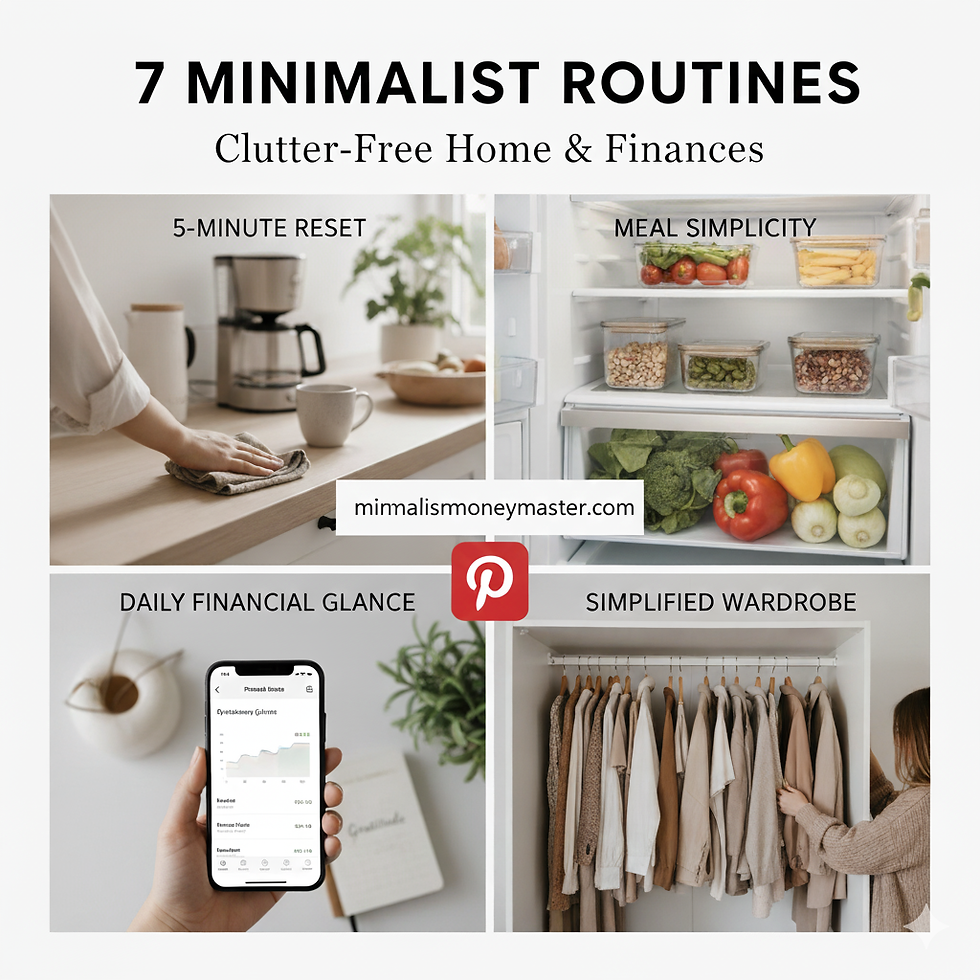
1. The 5-Minute Reset
Take five minutes each evening to reset your home. Return items to their place, wipe down one surface, and prep something for tomorrow (like setting out clothes or brewing coffee overnight).
Why it works: Waking up to a calm space reduces the urge to spend money on convenience—like buying breakfast because your kitchen feels chaotic.
2. Meal Simplicity Routine
Choose three to five go-to meals and rotate them weekly. Build your grocery list around these meals and keep ingredients stocked.
Why it works: Meal simplicity saves time, reduces food waste, and lowers the temptation for last-minute takeout. Even a simple “beans, grains, veggies” rotation can cut food costs dramatically.
3. Daily Financial Glance
Spend two minutes reviewing your account balances and transactions. This isn’t about micromanaging—it’s about awareness.
Why it works: A quick financial check-in keeps you connected to your spending habits, making it harder for little leaks (like forgotten charges) to slip through. Over time, this habit builds financial clarity.
4. The Declutter-One Rule
Remove one item from your home every day. It might be a duplicate kitchen gadget, an unread book, or clothes you no longer wear. Place it in a donation bag or recycle it responsibly.
Why it works: Decluttering a single item daily adds up—365 fewer things each year without overwhelming effort. It’s a slow, sustainable path to simplicity.
5. Simplified Wardrobe Check
Adopt the “two-minute outfit rule”: your wardrobe should be simple enough that choosing an outfit takes no more than two minutes.
Why it works: A streamlined wardrobe reduces decision fatigue and curbs the impulse to buy trendy clothes you don’t need. Bonus: you’ll develop a personal style that feels consistent and authentic.
6. Screen-Time Boundaries
Set a rule of “no screens” for the first hour of the day. Replace scrolling with journaling, stretching, or making a simple plan for the day.
Why it works: Less screen exposure means fewer ads, fewer impulse clicks, and more intentional mornings. It’s also a mental declutter routine that pays dividends in focus and calm.
7. Gratitude + Reflection Habit
End your day by writing down one thing you’re grateful for and one spending decision you’re proud of.
Why it works: This pairs emotional well-being with financial mindfulness. Over time, it creates a positive feedback loop that reinforces intentional living and spending.
Putting It All Together
Individually, these habits seem small. But practiced consistently, they transform your environment and finances. Imagine starting your day in a clutter-free kitchen, dressing quickly from a capsule wardrobe, checking your finances in two minutes, and ending with a moment of gratitude. That rhythm builds a life where order feels natural and money flows with purpose.
Minimalism isn’t about depriving yourself—it’s about designing routines that support the life you truly want.
Conclusion
Minimalist routines are the bridge between wanting simplicity and living it. By practicing these seven habits daily, you’ll steadily declutter your home and your wallet without overwhelm.
Start small. Pick one habit—maybe the 5-minute reset or the daily financial glance—and build from there. Over time, these routines compound into freedom, clarity, and a clutter-free life.



Comments