


The No-Spend Challenge: A Minimalist Reset for Your Money and Mind
- jennifercorkum
- Sep 26, 2025
- 4 min read
Why a No-Spend Challenge Fits Minimalist Finance
Minimalism is about stripping away what doesn’t matter and making space for what does. In finance, that means cutting through unnecessary expenses and finding clarity around how we use money.
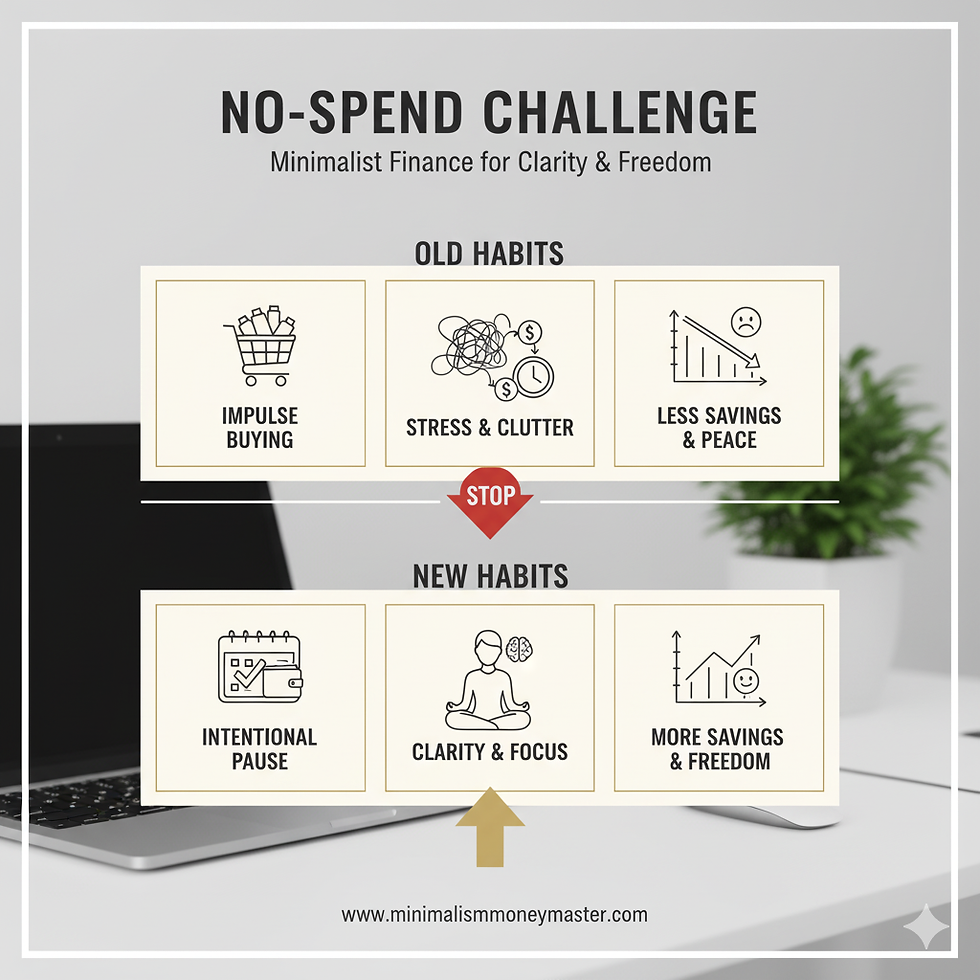
The no-spend challenge is a natural extension of that mindset. It’s not about deprivation or extreme frugality. Instead, it’s about intentional pause: stepping back from consumer culture, resetting habits, and learning to live with less—on purpose.
For minimalists, the challenge isn’t punishment. It’s a tool for clarity, peace, and freedom.
What Is a No-Spend Challenge?
A no-spend challenge is exactly what it sounds like: for a set period of time, you commit to not spending money on non-essential items. Essentials—like rent, utilities, groceries, or medication—are still fair game. But everything else (takeout, new clothes, online shopping, random Amazon finds) goes on pause.
The beauty of this challenge is its flexibility:
No-Spend Weekend: A short reset, perfect for beginners.
No-Spend Week: Enough time to reveal your habits and cravings.
No-Spend Month: A deeper reset that forces reflection and intentionality.
The Minimalist Angle
Traditional personal finance frames no-spend challenges as a way to “save fast” or “catch up on debt.” Those are valid reasons—but from a minimalist finance perspective, the benefits run deeper.
Minimalism reframes the challenge as:
A decluttering exercise for your wallet.
A way to reconnect with enough—realizing how little you truly need.
A chance to observe consumer habits without judgment.
A step toward building a calmer, less consumption-driven lifestyle.
In other words, it’s less about “cutting back” and more about “resetting.”
How to Start Your No-Spend Challenge
1. Define Your Rules Clearly
Minimalism thrives on clarity. Decide in advance:
What counts as essential?
Will you include groceries or limit them?
What exceptions (if any) are allowed—like a planned birthday gift or work expense?
Write your rules down. Keep them simple.
2. Pick a Realistic Timeframe
If you’re new to the challenge, start small. A weekend is long enough to feel a shift but short enough to succeed. From there, stretch to a week or even a month.
3. Prepare Your Environment
Remove temptations. Unsubscribe from marketing emails. Delete shopping apps from your phone. Declutter your space to remind yourself of how much you already own.
4. Plan Alternative Activities
Spending is often tied to boredom. Replace shopping and dining out with low-cost, minimalist alternatives:
Reading books you already own.
Going for a long walk.
Cooking with pantry staples.
Reorganizing or decluttering your home.
Benefits of the No-Spend Challenge
1. Financial Clarity
By stopping the flow of money for even a short period, you quickly see which purchases you miss and which were just habits. This clarity helps you spend more intentionally moving forward.
2. Gratitude for What You Have
Minimalism teaches us to value enough. The no-spend challenge forces you to use what’s already in your pantry, closet, or home. You begin to rediscover joy in the overlooked and forgotten.
3. Emotional Reset
Spending often masks stress, boredom, or comparison. By pausing purchases, you learn to sit with these feelings instead of outsourcing them to a credit card swipe.
4. Stronger Habits Long-Term
After a no-spend period, many people naturally spend less—even when the challenge ends. Minimalists appreciate this shift as it fosters a calm, clutter-free financial lifestyle.
Common Pitfalls (and How to Avoid Them)
Going Too Extreme, Too Fast
Jumping straight into a no-spend month can feel overwhelming. Start small and build momentum.
Not Defining Essentials
Without clear rules, you’ll find loopholes. “Technically, this latte is self-care…” Define what’s in and what’s out before starting.
Boredom = Spending
If you don’t plan alternative activities, you’ll end up scrolling online shops out of habit. Have a go-to list ready.
Guilt Trips
If you slip, don’t quit. Minimalism values progress over perfection. Adjust and continue.
Minimalist Variations of the Challenge
Pantry Challenge: Commit to eating only what’s in your fridge, freezer, or pantry for a week. Saves money and reduces food waste.
Closet Challenge: Pause clothing purchases and focus on remixing what you already own.
Digital No-Spend: Avoid spending on apps, games, or subscriptions. A digital declutter for your finances.
Social No-Spend: Pair the challenge with a break from social media ads, removing the triggers to spend in the first place.
Reflection Prompts
A minimalist finance approach encourages reflection. At the end of your challenge, ask yourself:
What did I truly miss, and why?
Which cravings were just habits?
How did my relationship with money shift?
What can I simplify moving forward?
These questions help transform the no-spend challenge from a temporary experiment into lasting change.
Final Thoughts
A no-spend challenge isn’t about deprivation—it’s about liberation. When you stop spending for a time, you free yourself from unnecessary clutter, both financial and mental. You rediscover gratitude, sharpen your awareness, and prove to yourself that you already have enough.
In the minimalist finance world, saving money isn’t just about numbers—it’s about creating space. Space for clarity, space for freedom, and space to live intentionally.
So whether you start with a weekend or stretch to a month, give the no-spend challenge a try. You may be surprised by how much lighter life feels when you stop chasing the next purchase.


Comments