


The First Rule of Minimalist Finance: Get Rid of the Junk
- jennifercorkum
- Sep 9, 2025
- 3 min read
Start with Things That Are Clearly Junk: A Minimalist Finance Approach
When it comes to personal finance, people often look for complex solutions — budgeting hacks, investment strategies, and clever financial tools. But the truth is, most of us are held back by something far simpler: the clutter in our lives.
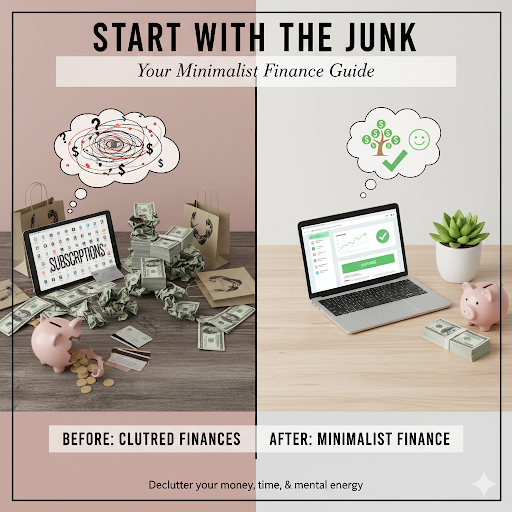
In minimalist finance, one guiding principle stands out: start with things that are clearly junk. Before optimizing spreadsheets or hunting for high-yield savings accounts, focus on eliminating what’s obviously draining your money, time, and mental energy.
Why “Junk” Costs You More Than You Think
Junk isn’t just physical clutter — it’s anything in your financial life that doesn’t add value. This can be:
Unused subscriptions you forgot you were paying for.
Impulse purchases that seemed exciting but ended up collecting dust.
Debt-fueled habits that keep you in a cycle of overconsumption.
Financial products that sound fancy but don’t align with your goals.
Every dollar tied to these things isn’t just a sunk cost; it represents opportunity lost. That’s money you could be saving, investing, or using for something that genuinely improves your life.
Step 1: Audit Without Overthinking
Minimalist finance starts with clarity. Take one afternoon and review:
Your bank and credit card statements
Your monthly subscriptions
Your recurring bills
Highlight anything that immediately feels unnecessary. Don’t rationalize or debate — if it’s “junk” at first glance, it probably is.
Tip: Tools like Mint, YNAB, or your bank’s spending insights can make spotting these drains effortless.
Step 2: Cut the Obvious Before Optimizing
Here’s where most people get stuck: they try to micromanage small wins before tackling the big, obvious leaks. You don’t need a complicated budgeting framework to free up cash — just cancel or eliminate the things you already know aren’t worth it.
Examples:
Unused gym memberships → Cancel immediately
That extra streaming service you rarely watch → Drop it
High-interest credit cards → Start paying them down aggressively
Duplicate insurance coverages → Consolidate and simplify
This approach builds momentum. Each quick win reinforces your commitment and gives you immediate breathing room.
Step 3: Redefine “Value” in Your Life
Minimalist finance isn’t about extreme deprivation — it’s about intentional spending. Ask yourself:
“Does this expense truly improve my life, or is it just noise?”
When you shift focus from owning more to valuing more, you naturally gravitate toward fewer, better things:
Investing in quality essentials instead of chasing trends
Funding experiences that align with your values
Prioritizing financial security over status signaling
Step 4: Build a “Junk Filter” for the Future
Decluttering your finances once isn’t enough — you need a system to keep junk out:
Set spending rules: e.g., a 48-hour waiting period for non-essential buys
Automate savings so leftover cash isn’t spent impulsively
Review quarterly: take five minutes every three months to reassess recurring expenses
By making these habits automatic, you ensure that future “junk” never sneaks back in.
Why This Works
Most financial advice focuses on earning more or investing better, but that’s useless if you’re bleeding money on things that don’t matter. Starting with obvious junk gives you:
Quick, tangible wins → motivates long-term consistency
Lower mental load → fewer bills, fewer decisions
More intentional living → money goes where it truly matters
Final Thoughts
Minimalist finance is about simplifying your path to financial freedom. The easiest way to start isn’t by optimizing — it’s by subtracting.
Start with the things that are clearly junk. Cut them ruthlessly. Reclaim your money, time, and energy. Then, with a cleaner financial foundation, you can focus on building wealth intentionally.
Because sometimes, the fastest way forward isn’t adding more — it’s letting go.


Comments