


The Financial Cost of Digital Clutter: Why Simplifying Your Digital Life Saves You Money
- jennifercorkum
- Sep 27, 2025
- 3 min read
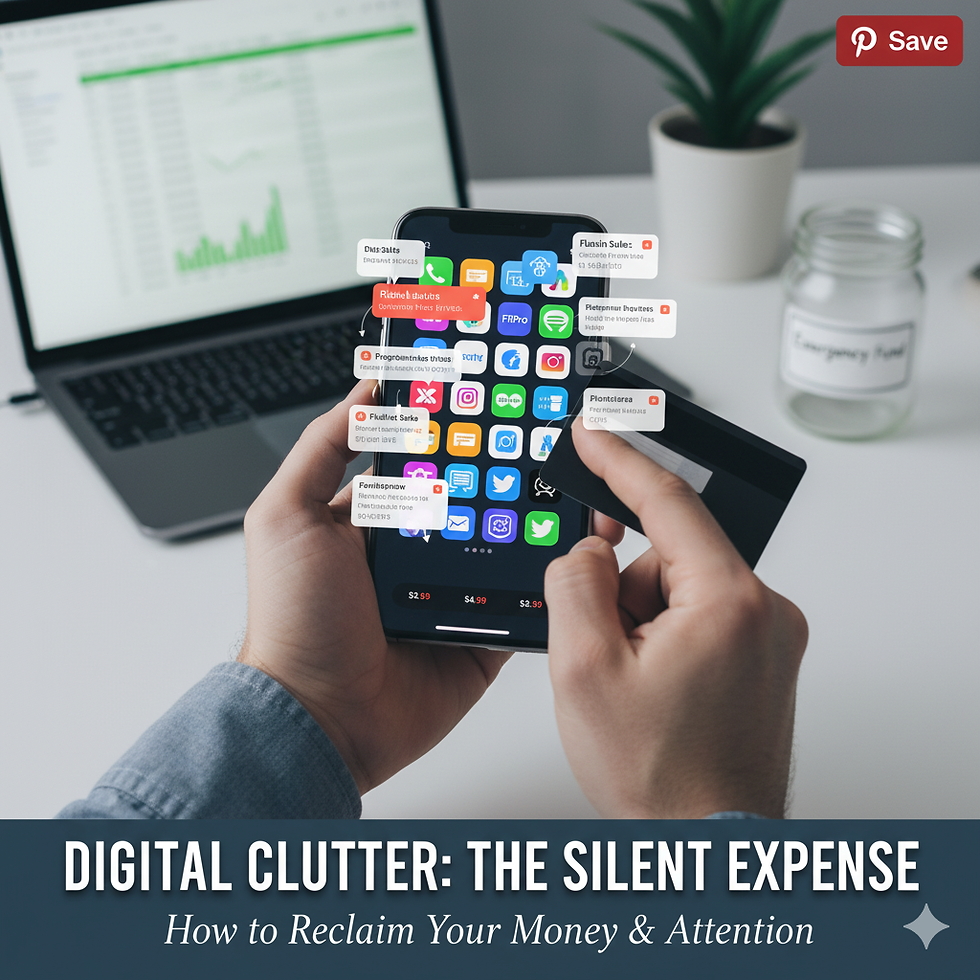
In an era where everything is just a tap away, digital clutter has become the new silent expense. While minimalism often focuses on physical possessions—clothing, cars, or houses—our digital lives are overflowing with subscriptions, apps, and notifications that quietly chip away at our bank accounts.
From a minimalist finance viewpoint, this clutter isn’t just inconvenient—it’s expensive. Every unnecessary app, subscription, and ping carries hidden costs that can prevent you from reaching financial freedom. Let’s explore how cutting digital excess can help you reclaim both your money and your attention.
The Hidden Cost of Subscriptions
Subscriptions are marketed as affordable luxuries. A streaming service for $9.99/month, a meditation app for $4.99, and a “premium” storage plan for $2.99—it all seems harmless. But these small charges compound faster than most people realize.
Consider this: the average American spends over $200/month on digital subscriptions. That’s nearly $2,400 a year—enough to fund an emergency savings account or an annual investment contribution.
Worse, most people don’t actively use half of what they pay for. Forgotten free trials, duplicate services, and “just-in-case” subscriptions drain funds while providing little value. In minimalist finance, every recurring expense must be questioned: Does this subscription align with my values and financial goals? If not, it’s clutter disguised as convenience.
App Overload & The Price of “Free”
The app economy thrives on the illusion of choice. You download a free app, only to face hidden costs: in-app purchases, ads that encourage consumerism, and even upgrades to larger devices to store them all.
Having dozens of apps isn’t just a space issue—it’s a money issue. Each additional app increases the likelihood of microtransactions, data costs, or recurring upgrades. In many cases, people buy premium versions of apps they rarely open, convinced that more apps = more productivity.
The minimalist approach flips this thinking: fewer apps mean fewer temptations, fewer microtransactions, and more intentional use of the tools that actually support your financial and personal goals.
Notifications as Spending Triggers
Notifications are often seen as nuisances, but they’re also financial triggers. Every ping is designed to demand attention—and sometimes your money.
Think about it:
A flash sale alert leads to impulse buying.
A game notification nudges you toward an in-app purchase.
A finance app pings you about “exclusive upgrades” you don’t need.
These nudges are deliberate, engineered to convert distraction into dollars spent. By leaving notifications unchecked, you’re effectively giving companies unrestricted access to your attention—and your wallet.
The minimalist finance solution is simple: silence the noise. Turn off all non-essential notifications and take back control of when and how you engage.
Every Cutback Is a Pay Raise
When you cut a subscription, delete a redundant app, or silence an unnecessary notification, you’re effectively giving yourself a pay raise. These aren’t acts of deprivation—they’re acts of redirection.
Here’s how it plays out:
Canceling a $12/month subscription frees $144/year.
Cutting three unused services could free up $400/year.
Add in reduced microtransactions and impulse buys, and you’re looking at hundreds, even thousands, of dollars annually redirected toward savings, debt repayment, or investing.
In finance, small consistent wins add up to big outcomes. In digital minimalism, the same is true: every cut is cumulative progress toward clarity and independence.
Practical Steps to Declutter Digitally and Save Financially
Run a Subscription Audit
List all recurring charges.
Cancel everything that doesn’t directly serve your goals.
Do an App Audit
Keep only essential apps (communication, health, finance).
Delete duplicates and “dopamine apps.”
Tame Notifications
Silence all non-essential alerts.
Batch-check communication at set times of the day.
Track the Savings
Redirect every canceled subscription into savings or investments.
Watch how quickly your “digital detox” translates into financial growth.
Final Thoughts: Digital Minimalism as Financial Freedom
Digital clutter isn’t just about wasted storage—it’s about wasted money and wasted attention. Each unnecessary subscription, app, or notification has an opportunity cost: money that could grow in investments, and focus that could build your career or side business.
Adopting digital minimalism through a financial lens is about more than decluttering—it’s about reclaiming control. By trimming digital excess, you simplify your life, strengthen your finances, and create space for what truly matters.
Minimalist finance is not about cutting joy—it’s about cutting noise. And in a world that constantly demands more of your money and attention, the true luxury is less.


Comments