


The Domino Effect of Your Biggest Purchases
- jennifercorkum
- Sep 12, 2025
- 3 min read
In personal finance, we often obsess over small purchases — the $5 coffee, the $15 streaming subscription, the $30 impulse buy. But from a minimalist finance perspective, it’s not the little things that trap us — it’s the big ones.
Our biggest financial decisions — the house, the car, the gadgets, the lifestyle upgrades — often trigger chain reactions that shape everything else. When we buy big, we commit to more than just a price tag. We commit to a lifestyle, ongoing expenses, and often hidden costs that quietly drain our freedom.
Let’s unpack how this works and why becoming conscious of these chain reactions is one of the most powerful money moves you can make.
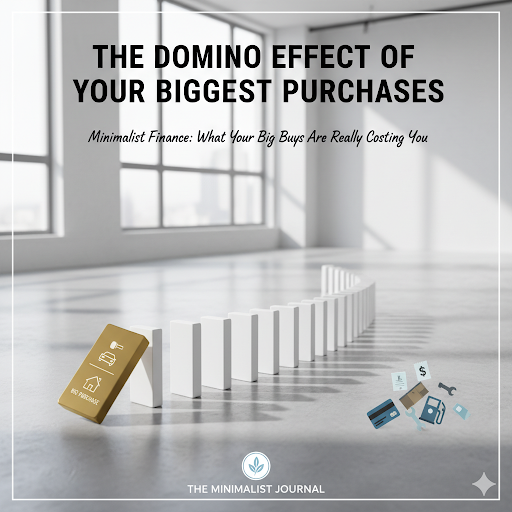
The Domino Effect of Big Purchases
Imagine buying a bigger house.
Suddenly, you’re not just paying a bigger mortgage — you’re paying more property taxes, higher insurance premiums, and increased utility bills.
A bigger space often “requires” more furniture, décor, and gadgets to fill it.
If the house is in a different area, you might face longer commutes, meaning more fuel, car maintenance, and maybe even… a nicer car.
This is the chain reaction at work. One decision sets off a cascade of costs — financial, emotional, and even environmental.
The same happens when you buy a luxury car, the latest tech, or even say yes to a high-cost lifestyle upgrade. You’re not just buying an item — you’re buying into a system of obligations.
Why Bigger Isn’t Always Better
Marketers have trained us to believe that “bigger” equals “better”:
Bigger houses mean success.
Bigger cars mean status.
Bigger closets mean happiness.
But when you zoom out, these upgrades often lock us into cycles of spending that make financial freedom harder to reach.
Minimalist finance flips the script: the less you commit to, the freer you are. Lower monthly obligations mean more flexibility, more savings, and more time to focus on what truly matters.
The Hidden Emotional Cost
Chain reactions aren’t just financial — they’re mental and emotional too.
Every big purchase demands more of your attention:
More upkeep.
More maintenance schedules.
More stress about damage, theft, or resale value.
The result? Mental clutter. Owning more often means worrying more. In contrast, a minimalist approach simplifies not just your finances but your headspace.
How to Break the Cycle
Here are a few minimalist finance strategies to avoid triggering costly chain reactions:
1. Think Total Cost of Ownership (TCO)
Don’t just ask, “Can I afford this today?” Ask, “What does this cost me over its entire lifespan?”This includes maintenance, insurance, taxes, and opportunity costs.
2. Set Lifestyle Boundaries
Choose your “enough” point intentionally.Instead of upgrading by default, define what size, style, and scope actually support your life instead of complicating it.
3. Delay Major Decisions
Big purchases often feel urgent. They rarely are.Give yourself 30 days — or longer — before committing. The space between impulse and action is where clarity lives.
4. Focus on Flexibility
Prioritize financial choices that expand your options rather than limit them. A modest home, a reliable car, and fewer subscriptions give you freedom to pivot when life changes.
The Minimalist Advantage
Minimalism isn’t about deprivation — it’s about intentionality.When we’re deliberate about our big financial choices, we:
Reduce recurring expenses.
Free up mental energy.
Build a buffer for opportunities instead of obligations.
In other words, we stop chasing more and start owning our enough.
Final Thoughts
“Our biggest items trigger chain reactions” isn’t just a financial truth — it’s a life truth.Every significant purchase either chains us to more obligations or frees us to focus on what matters.
The minimalist path isn’t about denying yourself comfort or success. It’s about aligning your money, stuff, and time with your values. Because the fewer dominoes you set up, the fewer you’ll have to chase when they fall.


Comments