


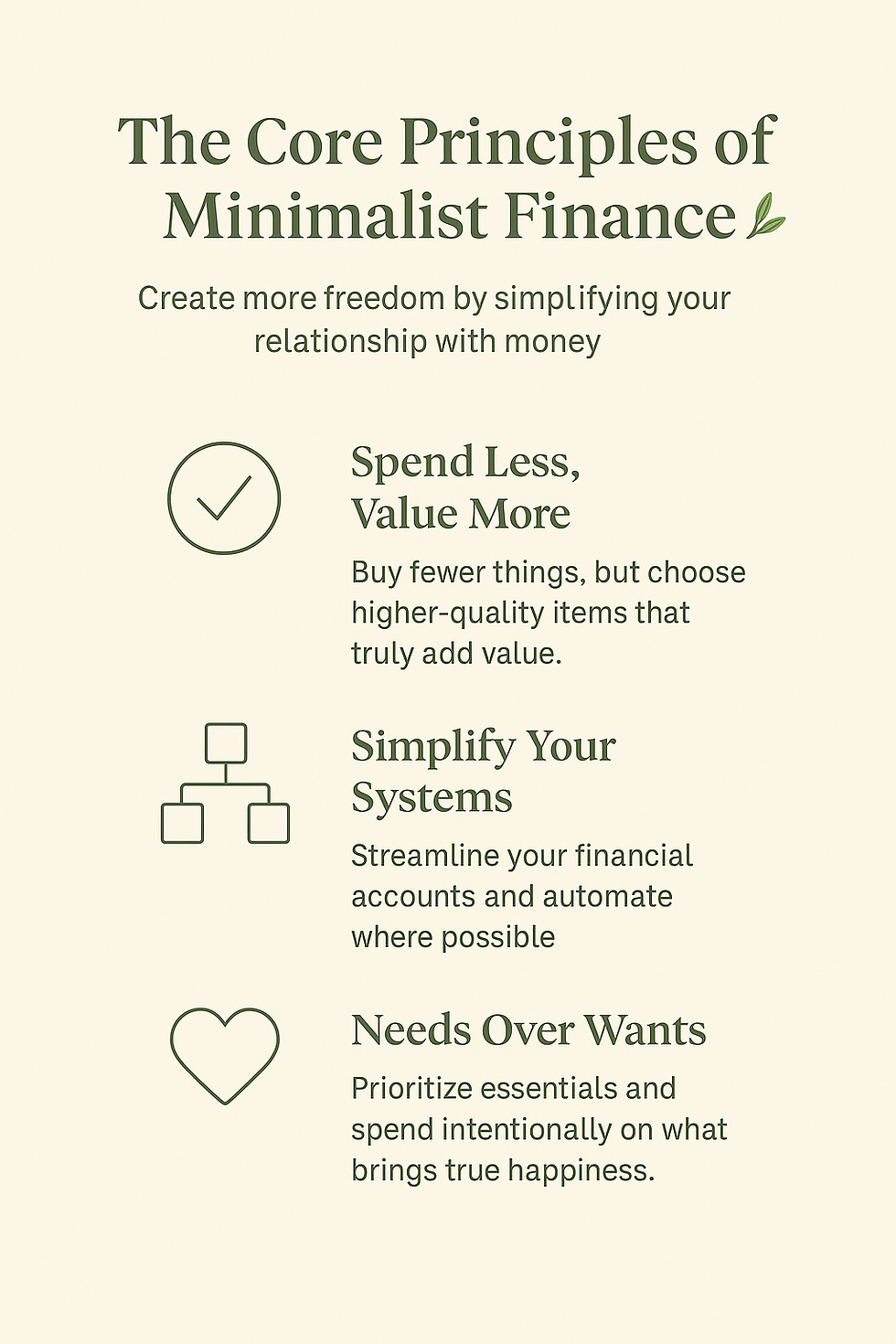
The Core Principles of Minimalist Finance
- jennifercorkum
- Aug 21, 2025
- 3 min read
Create More Freedom by Simplifying Your Relationship with Money
In today’s fast-paced world, personal finance can feel unnecessarily complicated. Between juggling multiple credit cards, endless budgeting hacks, and a constant push to buy the latest “must-have” products, many people feel overwhelmed and out of control.
This is where minimalist finance comes in.
Minimalist finance isn’t about extreme frugality or cutting every expense to the bone. Instead, it’s about creating a simple and intentional financial system that enhances your life rather than controls it. By focusing on what truly matters, you reduce financial stress, decision fatigue, and the pressure to “keep up” with others — giving you a sense of freedom, clarity, and empowerment.
What Is Minimalist Finance?
Minimalist finance is a lifestyle approach that simplifies your money management so your finances work for you, not against you. At its heart, this philosophy revolves around three key principles:
1. Spend Less, Value More ✨
Minimalist finance shifts your mindset from buying more to buying better. It’s not about depriving yourself — it’s about intentional spending.
Instead of chasing fast fashion trends, making impulse purchases, or upgrading to the latest gadgets, minimalists focus on quality over quantity.
Less clutter = fewer regrets
Better quality = longer-lasting value
Mindful spending = purchases that align with your values
For example, instead of buying five pairs of cheaply made shoes, you could invest in one high-quality pair that lasts for years. Over time, this approach leads to lower spending while filling your life with things that truly serve you.
Pro tip: Search-friendly keyword: “intentional spending for financial freedom”.
2. Simplify Your Systems 🧩
One of the leading causes of financial stress isn’t a lack of money — it’s complexity. Juggling multiple accounts, credit cards, and investment platforms creates confusion and anxiety.
Minimalist finance encourages financial decluttering by simplifying your systems:
Keep one primary checking account
Use one dedicated savings account
Consolidate credit cards when possible
Choose automated, easy-to-use investment tools
By streamlining your financial setup, you free up mental space, reduce errors, and make money management stress-free.
SEO tip: Integrate related keywords like “simple budgeting systems” and “how to manage money effortlessly”.
3. Needs Over Wants 🌱
At its core, minimalist finance is about aligning your money with your values.
Start by prioritizing essentials like housing, food, healthcare, and savings. Then, when considering non-essential purchases, pause and ask:
“Will this truly add happiness or meaning to my life?”
This habit helps you avoid impulse spending and the pursuit of status symbols. Instead, you’ll focus on creating a life filled with purpose and fulfillment — not just stuff.
Why Minimalist Finance Works
Minimalist finance isn’t restrictive — it’s liberating. By simplifying your money habits, you gain:
Financial clarity → No more guesswork
Less stress → Fewer accounts, fewer bills, fewer worries
Aligned priorities → Spend on what truly matters
Freedom to grow → Save, invest, and build wealth intentionally
The result? A calmer, more intentional financial life where your money serves your dreams, not your anxieties.
Final Thoughts 🌿
Money doesn’t have to be complicated. By adopting a minimalist finance mindset, you create systems and habits that support a simpler, happier, and more intentional life.
Start small:
Cancel a subscription you don’t use
Consolidate an account
Choose quality over quantity for your next purchase
Minimalist finance isn’t about having less — it’s about making room for more: more clarity, more freedom, and more peace of mind.


Comments