


Teaching Kids the Value of Money and Gratitude in a Minimalist Home
- jennifercorkum
- Sep 24, 2025
- 3 min read
Minimalism isn’t just about living with fewer things — it’s about shaping values. When applied to family life, minimalism becomes a powerful tool for teaching kids lessons about money, gratitude, and intentional living.
In a consumer culture where children are constantly told they need the newest toy, trend, or gadget, a minimalist household provides a counterbalance. It shows kids that joy doesn’t come from constant consumption, and that money is a tool — not a master. From a minimalist finance perspective, this is one of the greatest gifts we can give our children: the ability to manage money wisely and live with gratitude for enough.
Why Kids Need Money Lessons Early
Many adults struggle with money because they were never taught how it works. By introducing children to financial concepts early in life, you:
Give them confidence around money instead of fear.
Help them distinguish between needs and wants.
Teach them patience, saving, and delayed gratification.
Encourage gratitude for what they already have.
Minimalist families have a unique opportunity: the lifestyle itself naturally supports these lessons.
Explaining Minimalism to Kids
Children understand more than we often think. You can explain minimalism in simple terms:
We only keep what we use and love.
We choose experiences over things.
We’re careful with our money because it helps us reach bigger goals.
These conversations help kids connect minimalism to values they can see — like more family time, less clutter, or saving for a trip.
Money Lessons in Everyday Life
Minimalist households can turn ordinary moments into financial lessons.
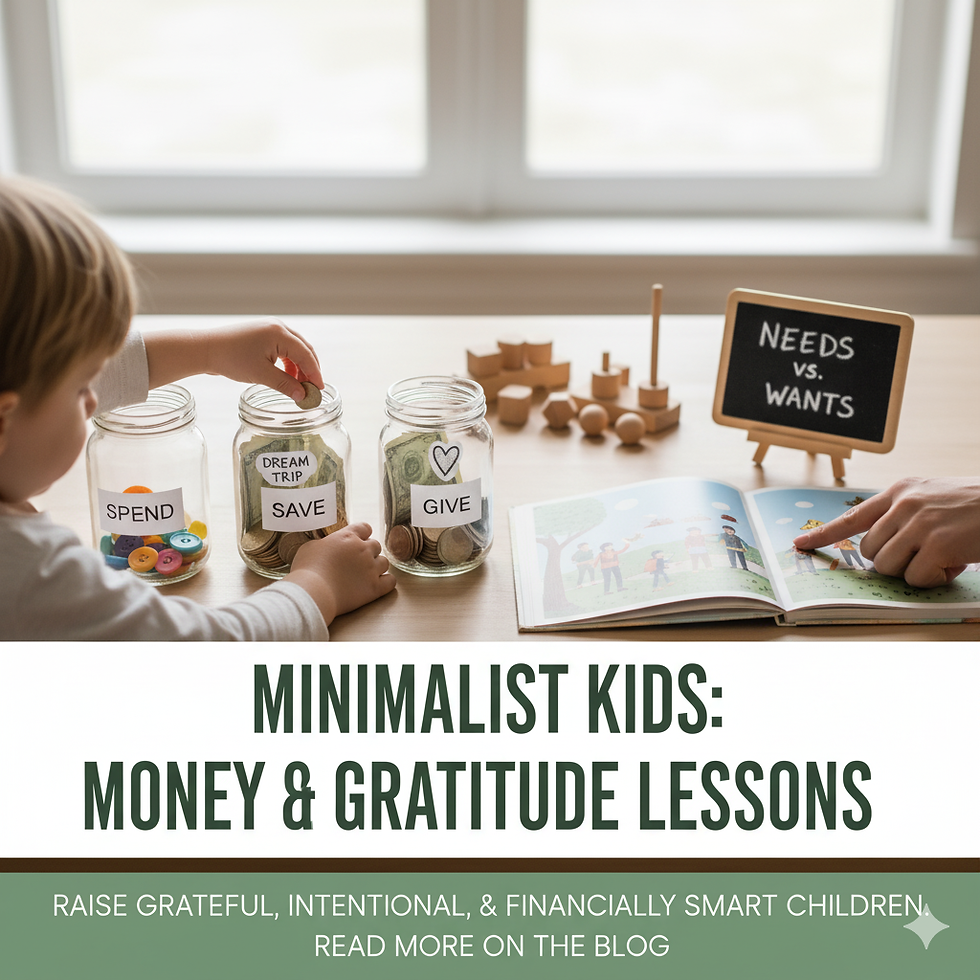
1. Allowance With Purpose
If you give an allowance, frame it as a teaching tool:
A portion for saving (for bigger goals).
A portion for spending (on small joys).
A portion for giving (to practice generosity).
This simple system introduces budgeting, balance, and the joy of intentional choices.
2. Needs vs. Wants
When kids ask for new toys or clothes, use it as a teaching moment:
Do you need this, or do you want it?
Will it add value to your life, or just create more clutter?
Over time, kids start asking these questions themselves.
3. Saving for Goals
Encourage children to save for something they truly want. This teaches patience and shows that money is a tool to reach meaningful goals — not just for impulse spending.
Teaching Gratitude Through Minimalism
Gratitude is the antidote to consumer culture. When kids appreciate what they have, they stop chasing what they don’t.
Minimalist Gratitude Practices
Decluttering Together: Have kids thank toys, clothes, or books before donating them. It reinforces appreciation instead of guilt.
Gratitude Lists: Encourage writing or sharing three things they’re grateful for daily.
Experience Over Stuff: Celebrate birthdays with adventures, not mountains of gifts, and emphasize the memory over the material.
Gratitude shifts the focus from scarcity (“I don’t have enough”) to abundance (“I already have plenty”).
Modeling Matters Most
Children learn more from what we do than what we say. If you live minimally, manage money intentionally, and express gratitude regularly, they will mirror those habits.
Show them how you budget as a family.
Celebrate financial milestones together (like paying off debt).
Verbally express gratitude for the home, meals, and simple joys you share.
Minimalist parenting isn’t about perfection — it’s about demonstrating intentional living in real time.
Overcoming “But Other Kids Have More”
It’s natural for children to compare themselves to peers. Minimalist parents can reframe this by:
Acknowledging feelings without judgment: I know it feels hard when friends have new things.
Refocusing on values: In our family, we choose to spend money differently — on travel, savings, and time together.
Encouraging individuality: Having fewer things doesn’t mean you have less worth. It means you know what truly matters.
This equips kids with resilience and confidence to stand apart from consumer pressure.
Long-Term Benefits of Teaching Money and Gratitude
Minimalist households don’t just raise kids with tidy rooms — they raise kids who:
Value money: They understand its purpose and power.
Avoid debt traps: They’re less likely to chase instant gratification as adults.
Practice gratitude: They focus on abundance instead of lack.
Live intentionally: They make conscious decisions instead of following trends.
These lessons compound over a lifetime, creating adults who are grounded, financially wise, and deeply content.
Final Thoughts: Minimalism as a Classroom
Every minimalist household is a classroom. The curriculum isn’t about rules — it’s about values: money as a tool, gratitude as a practice, and enough as a philosophy.
From a minimalist finance perspective, raising kids with these lessons is one of the most impactful investments you’ll ever make. Toys will break, trends will fade, but the habits of gratitude and intentional money management will carry them into adulthood.
The truth is simple: when children grow up in a minimalist home, they learn that joy isn’t bought — it’s created. And that is a lesson worth passing down.


Comments