


Raising Kids in a Minimalist Household — Why Less Really Is More
- jennifercorkum
- Sep 24, 2025
- 3 min read
Parenting in today’s world often feels like a race to keep up. New toys, trendy clothes, endless activities, and tech gadgets marketed “for kids” pile up quickly. Many parents feel pressure to provide more so their children don’t feel deprived. But what if the opposite were true? What if raising kids with less actually gave them more — more creativity, more gratitude, more freedom, and more financial stability?
From a minimalist finance viewpoint, childhood doesn’t have to be defined by clutter or consumerism. Raising kids in a minimalist household is about intentional choices — giving them what they truly need to thrive, while avoiding excess that drains both money and peace of mind.
Minimalist Parenting: A Different Perspective
Minimalism doesn’t mean depriving children or withholding joy. Instead, it asks a simple question: Does this add value to our family’s life?
Traditional parenting culture: equates love with giving more — more toys, more clothes, more activities.
Minimalist parenting: focuses on quality over quantity — intentional toys, functional wardrobes, meaningful experiences, and family time.
By embracing this mindset, you free your family from the cycle of overconsumption and financial clutter.
Why Kids Don’t Need More to Thrive
The marketing world wants parents to believe children are deprived without constant novelty. But research — and common sense — show the opposite:
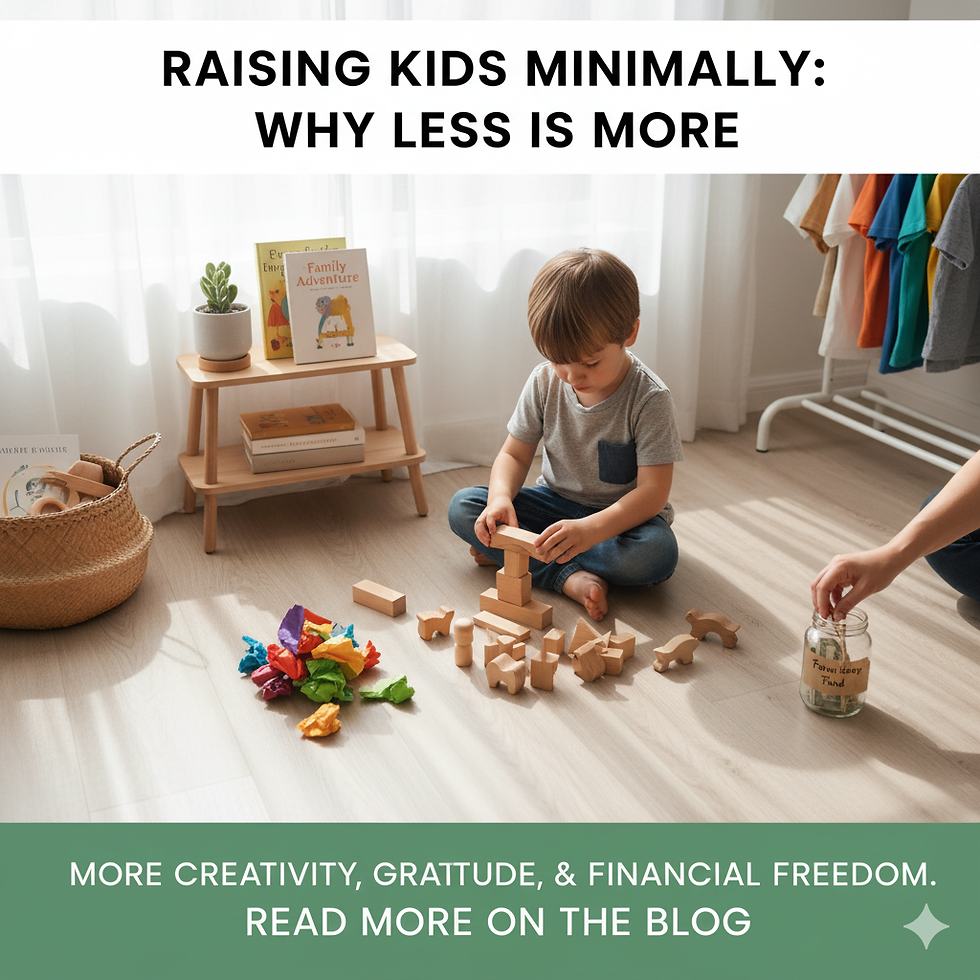
Toys and creativity: Fewer toys encourage deeper play, imagination, and problem-solving. Children invent new ways to use what they have instead of moving quickly from one thing to another.
Clothes and identity: A smaller wardrobe simplifies mornings, reduces decision fatigue, and saves money. Kids learn confidence comes from who they are, not what they wear.
Activities and time: Overscheduling leaves families drained. Minimalist parenting prioritizes downtime, play, and connection over constant busyness.
In reality, less stuff means more freedom.
The Financial Benefits of Raising Kids Minimally
The average American family spends thousands of dollars every year on toys, clothes, and gadgets that quickly lose value. Minimalist parenting changes that equation:
Toys: Buying fewer but higher-quality items saves money long-term. One $40 durable toy beats four $10 disposable ones.
Clothing: Capsule wardrobes, hand-me-downs, and secondhand finds reduce spending while keeping kids well-dressed.
Activities: Choosing a few meaningful extracurriculars avoids the financial drain of overscheduling.
Tech: Limiting devices and upgrades reduces expenses and helps kids engage with the real world.
Every dollar not spent on clutter can go toward savings, family experiences, or future goals — like college or travel.
Minimalism Creates Stronger Family Bonds
Minimalist households aren’t about restriction — they’re about connection. When you strip away excess, you make room for what matters:
Family dinners instead of fast-food rushes.
Board games instead of endless screen time.
Walks to the park instead of trips to the mall.
These small choices add up to lasting memories. Kids raised with fewer distractions often form deeper connections with parents and siblings.
Addressing the Fear of Deprivation
One of the biggest hesitations parents have about minimalism is the fear their children will feel deprived. But deprivation isn’t about quantity — it’s about neglect.
Minimalist kids are not neglected; they are prioritized. They may have fewer toys, but they gain more time, presence, and intentional love from their parents. They may have fewer clothes, but they wear what’s comfortable, practical, and aligned with their needs.
Deprivation comes from absence. Minimalism creates abundance by focusing on presence.
Practical First Steps for Families
If you’re curious about raising kids in a minimalist household, start small:
Toy Rotation: Keep only a handful of toys accessible and store the rest. Rotate monthly to keep play fresh without constant buying.
Capsule Wardrobe: Choose 10–15 versatile clothing items for each child per season.
Experience Gifts: Replace toy-heavy birthdays with experiences — museum trips, memberships, or family adventures.
Declutter Together: Involve kids in letting go of what they no longer use. It teaches gratitude and decision-making.
Simplify Activities: Prioritize one or two extracurriculars instead of overloading the calendar.
These small shifts reduce financial clutter and show kids that joy doesn’t come from excess.
Final Thoughts: Less Really Is More
Raising kids in a minimalist household isn’t about saying “no” — it’s about saying “yes” to what matters most. Yes to creativity. Yes to family time. Yes to financial peace.
From a minimalist finance perspective, every toy, outfit, or activity you don’t buy is an opportunity to invest in something lasting. Childhood doesn’t need constant consumerism to be fulfilling. In fact, it’s often the simplicity, space, and connection that kids remember most.
The truth is simple: kids don’t need more to thrive. They need enough. And in a minimalist household, enough is exactly what they get.


Comments