


Paying for Digital Dust? Why You Need to Audit Your Cloud Storage
- jennifercorkum
- Sep 17, 2025
- 3 min read
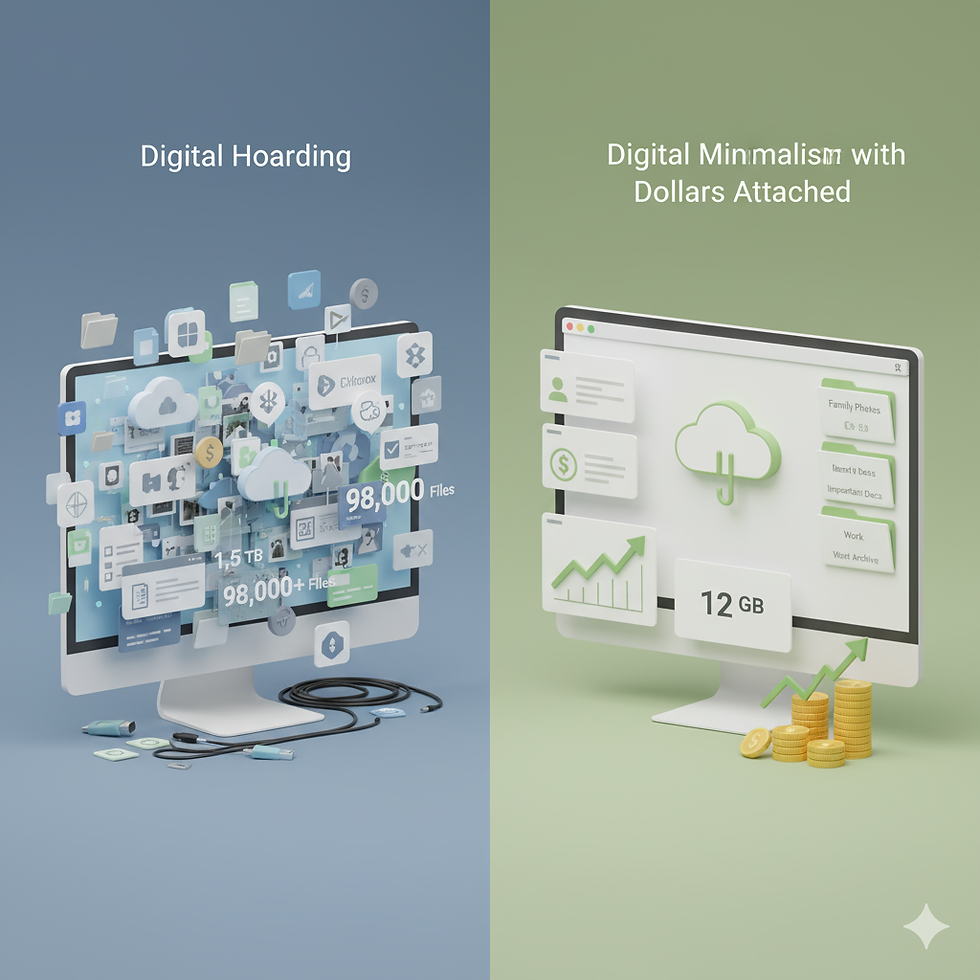
Digital Minimalism with Dollars Attached: The Hidden Cost of Data Hoarding
If you’ve ever opened your cloud storage and felt overwhelmed by old photos, duplicate files, and endless “just in case” folders, you’re not alone. In a world where storage is cheap and abundant, most of us fall into the trap of data hoarding.
But here’s the truth: digital clutter isn’t free. In fact, it can be surprisingly expensive — not just in money, but in time, focus, and even security. Minimalism reminds us that less is more, and the same applies to your digital life.
The Real Price of Unlimited Storage
It feels harmless to keep everything. After all, most cloud providers give you a few gigabytes for free. But as your files grow, so do your bills.
Cloud Storage Subscriptions: Google Drive, iCloud, Dropbox — they all start small but scale fast. $2.99 here, $9.99 there. Add family plans, backups, and suddenly you’re paying $120+ per year just to hold on to files you never open.
Hardware Costs: Data hoarding often spills into external drives. A $100 drive here, a $200 NAS system there. Over a decade, you’ve sunk thousands into keeping digital dust.
Time Costs: Digging through cluttered folders is like rummaging through a messy attic. Every wasted minute searching for the right document or photo is time you’ll never get back.
Security Risks: More files mean more potential leaks. Old tax returns, sensitive IDs, or financial records left forgotten in the cloud make you a target for hackers.
Minimalists ask: if these files don’t serve me now, why am I paying to keep them?
Why We Hoard Data
Understanding the why helps break the cycle.
Fear of Loss: “What if I need this someday?”
Nostalgia: Every blurry photo feels like a memory worth saving.
Effort Avoidance: Sorting through gigabytes of files feels overwhelming.
Cheap Monthly Costs: $2.99 doesn’t feel like much — until you multiply it by years.
The result? You outsource your decision-making to your storage provider, paying them to hold your indecision.
The Minimalist Alternative: Curate, Don’t Collect
Instead of keeping everything, minimalism encourages us to curate what we store. A smaller, intentional digital footprint saves money and reduces stress.
1. Audit Your Digital Closet
Just like a wardrobe cleanout, start with an audit:
Photos: Delete duplicates, blurry shots, and screenshots. Keep the meaningful ones.
Documents: Archive only the essentials (tax returns, legal papers).
Downloads: Clear old PDFs, random receipts, and “temp” files.
2. Set Boundaries
Minimalism thrives on limits. Try these:
One main cloud provider.
A maximum storage size (e.g., 200 GB total).
A “delete as you go” rule — remove useless files immediately.
3. Choose Cost-Effective Storage
Not all storage is equal. A minimalist setup might look like:
Free tier for everyday files (Google Drive, iCloud).
One reliable external backup drive for essentials (rotated annually).
No extra subscriptions unless you truly need them.
4. Automate Backups Intentionally
Don’t back up everything. Choose what deserves duplication: legal docs, work files, family photos. Leave the junk behind.
A Case Study: $600 Reclaimed
One client I worked with had upgraded to 2 TB of cloud storage at $9.99/month. They had four external drives, plus an annual backup subscription. After a minimalist audit:
75% of files were duplicates, memes, or unused downloads.
They downgraded to the 200 GB plan at $2.99/month.
Sold two external drives for $100.
Stopped paying for the extra backup subscription.
Annual savings: over $600. More importantly, they no longer wasted hours digging through cluttered folders.
The Emotional Cost of Clutter
Digital clutter may be invisible, but it weighs on us. Just knowing you have 50,000 unsorted photos or five drives of “stuff” creates background stress. Minimalism isn’t about living without memories — it’s about keeping the ones that matter, easy to find, and meaningful to revisit.
Minimalist Action Plan: Digital Declutter
Here’s a simple 3-step flow to reclaim your digital life:
Set a Timer: 20 minutes per week. Digital decluttering works best in small chunks.
Pick a Category: Photos, documents, downloads. Sort, delete, and move on.
Commit to Maintenance: Once you’ve slimmed down, set a recurring calendar reminder every 3–6 months to review.
Final Thoughts
Data hoarding is financial clutter disguised as convenience. The small monthly costs, the extra hardware, the wasted time — they add up. Minimalism offers the antidote: curate, simplify, and keep only what adds value.
In the end, the best storage plan isn’t unlimited — it’s intentional. Because the less you carry in your digital life, the freer (and wealthier) you’ll feel.


Comments