


Minimalist Wardrobes and Green Fashion: Why Less Clothing Means More Impact
- jennifercorkum
- Sep 24, 2025
- 3 min read
Fashion is fun. It’s creative, expressive, and constantly changing. But beneath the glossy marketing and runway trends lies a harsh reality: the fashion industry is one of the most polluting industries in the world. From water usage to landfill waste, fast fashion comes at a huge cost — both to your wallet and the planet.
Minimalism offers a better way. By embracing a minimalist wardrobe, you not only simplify your life and save money, but you also reduce your impact on the environment. Less clothing, when chosen intentionally, can create a much bigger impact than you realize.
The Environmental Cost of Fast Fashion
Fast fashion is built on mass production and rapid turnover. Retailers release new styles weekly to encourage constant buying. But the hidden costs are staggering:
Water consumption: It takes about 2,700 liters of water to make a single cotton t-shirt — enough for one person to drink for almost three years.
Chemical waste: Textile dyeing is one of the largest polluters of clean water globally.
Carbon footprint: The fashion industry is responsible for 10% of global carbon emissions.
Landfills: The U.S. discards about 11 million tons of textiles each year, most of it from cheap, disposable clothing.
Financially, the cycle isn’t much better. The average person buys more clothes than they wear, wastes money on items that fall apart quickly, and constantly feels the pressure to “refresh” their wardrobe.
The Minimalist Wardrobe Solution
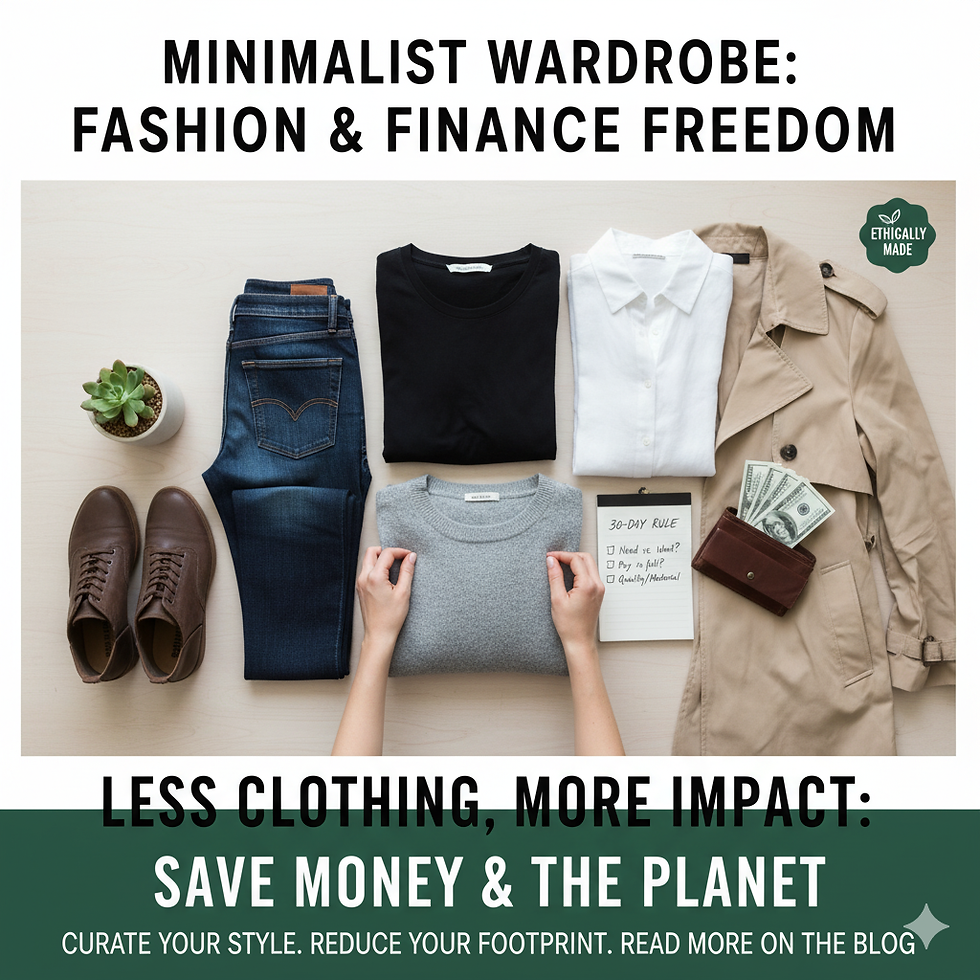
A minimalist wardrobe cuts through the noise. Instead of chasing endless new trends, you focus on fewer, higher-quality, versatile pieces that you actually wear and love.
Benefits of a Minimalist Wardrobe:
Financial freedom: Less shopping means lower costs and fewer impulse buys.
Eco-friendly impact: Fewer clothes purchased means less demand for mass production and less waste in landfills.
Mental clarity: Fewer choices mean less decision fatigue and more confidence in your style.
Longevity: Quality pieces last longer, reducing the need for replacements.
Minimalist wardrobes are not about deprivation — they’re about curation.
The Capsule Wardrobe Approach
One popular minimalist method is the capsule wardrobe: a small collection of timeless clothing items that can be mixed and matched.
30–40 pieces total, including tops, bottoms, shoes, and outerwear.
Neutral colors and versatile styles that work across multiple outfits.
Seasonal swaps (e.g., summer/winter clothes) to keep the wardrobe fresh without overbuying.
The capsule wardrobe is eco-friendly because it prioritizes longevity over novelty. Instead of buying 20 trendy tops, you invest in 5 high-quality ones that last for years.
Quality Over Quantity
Minimalists know that buying fewer items allows you to invest in better ones. A $100 pair of jeans that lasts five years is more affordable (and eco-friendly) than buying five $30 pairs that fall apart in a year.
Tips for Choosing Quality:
Look for natural fibers like organic cotton, linen, or wool.
Check stitching and construction.
Support ethical brands that prioritize sustainability.
Buy secondhand — it’s eco-friendly and often higher quality than fast fashion.
Financial and Environmental Wins
The shift from fast fashion to minimalist fashion has a double payoff:
For your wallet:
Fewer purchases = more savings.
Buying durable clothing reduces replacement costs.
Secondhand shopping saves up to 70% compared to retail.
For the environment:
Lower demand reduces water usage, chemical waste, and carbon emissions.
Buying less means fewer clothes ending up in landfills.
Reusing and repairing keeps items in circulation longer.
Minimalism proves that what’s good for your finances is also good for the planet.
Breaking Free From Fashion Consumerism
Fast fashion thrives on convincing you that last month’s clothes are outdated. Minimalism resists this cycle by:
Unsubscribing from marketing emails and fast-fashion ads.
Unfollowing influencers who push constant shopping.
Focusing on personal style instead of trends.
Practicing gratitude for what you already own.
Minimalism reframes fashion as self-expression, not consumption.
How to Start Your Minimalist Wardrobe
Declutter: Go through your closet and donate or resell what you don’t wear.
Identify staples: Keep versatile pieces you can mix and match.
Set limits: Define how many pieces you truly need (e.g., 35–40).
Shop intentionally: Buy only when you need to replace or upgrade, not out of impulse.
Repeat the cycle: Reassess seasonally to keep your wardrobe aligned with your lifestyle.
Final Thoughts: Less Clothing, More Impact
The fashion industry thrives on overconsumption, but minimalism proves that less really is more. By creating a minimalist wardrobe, you save money, reduce waste, and step away from the fast-fashion treadmill.
From a minimalist finance perspective, every shirt you don’t buy is money you keep — and every outfit you reuse is one less strain on the planet. Sustainable fashion doesn’t require buying eco-brands every season. Sometimes, the greenest wardrobe is simply the one you already own.
The truth is simple: less clothing means more impact. More freedom for your wallet, more clarity in your life, and more hope for the planet.


Comments