


Minimalist Gadgets — The Case for Owning Less, Using More
- jennifercorkum
- Oct 26, 2025
- 4 min read
Introduction: Drowning in Devices
Walk into the average household today and you’ll see a stack of gadgets: smartphones, tablets, laptops, e-readers, smartwatches, gaming consoles, headphones, speakers, and more. Each device promises convenience or entertainment, yet most overlap heavily in function.
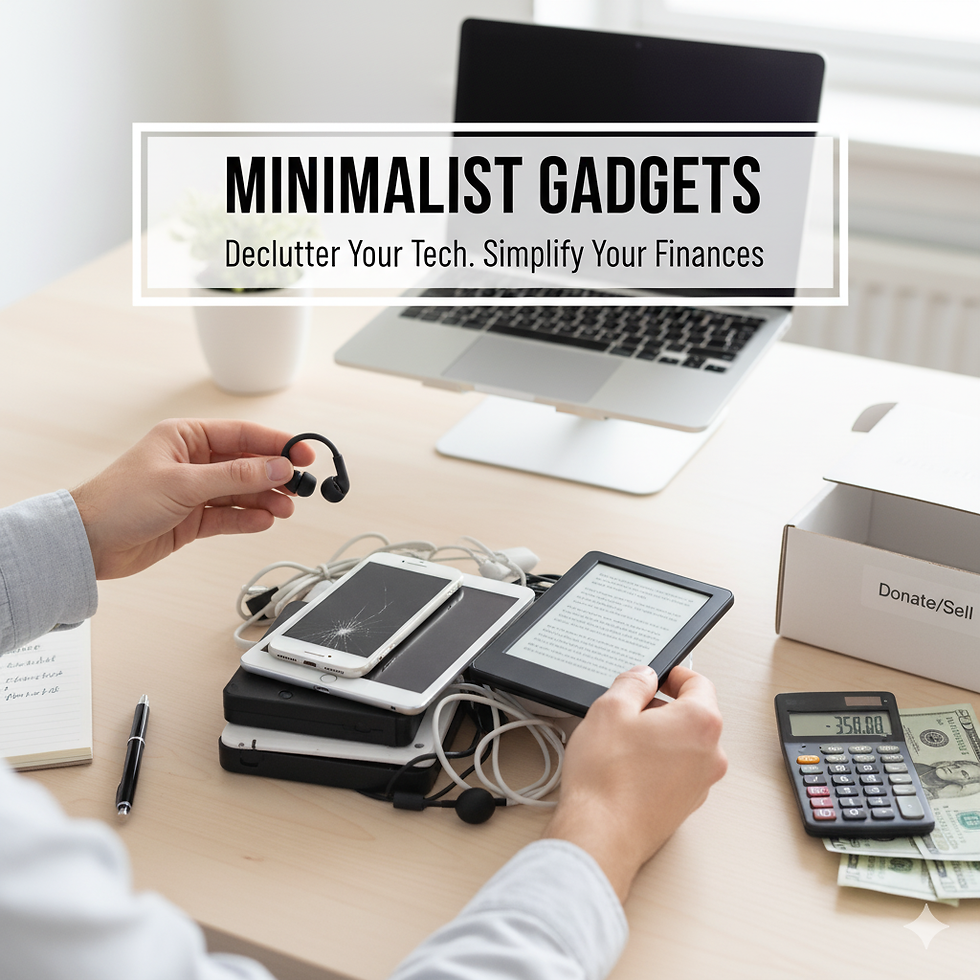
The result? Tech clutter — a drawer full of chargers, shelves filled with underused devices, and wallets drained by unnecessary upgrades. From a minimalist finance perspective, the smarter approach is not to own every gadget, but to own fewer, and use them more intentionally.
Minimalist gadgets are not about deprivation. They’re about maximizing value, reducing waste, and freeing up money for what truly matters.
The Gadget Obsession: Why We Chase “The Latest and Greatest”
Why do we keep buying new gadgets when our old ones work just fine? Marketing and consumer psychology play a big role:
Fear of Missing Out (FOMO): Companies convince us that skipping the newest model means falling behind.
Lifestyle signaling: Gadgets become status symbols. Owning the latest phone feels like proof of success.
Convenience trap: Each new gadget promises to “make life easier” — but more devices often mean more complexity.
Minimalism asks us to pause and reflect. Instead of chasing novelty, we should ask: Is this adding real value to my life, or is it just adding clutter?
Minimalist Finance Lens: Cost per Use
One of the most powerful tools in the minimalist finance toolkit is the cost-per-use formula:
Cost per use = Total price ÷ Number of uses
For example:
A $1,200 smartphone used 3 hours daily for 4 years costs less than $0.30 per hour of use — a bargain.
A $500 tablet used once a week for reading costs nearly $10 per use — not so great.
Minimalism shifts the focus from “Can I afford this?” to “Will I actually use this enough to justify the cost?”
The Case for Consolidation
Most of us don’t need separate devices for every function. A well-chosen gadget can often replace several others:
Smartphones now serve as cameras, e-readers, GPS units, music players, and even wallets.
Laptops can replace tablets for most tasks — browsing, reading, streaming.
E-readers may be redundant if you read casually on your phone or tablet.
By consolidating gadgets, you save money, reduce clutter, and simplify your digital life.
Case Study: The iPad as a Laptop Replacement
One of the most common debates in tech minimalism is whether a tablet can replace a laptop.
The consumer trap: Many people buy an iPad “for productivity,” but still keep their laptop. The iPad becomes a $500+ streaming device.
The minimalist approach: If the iPad truly replaces your laptop, then it’s a smart investment. But if it adds to your gadget pile, it’s wasted money.
The lesson? Minimalism isn’t about banning gadgets — it’s about ensuring each device earns its keep.
The Real Cost of Owning Too Many Gadgets
Gadgets don’t just cost money upfront. They bring hidden costs too:
Accessories: Cases, chargers, screen protectors, mounts.
Software: Paid apps, subscriptions tied to the device.
Upgrades: Once you enter a product ecosystem, you feel pressure to keep upgrading.
Time cost: Managing updates, syncing data, troubleshooting glitches.
The more gadgets you own, the more financial and mental energy you expend maintaining them. Minimalism flips the script: fewer devices, fewer costs, fewer headaches.
Practical Rules for Buying Minimalist Gadgets
To avoid falling into the tech clutter trap, use these minimalist finance rules when considering a purchase:
One-in, one-out
If you buy a new device, sell or donate the old one. Don’t let gadgets accumulate.
Replace, don’t duplicate
Only buy new tech if it will replace something you already own — not just add another layer.
Use it or lose it
If you haven’t used a gadget in 90 days, it’s probably not essential. Sell it and free up cash.
Delay gratification
Wait 30 days before buying. If you still feel the need, it’s more likely a genuine purchase.
Calculate cost per use
Be honest about how often you’ll actually use the device.
The Psychological Freedom of Fewer Gadgets
Minimalism isn’t just about saving money — it’s about saving mental energy. Every gadget you own requires attention: charging, updating, protecting, troubleshooting.
By owning fewer devices, you gain:
Less decision fatigue — no need to choose between tablet, laptop, and phone.
More focus — your tools serve you, instead of distracting you.
Lighter living — fewer cords, chargers, and accessories cluttering your home.
The financial savings are tangible, but the peace of mind is priceless.
Minimalist Alternatives to Gadget Overload
Instead of buying more devices, consider alternatives:
Maximize the device you already own: Most people only use a fraction of their phone or laptop’s features. Learn to unlock its full potential.
Borrow before buying: Need a tablet for travel? Borrow one instead of purchasing.
Invest in quality, not quantity: One well-made laptop that lasts 7 years beats replacing cheap ones every 2–3 years.
Repair, don’t replace: Fixing a cracked screen or upgrading memory is often cheaper than buying new.
Conclusion: The Best Device Is the One You Already Own
The minimalist finance philosophy reminds us that more gadgets rarely equal more happiness. Instead, it’s about owning less, using more, and making intentional purchases that align with your real needs.
Technology should serve us, not enslave us. When we focus on consolidating devices, calculating cost per use, and resisting consumerist hype, we reclaim both our wallets and our peace of mind.
Minimalist gadgets don’t mean no gadgets — they mean the right gadgets, used well. And often, the smartest choice is to simply appreciate and maximize what’s already in your hand.


Comments