


Minimalism & Fall Holidays: Finding Joy Without Overspending
- jennifercorkum
- Oct 13, 2025
- 4 min read
Fall has a way of sweeping us into a whirlwind of celebrations — pumpkin patches, Thanksgiving dinners, cozy gatherings, and the endless lead-up to the winter holidays. While it’s a season rich in meaning, it’s also a time when spending can quietly spiral out of control.
Retailers count on it. The warm color palettes, seasonal scents, and “limited-time” events all trigger emotional spending. Before you know it, your calendar is overbooked, your storage is overflowing, and your credit card bill has a hint of holiday regret.
But what if fall could feel calm, joyful, and financially balanced?Minimalism offers a path to reclaiming the season — focusing on what truly matters, and letting go of the noise.
Here’s how to find joy in fall holidays through a minimalist finance lens, without overspending or overcomplicating.
🍁 The Cozy Aesthetic Trap
Fall is the poster child for seasonal marketing. The moment the weather shifts, the world fills with:
Pumpkin-spiced everything
Matching family outfits for apple-picking photos
Endless “must-have” décor
Specialty foods, candles, and novelty kitchenware
These aren’t inherently bad — but when they become the standard, not the treat, they turn seasonal joy into seasonal spending.
The “cozy aesthetic” is easy to buy but harder to maintain. Trends shift every year, and what looked perfect on Instagram last fall suddenly feels dated. The result? A constant cycle of buying, storing, donating, and replacing.
Minimalism breaks this cycle by reminding us:👉 You don’t have to buy the season to experience it.
🧠 Emotional Spending Around Holidays
Holidays trigger emotions — nostalgia, excitement, belonging. Marketers know this. They build campaigns that link buying with meaning, so we subconsciously equate spending with creating memories.
A few common emotional spending triggers during fall:
Guilt: Feeling like you need to “go big” to make holidays special for kids or guests.
Comparison: Seeing curated fall tablescapes online and wanting to match them.
Tradition pressure: Buying things because “we always do this,” not because they add value now.
FOMO: Limited-time products make you feel like you’ll miss out if you don’t buy.
Minimalism invites you to pause between the emotion and the purchase. Ask:
Does this align with my values and budget?
Is this adding lasting joy or momentary satisfaction?
Could I achieve the same feeling more simply?
Often, the answer leads to spending less — without feeling deprived.
🥧 Redefining Celebration: Connection Over Consumption
When you strip away the marketing, fall holidays have always been about community, gratitude, and shared experiences — not store aisles. Minimalism encourages us to recenter celebrations on connection rather than consumption.
Simple, Meaningful Ideas:
Potluck Gatherings: Instead of hosting elaborate dinners alone, share the cooking. It reduces cost, stress, and food waste — and guests love contributing.
Nature Walk Traditions: A family walk through fall foliage costs nothing and creates lasting memories.
Story or Gratitude Nights: Gather with candles and warm drinks to share family stories or what you’re thankful for.
DIY Together: Make simple decorations or bake seasonal treats as a group activity rather than buying pre-made versions.
These activities don’t require large budgets, but they often end up being the most cherished moments of the season.
🏡 Minimalist Thanksgiving & Fall Gatherings
Thanksgiving, Friendsgiving, and other fall events can quickly balloon into logistical and financial stress. Minimalism doesn’t mean canceling — it means streamlining so the focus returns to people, not perfection.
Practical Tips for a Simpler, Cheaper Gathering
Set a clear budget early — for food, décor, and extras. Work backward from that number.
Choose a few standout dishes instead of making everything. (Quality > quantity.)
Use real dishes and cloth napkins you already own rather than buying themed paper products.
Reuse décor — pumpkins, candles, and neutral table linens work beautifully year after year.
Borrow instead of buy — if you need extra chairs, dishes, or serving ware, ask friends or neighbors.
The goal is to host joyfully, not perfectly. Guests remember how they felt more than whether your centerpiece matched your napkin rings.
💵 Budgeting Intentionally for Seasonal Fun
One of the most empowering minimalist finance habits is pre-planning your seasonal spending. Instead of reacting to every sale, you decide in advance how much you’ll allocate to fall activities — and stick to it.
A simple seasonal budget might look like:
Decorations: $0–$30 (reuse + 1 new timeless item if needed)
Events & gatherings: $50–$100 (shared potlucks help here)
Food treats: $25–$50 (think quality over novelty overload)
Experiences: $50 (pumpkin patch, hayride, or museum outing)
This kind of budgeting doesn’t limit joy — it channels it. When you decide intentionally, each purchase has more meaning, and you’re far less likely to feel financial regret in November.
🌱 Gratitude as the Ultimate Minimalist Practice
Minimalism isn’t about what’s missing — it’s about appreciating what’s already here. And fall is the perfect time to lean into gratitude as a guiding practice.
Gratitude shifts the focus from acquiring more to noticing more:
The crunch of leaves underfoot.
The smell of something baking in the oven.
A warm blanket and a good book on a rainy evening.
A shared laugh over pumpkin pie.
These are the experiences money can’t buy — and they’re often drowned out when we fill the season with unnecessary spending and commitments.
A simple gratitude ritual — like jotting down one thing each night you appreciated about the day — can make the entire season feel fuller, without buying a single extra thing.
📝 A Minimalist Fall Holiday Checklist
Here’s a quick guide to simplify and save this season:
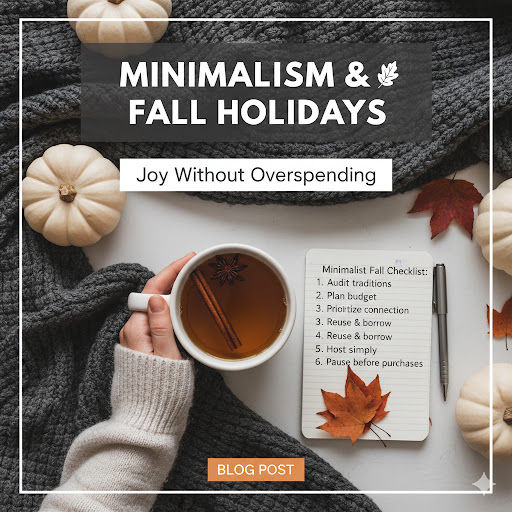
✅ Audit your fall traditions — keep what brings joy, let go of the rest.✅ Plan your budget in advance — and track spending weekly.✅ Prioritize connection — choose shared experiences over shopping trips.✅ Reuse and borrow — don’t default to buying new décor or supplies.✅ Host simply — potlucks, cozy nights, and gratitude beat extravagance.✅ Pause before purchases — align spending with your values.
🍂 Key Takeaways
Fall holidays often encourage emotional, impulsive spending, but minimalism helps break that pattern.
Connection and gratitude are the heart of the season — not décor trends or endless shopping.
Simple gatherings, clear budgets, and mindful traditions create more joy with less stress.
A minimalist fall doesn’t look sparse — it feels calm, meaningful, and financially free.
By embracing minimalism this season, you’ll create holidays that nourish, not drain — both your wallet and your well-being.


Comments