


Long-Term Minimalist Home Investments That Pay Off
- jennifercorkum
- Sep 25, 2025
- 3 min read
When it comes to upgrading your home, not every choice is about quick fixes or small swaps. Some of the most valuable upgrades require a little more upfront investment — but they pay off for years, even decades, in savings and peace of mind.
From a minimalist finance perspective, these long-term home investments aren’t about luxury or aesthetics. They’re about durability, efficiency, and functionality. Instead of chasing short-term trends, you choose upgrades that save money over time while reducing clutter and stress. The goal is simple: buy once, buy well, and enjoy the savings for years to come.
Why Long-Term Investments Matter
Quick, inexpensive upgrades are great for immediate savings. But homes also require deeper improvements over time. The risk comes when homeowners sink money into projects that look good but don’t deliver value.
Cosmetic remodels: A new backsplash or trendy paint color may boost appearance, but rarely save money long-term.
Trendy appliances: High-tech gadgets may look exciting but often break quickly or add complexity.
Cheap fixes: Low-cost furniture or flooring that wears out quickly ends up costing more in replacements.
Minimalism flips this thinking: invest in fewer, higher-quality upgrades that provide long-term savings — financially and functionally.
Minimalist Home Investments That Save Money
1. Durable Flooring
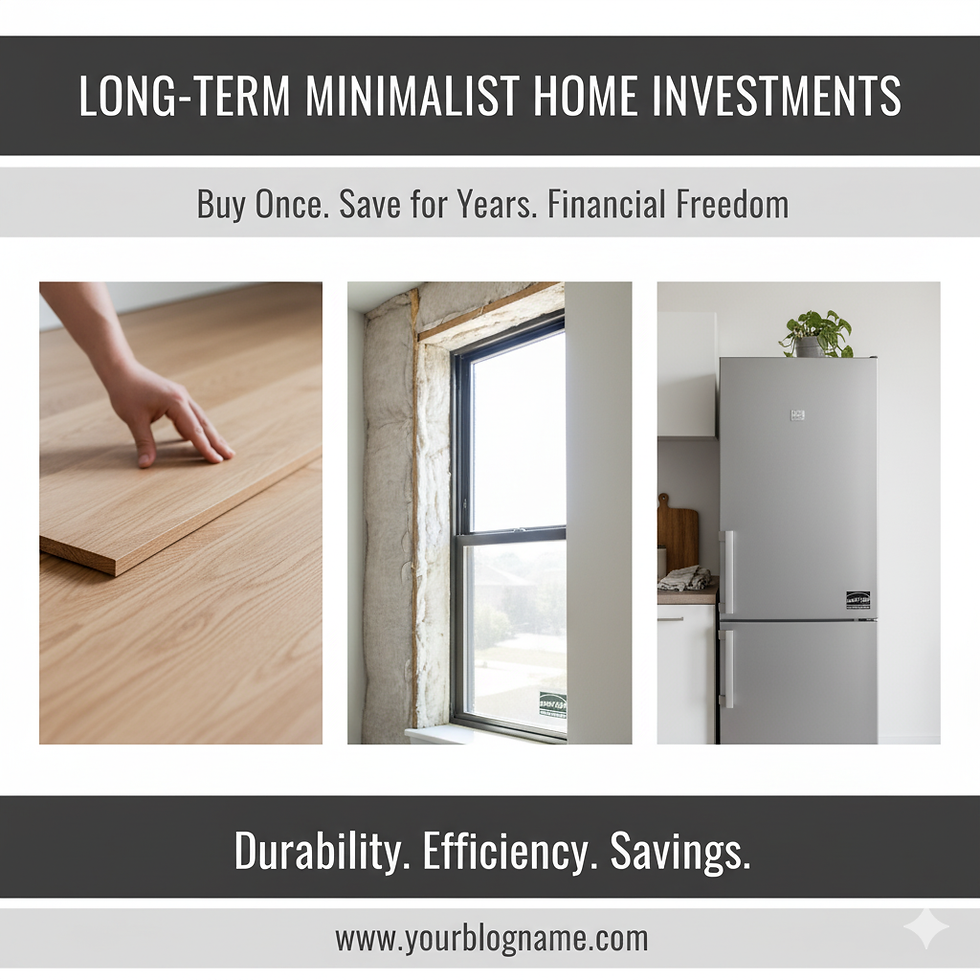
Instead of opting for cheap carpet or trendy laminate, invest in durable flooring like hardwood, tile, or high-quality vinyl.
Savings: Lasts decades with minimal replacement costs.
Minimalist angle: One upgrade that reduces waste and maintenance over time.
2. Energy-Efficient Windows
High-quality windows with proper insulation reduce heating and cooling costs year-round.
Savings: Up to 25–30% lower energy bills.
Minimalist angle: Fewer drafts, fewer repairs, more comfort.
3. Reliable Major Appliances
Fridges, washers, and ovens are daily-use essentials. Instead of replacing them every few years, invest in energy-efficient, durable models.
Savings: Hundreds per year in lower utility bills, plus fewer repair/replacement costs.
Minimalist angle: Buy once, buy well — fewer breakdowns, less clutter.
4. Quality Mattress and Bed Frame
It might not seem like a financial investment, but poor-quality sleep leads to health issues, lower productivity, and even higher medical costs. A durable, supportive mattress can last 8–12 years and improve well-being.
Savings: Reduced health-related expenses, fewer replacements.
Minimalist angle: One piece of furniture that adds tremendous daily value.
5. Proper Insulation
Adding or upgrading attic, wall, or floor insulation significantly lowers utility bills.
Savings: Often recoups its cost within a few years.
Minimalist angle: Invisible, effective, and maintenance-free.
6. Roof and Structural Repairs
It’s tempting to put these off, but investing in a durable roof or fixing foundation issues prevents catastrophic costs later.
Savings: Avoids tens of thousands in water damage or structural failure.
Minimalist angle: Prevention is simpler — and cheaper — than constant fixes.
The Financial Math of Long-Term Upgrades
While upfront costs may feel heavy, the savings over time are undeniable:
Energy-efficient windows: $200–$500/year saved on utilities.
Proper insulation: 10–20% cut on heating/cooling bills.
Reliable appliances: $300–$500/year saved compared to older, inefficient models.
Durable flooring: One-time cost vs. multiple replacements of cheap carpet every 5–7 years.
Over a decade, these upgrades can add up to tens of thousands of dollars in savings — all while reducing stress and maintenance.
Minimalism and Long-Term Thinking
Minimalism is about intentional living, and that extends to how we upgrade our homes. Instead of thinking short-term — buying the cheapest option or chasing trends — minimalists take the long view:
Quality over quantity: Fewer items, but better ones.
Durability over novelty: Upgrades that last, not ones that look good temporarily.
Function over appearance: Investments that make life easier and cheaper, not just prettier.
This mindset reduces financial stress while creating a home that truly supports your lifestyle.
How to Prioritize Long-Term Home Investments
Audit Your Home: Identify areas draining the most money (energy bills, frequent repairs, cheap furniture).
Calculate ROI: Compare the cost of an upgrade with potential annual savings.
Save Intentionally: Instead of financing big upgrades, create sinking funds to pay in cash.
Start with Essentials: Focus first on insulation, appliances, or structural repairs before cosmetic changes.
Think Decades, Not Months: Ask, Will this still provide value 10 years from now?
Final Thoughts: Buy Once, Save for Years
From a minimalist finance perspective, the smartest home upgrades aren’t flashy remodels — they’re the durable, intentional investments that lower costs, reduce waste, and simplify life for years to come.
The truth is simple: a home doesn’t need constant cosmetic upgrades to feel complete. By focusing on a few long-term, minimalist investments, you can create a space that saves money, reduces stress, and supports your financial freedom for the long haul.
In the end, less frequent upgrades and fewer, higher-quality purchases lead to more savings, more peace, and more freedom. Minimalism proves once again: less is not only more — it’s smarter.


Comments