


Living With Less on the Road: The Real Financial and Lifestyle Benefits of Car-Free and Car-Light Living
- jennifercorkum
- Dec 3, 2025
- 5 min read
If you look at modern life in most countries, you’ll notice a pattern: the car is the centerpiece of daily existence. Commuting, shopping, errands, school drop-offs, weekend trips — it all centers around the vehicle in the driveway. Cars have become such a normalized part of the western lifestyle that most people can’t imagine living without one, let alone questioning whether the financial cost matches the value they receive.
But from a minimalist finance perspective, the car is one of the most critical places to pause and ask:“Is this simplifying my life, or complicating it?”
Car-free and car-light living are not fringe ideas. They are powerful strategies for reducing lifestyle costs, increasing financial flexibility, and improving quality of life — even if you don’t live in a major city or perfectly walkable neighborhood. In fact, adopting a car-light mindset is one of the most overlooked ways to accelerate financial independence without feeling deprived.
This post explores the financial, psychological, and lifestyle shifts that happen when you break free from the automatic assumption that car ownership is a requirement.
1. The High Price of “Normal”: Understanding the Full Financial Burden of Cars
Cars are often framed as a necessity, but we talk very little about their true financial weight. A car isn’t one purchase — it’s a chain of recurring costs that follows you for years, and sometimes decades.
The Annual Financial Burden of a Car Includes:
Loan payments
Insurance
Fuel
Repairs and maintenance
Tires
Registration and taxes
Parking
Tolls
Depreciation
Car washes, cleaning, detailing
Unexpected emergencies
AAA estimates the annual cost of owning a new car exceeds $12,000. Even a used car typically costs $6,000–$8,000 per year when adding fuel, insurance, and repairs.
Now multiply this number by two for households with multiple cars.Suddenly, transportation becomes one of the largest household expenses, often surpassing:
groceries
retirement contributions
savings goals
student loan payments
From a minimalist finance perspective, this is a huge opportunity. Cutting car dependence even slightly creates massive room in your budget without sacrificing comfort or joy.
2. Minimalism and Mobility: Redefining the “Need” for a Car
Minimalist living means questioning defaults. And few defaults are more culturally ingrained than car ownership. People assume they need a car because:
“Everyone has one.”
“My parents always drove.”
“Public transit is inconvenient.”
"What if something comes up?"
But when minimalists examine their transportation habits closely, they often discover:
They don’t drive as much as they think.
Most trips are short and could be walked or biked.
A second car isn’t truly necessary.
Occasional car use can be replaced with rideshare or renting.
They’re paying thousands to “save time,” yet lose hours to traffic.
Minimalist finance encourages an honest assessment:Is car ownership truly improving your life enough to justify its cost?
If the answer is no, you’re a strong candidate for car-free or car-light living.
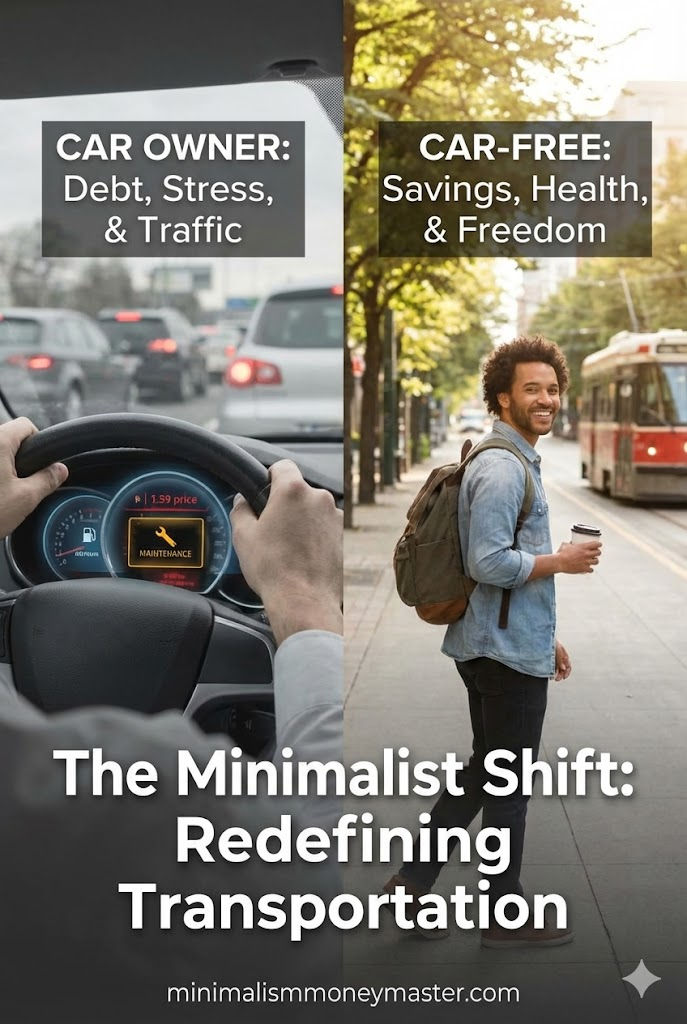
3. The Lifestyle Benefits Are Bigger Than the Financial Ones
The financial advantages of driving less are impressive, but the lifestyle improvements can be even more profound.
Car-Light or Car-Free Living Often Results In:
More daily physical activity
Better mental health
Lower stress levels
More time outdoors
A calmer daily pace
Deeper connection with your neighborhood
Fewer errands
Less rush and scheduling pressure
A surprising sense of freedom
Many people don’t realize how much mental energy their cars consume:
keeping up with maintenance
comparing gas prices
worrying about repairs
renewing insurance
dealing with accidents
finding parking
budgeting for repairs
A car-light lifestyle removes dozens of small stressors that silently drain your peace.
Minimalists don’t just remove possessions — they remove problems. And cars often come with more problems than benefits.
4. The Emotional Weight of Car Ownership: Anxiety, Obligation, and Identity
Cars carry emotional baggage. They’re symbols:
of adulthood
of success
of competence
of independence
of personal image
But this symbolism often overshadows the truth:Cars also create emotional stress.
Owning a car can mean:
anxiety over breakdowns
guilt over expensive repairs
shame about driving an old car
pressure to upgrade
frustration over rising fuel costs
worry about accidents
fear of unexpected expenses
When people go car-free or car-light, they often describe the shift as:
“relieving”
“grounding”
“calming”
“like a weight off my chest”
Minimalist finance prioritizes mental freedom as much as financial freedom. Driving less supports both.
5. Car-Light Living: The Most Practical Minimalist Strategy for Most People
You don’t have to give up your car entirely to experience the benefits of less driving. Car-light living is a powerful middle path.
Car-light living means:
sharing one car in a two-car household
using alternative transportation for short trips
reserving car use for specific weekly or monthly needs
working from home part-time
biking or walking for errands
intentionally planning errands to reduce mileage
This approach can cut transportation costs by 40–60%, without forcing major lifestyle sacrifices.
Common Financial Gains in Car-Light Households:
no second car payment
insurance costs cut in half
lower maintenance
fewer repairs
lower fuel costs
reduced parking expenses
Millions of households maintain two cars simply out of habit — not necessity. A minimalist review often reveals that one car can easily support the entire household with a few adjustments.
6. Car-Free Living: A Hidden Pathway to Accelerated Financial Independence
For those in transit-friendly or walkable areas, going car-free can be financially transformative.
Car-Free Living Can Save $8,000–$12,000 Per Year.
That’s:
$700–$1,000 per month
enough to max out a Roth IRA
enough to build a 6-month emergency fund in one year
enough to reach FI 5–10 years earlier
From a minimalist finance standpoint, few lifestyle choices offer such an immediate and dramatic shift in financial trajectory.
Even if you only go car-free temporarily, such as:
during a remote work period
while living in a walkable neighborhood
while in a transitional life stage
…the financial gains compound for years.
7. Transportation as a Service, Not an Asset
One of the biggest mindset shifts in minimalist finance is reframing transportation from ownership to access.
Today, there are abundant alternatives:
public transit
bikes and e-bikes
scooters
rideshare
car-sharing services (Zipcar, Turo)
once-a-month rental cars
employer shuttles
grocery delivery
remote work and virtual meetings
The need for personal car ownership has decreased dramatically, and yet society still treats it as a default.
Minimalists take advantage of modern access instead of clinging to outdated norms.
8. The Environmental Bonus: A Side Effect Minimalists Appreciate
Saving the environment may not be your main motivation, but the lifestyle benefits align naturally with minimalist values:
reduced carbon footprint
lower noise pollution
fewer parking lots
less resource consumption
cleaner air
safer neighborhoods
Minimalist finance focuses on reducing waste — financial waste, time waste, emotional waste. Car-free or car-light living simply extends this principle environmentally.
9. Small Changes Create Big Impact: How to Begin Living Car-Light Today
You don’t need to make a sweeping change tomorrow. Minimalist transitions work best when gradual.
Start small:
replace one weekly errand with a bike trip
walk to the local coffee shop or library
take public transit once a week
combine errands into a single trip
try going one full weekend per month without driving
experiment with a month of car-sharing instead of owning
These small shifts reveal how much transportation freedom you actually have — and how little of your routine truly requires a car.
Minimalism isn’t about doing without.It’s about discovering how much life gives you when you remove what you don’t need.
Final Thoughts: Fewer Cars, More Freedom
Car-free and car-light living challenge one of society’s deepest assumptions: that mobility requires ownership. But when you strip away that assumption, a new world opens up — one with more money in your pocket, more calm in your day, and more connection to the life around you.
Minimalist finance teaches that freedom comes not from having more, but from needing less.Cars, while useful, are often far more expensive and burdensome than we realize.
Going car-free or car-light isn’t about sacrificing convenience.It’s about reclaiming your:
financial power
mental clarity
physical health
time
freedom
Less driving can lead to more living — and that’s the minimalist way.


Comments