


Live Light, Waste Less: The Powerful Connection Between Minimalism and Zero-Waste Living
- jennifercorkum
- Nov 15, 2025
- 5 min read
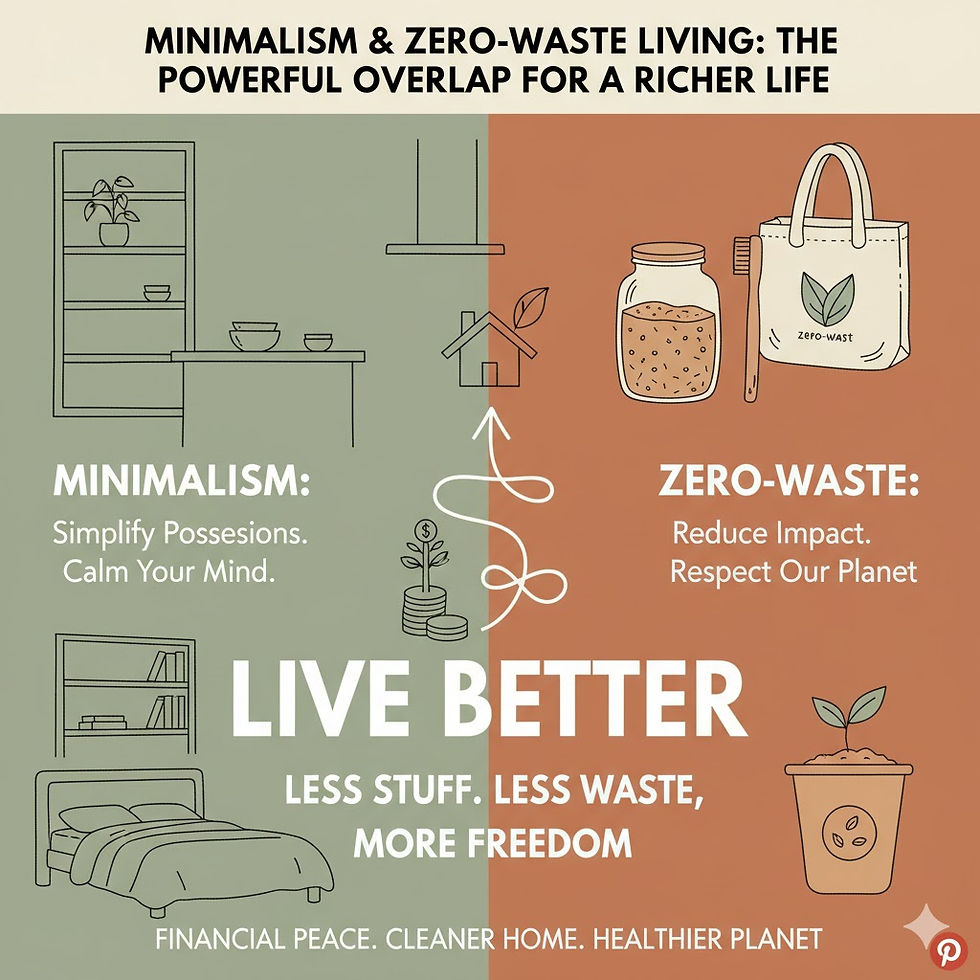
Minimalism and zero-waste living are often presented as two separate lifestyle movements—one focused on simplifying possessions and routines, the other focused on reducing environmental impact. But in practice, they share a deep, natural overlap. At their core, both philosophies challenge the culture of excess, question the constant pressure to buy more, and promote mindful choices that support long-term wellbeing.
For those who adopt minimalist finance as a guiding framework, the synergy between minimalism and zero-waste habits becomes even clearer: owning less reduces waste, wasting less reduces spending, and the combination frees up money, time, energy, and mental clarity.
This post explores how these two lifestyles reinforce each other—and how embracing both can help you simplify your home, strengthen your financial health, and reduce your environmental impact with ease.
1. Both Lifestyles Begin With Saying “No” to Overconsumption
Minimalism asks you to question why you buy something.Zero-waste asks you to question what happens after you buy it.
Both philosophies push back against:
impulse buying
fast fashion
disposable culture
the pressure to accumulate
overstuffed homes and overflowing trash bins
Minimalism reduces the intake of new items.Zero-waste reduces the output of discarded items.Together, they interrupt the cycle of mindless consumption.
Minimalist Finance Insight:
When you reduce both the number of purchases and the waste created by those purchases, you naturally protect your wallet. The fewer things you bring in, the less money you spend—and the more intentional you become about what stays in your life.
2. Minimalist Living Makes Zero-Waste Habits Easier to Maintain
A cluttered home makes zero-waste actions harder. You can’t compost, recycle, or reuse effectively when your space is overwhelmed with gadgets, products, and excess inventory.
Minimalism clears the path.
A minimalist kitchen, for example:
makes it easier to see what you already have
reduces food waste
prevents duplicate purchases
gives you the space to store reusable containers
simplifies meal prep and cooking
A minimalist bathroom eliminates:
dozens of half-used products
unnecessary packaging
complicated routines
the mental load of “trying everything”
A minimalist wardrobe leads to:
longer clothing life cycles
reduced laundry
fewer textile items ending up in landfills
Minimalism creates the environment needed for zero-waste living to thrive.
Minimalist Finance Insight:
A clutter-free home prevents the “I lost it, so I bought another” purchases that quietly drain your budget.
3. Zero-Waste Habits Reinforce Minimalist Financial Choices
Zero-waste living naturally supports minimalist finance because it shifts your spending toward durable, long-lasting solutions.
Common zero-waste habits include:
repairing instead of replacing
buying secondhand
choosing reusable over disposable
opting for multi-purpose products
reducing packaging waste through bulk buying
borrowing tools instead of owning everything
These habits reduce ongoing costs significantly.Instead of rebuying single-use items every week, you invest once in a reusable item that lasts for years.
Consider these examples:
cloth napkins replace thousands of paper ones
a stainless-steel bottle eliminates plastic purchases
a safety razor outlasts disposable blades
beeswax wraps replace rolls of plastic wrap
durable containers cut down on endless zip bags
Minimalist Finance Insight:
Zero-waste choices tend to be “buy once” investments—reducing long-term spending and aligning perfectly with minimalist budgeting.
4. Both Approaches Encourage Long-Term Thinking Over Short-Term Convenience
Minimalism emphasizes clarity, intention, and calm.Zero-waste emphasizes sustainability and resource stewardship.
Together, they push you out of short-term thinking and into thoughtful, long-term decision-making.
This shows up in:
buying furniture that lasts decades
choosing timeless wardrobe staples
repairing appliances before replacing them
purchasing higher-quality goods less frequently
becoming conscious of maintenance and care
planning meals to eliminate food waste
When you combine both philosophies, you start to see every purchase as a long-term relationship instead of a temporary convenience.
Minimalist Finance Insight:
Long-term thinking is one of the most financially powerful habits you can build. Every decision becomes more intentional and less reactive to trends or emotions.
5. Minimalist Purchasing Reduces Packaging and Waste Automatically
Minimalism says: Buy less.Zero-waste says: Waste less.
When you limit what enters your home, you automatically reduce:
cardboard boxes
plastic packaging
paper receipts
single-use wrappers
shipping materials
impulse buys that become clutter
Minimalist shopping habits eliminate the source of most household waste.
And the reverse is also true:Zero-waste habits encourage you to shop with intention—which reduces clutter, which reinforces minimalism.
Minimalist Finance Insight:
Less purchasing means more savings.Less waste means fewer repeat expenses.The two reinforce each other seamlessly.
6. Secondhand Works Beautifully for Both Minimalism and Zero-Waste
It’s a misconception that minimalists only buy new, high-end items. In reality, secondhand shopping aligns perfectly with minimalist and zero-waste values.
Buying secondhand allows you to:
pay significantly less
avoid the environmental cost of new manufacturing
skip the packaging waste
access higher-quality items at a discount
reduce textile and product waste
break the fast-fashion cycle
Minimalists appreciate intentionality.Zero-waste advocates appreciate reuse.Secondhand delivers both.
Minimalist Finance Insight:
Secondhand is often the smartest financial move—quality for a fraction of the price.
7. Repair Culture Unites Both Movements
Minimalism encourages owning fewer—but better—items.Zero-waste encourages maintaining and repairing the items you own.
This overlap promotes:
learning basic repair skills
valuing craftsmanship
making clothes last longer
maintaining tools and appliances
repurposing items creatively
choosing fixable items over disposable ones
The result is a lifestyle that respects resources—financial, environmental, and emotional.
Minimalist Finance Insight:
Repairing instead of replacing can save hundreds or thousands each year.
8. Both Lifestyles Reduce Stress, Decision Fatigue, and Mental Clutter
Decluttering your home leads to mental clarity.Reducing waste leads to calmer routines.Purchasing intentionally leads to financial peace.
Together, these habits reduce:
decision fatigue
guilt around overspending
the pressure to keep up with trends
the stress of managing too many belongings
overwhelm around cleaning and organizing
You end up with:
a calmer home
a cleaner environment
a stronger bank account
a clearer mind
a slower, more intentional pace of life
Minimalist Finance Insight:
When your mind is calm, you make better financial choices—and avoid impulse spending.
9. Combining Minimalism and Zero-Waste Leads to a More Aligned Life
Minimalism simplifies your environment.Zero-waste simplifies your habits.Minimalist finance simplifies your money.
Blending all three leads to:
less mental clutter
fewer regrets
reduced expenses
less dependence on consumer culture
more alignment between values and actions
a lifestyle that improves both your finances and the planet
You don’t need perfection.You simply need intention.
Small steps compound into meaningful change.
Final Thoughts: Spend Less, Waste Less, Live Better
Minimalism and zero-waste living are not identical, but their overlap is powerful. One reduces the amount you bring into your life; the other reduces the amount you throw away. Together, they create a cycle of mindful consumption that strengthens your finances, cleans your home, and supports the planet.
You save money because you buy less.You waste less because you use what you have.You live better because everything in your home has purpose.
The path is simple:Less stuff.Less waste.More intention.
And with each step, you build a lifestyle that’s financially confident, environmentally responsible, and deeply aligned with what matters most.


Comments