


Less Stuff, Less Waste: How Minimalism Naturally Supports Zero-Waste Living
- jennifercorkum
- Nov 15, 2025
- 8 min read
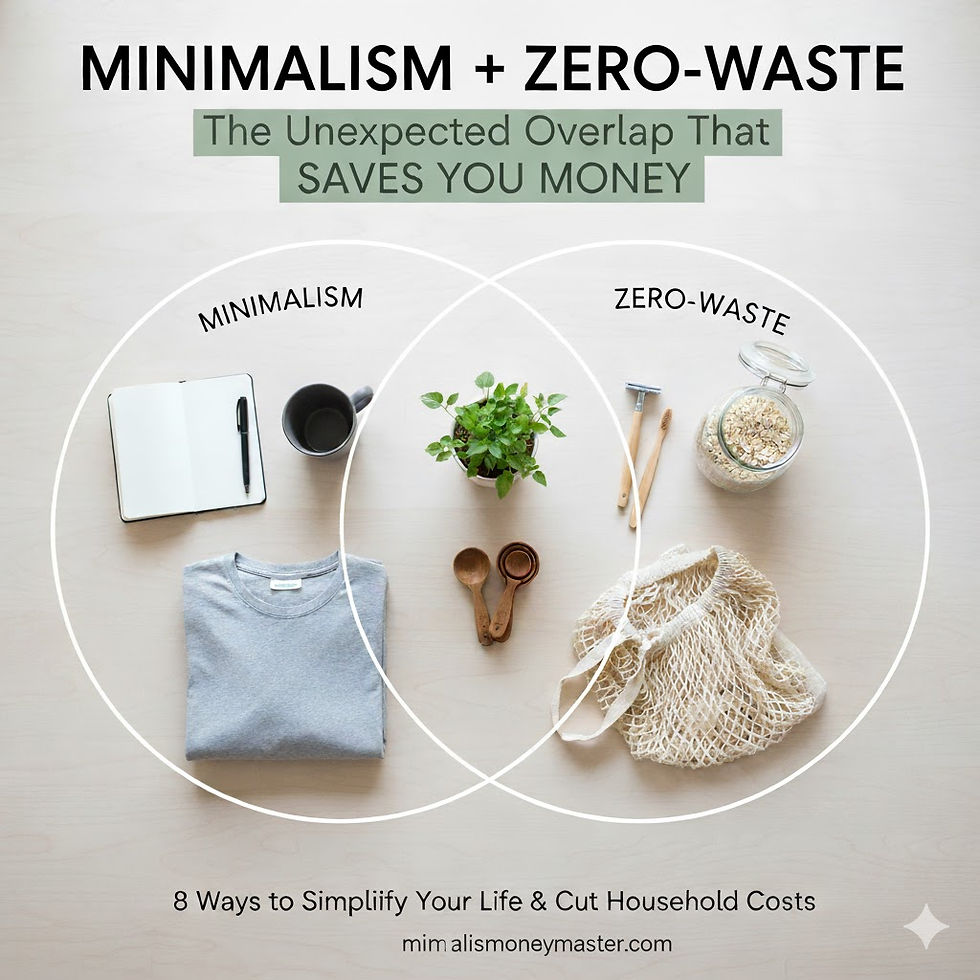
Minimalism and zero-waste living often get lumped into the same category, but they aren’t identical lifestyles. Minimalism focuses on reducing physical and mental clutter. Zero-waste centers around reducing environmental impact and preventing unnecessary trash. But when you look closely, these two philosophies share a surprisingly powerful overlap—one that can transform your habits, your wallet, and your sense of purpose.
Minimalist finance sits at the intersection of intentional consumption and long-term financial freedom. Zero-waste enhances that path by reframing how we use resources, repair belongings, and value durability over disposability. When woven together, they create a lifestyle that is simpler, more affordable, and more aligned with your long-term values.
Here’s how minimalist living and zero-waste philosophy reinforce each other—and how you can use both to spend less, stress less, and live more consciously.
1. Both Philosophies Challenge Mindless Consumption
At their core, minimalism and zero-waste living push back against the same cultural pattern: overconsumption.
Minimalism asks: Do I really need this? Will it add value?
Zero-waste asks: What will happen to this item when I’m done using it?
Both approaches require intentionality and a pause before purchasing. That pause becomes a powerful filter:
You stop buying things because they’re on sale.
You stop buying things for short-term convenience.
You stop buying things to keep up with others.
You start purchasing items designed to last.
This shift naturally reduces clutter and waste. You buy fewer items overall, and the items you do buy tend to be higher quality, longer-lasting, and easier to maintain.
Financial benefit:
You spend significantly less over time. Intentional consumption reduces impulse purchases, forgotten subscriptions, trend cycles, and cheap replacements.
2. Owning Less Helps You Waste Less
Minimalists naturally produce less waste because they focus on fewer possessions and simpler routines.
For example:
A minimalist wardrobe reduces textile waste and the environmental cost of fast fashion.
A minimalist kitchen uses fewer gadgets, which means fewer plastics and broken appliances tossed in the trash.
A minimalist home prioritizes quality, meaning items live longer before needing repair or replacement.
By owning less, you use each item more fully—and with more appreciation.
Financial benefit:
You replace items less often, maintain things better, and avoid the financial drain of clutter-driven shopping cycles.
3. Zero-Waste Habits Reinforce Minimalist Spending
Zero-waste principles help reduce ongoing consumption in a way that supports minimalist finance goals.
Common zero-waste habits that save money include:
using reusables instead of disposables
repairing items instead of replacing them
choosing secondhand instead of new
buying in bulk to reduce packaging
opting for multi-purpose products
avoiding single-use convenience items
Every one of these habits also aligns with minimalist values and reduces long-term expenses. You create systems that simplify life and prevent clutter from re-entering your home.
Financial benefit:
Switching to reusable items (like cloth towels, safety razors, water bottles, or food containers) saves hundreds or thousands over time.
4. Both Lifestyles Encourage Long-Term Thinking
Minimalism asks you to think long-term about your space, emotional energy, and finances. Zero-waste asks you to think long-term about environmental impact.
Together, they shift your mindset from short-term gratification to long-term value.
This could look like:
choosing durable clothing made ethically
buying tools that will last decades, not months
purchasing food thoughtfully to reduce waste
investing in a small set of high-quality items rather than many disposable ones
Long-term thinking naturally results in less waste and fewer regrets.
Financial benefit:
You stop rebuying the same cheap items over and over. Long-term purchases reduce lifetime spending dramatically.
5. Minimalist Spaces Support Zero-Waste Routines
A cluttered home makes sustainable habits harder. When everything has a place—and you’ve simplified your belongings—you naturally support zero-waste systems.
Examples:
A minimalist kitchen makes it easier to store bulk food and avoid duplicate purchases.
A minimalist bathroom helps you maintain simple personal-care routines with fewer disposable items.
A minimalist wardrobe reduces laundry loads and encourages better clothing care.
A minimalist garage or storage area prevents forgotten items from spoiling or breaking.
Both lifestyles depend on systems, not perfection. When your environment is simple, your habits become more consistent.
Financial benefit:
You waste fewer resources, food, and products, saving money daily.
6. Buying Secondhand Fits Perfectly Into Both Philosophies
Minimalism celebrates intentional choices. Zero-waste celebrates reuse. Buying secondhand checks both boxes beautifully.
Whether it's:
clothing
furniture
tools
books
décor
electronics
Secondhand items:
cost significantly less
reduce landfill waste
slow demand for new manufacturing
eliminate packaging waste
support local resale economies
Minimalists appreciate the calm and clarity of owning only what they truly need. Zero-waste living appreciates the sustainability and creativity of using what already exists.
Financial benefit:
Secondhand shopping can cut purchase costs by 50–90%.
7. Both Lifestyles Reduce Decision Fatigue
Decision fatigue is financially draining. When you’re overwhelmed, it’s easy to:
impulse buy
duplicate purchases
choose fast food over cooking
give up on sustainable habits
make unnecessary replacements
Minimalism clears physical and mental clutter. Zero-waste creates simplified routines. Together, they reduce daily decision-making and help you stay financially grounded.
Examples:
a minimalist pantry helps you cook at home
a zero-waste cleaning routine eliminates dozens of product choices
a capsule wardrobe eliminates shopping stress
simple systems reduce time and emotional drain
Financial benefit:
You’re calmer, more focused, and more intentional—key components of strong financial habits.
8. Zero-Waste Encourages Creativity; Minimalism Encourages Restraint
These two values balance each other beautifully.
Minimalism says: “Choose less.”Zero-waste says: “Use what you have.”
Together, they create a lifestyle where:
you repurpose before buying
you borrow before replacing
you repair before discarding
you simplify before upgrading
This natural pairing strengthens your financial resilience.
Financial benefit:
Repairs, repurposing, and resourcefulness dramatically reduce replacement costs.
Final Thoughts: The Combined Power of Minimalism and Zero-Waste
Minimalism helps you live with clarity.Zero-waste helps you live with purpose.Together, they help you live with intention—and keep more money in your pocket.
You don’t need to be perfect in either lifestyle. Small shifts add up:
fewer purchases
longer-lasting items
less waste
more time
more financial breathing room
When minimalism and zero-waste habits overlap, your home becomes calmer, your choices become easier, and your finances naturally strengthen.
The result?A lifestyle that feels lighter, more sustainable, and more aligned with what truly matters.
✅ BLOG POST 2 (≈1,180 words)
How Minimalism and Zero-Waste Living Work Together to Save You Money and Simplify Your Life
Minimalism and zero-waste living are often described as separate movements—minimalism being about clarity and simplicity, while zero-waste focuses on sustainability and reducing trash. But in practice, they strengthen each other in ways that transform your spending, your habits, and your daily life.
Minimalist finance thrives on intentionality: fewer purchases, smarter choices, reduced clutter, and long-term thinking. Zero-waste thrives on similar principles—reuse, resourcefulness, quality, and mindfulness. Integrating both creates a financially efficient, environmentally conscious lifestyle that reduces waste of all kinds: physical waste, money waste, and mental energy waste.
This post explores how these two approaches overlap seamlessly—and how embracing both can bring you financial freedom, sustainability, and peace of mind.
1. Both Minimalism and Zero-Waste Start With “Less”
Minimalism says:Own less. Choose less. Do less.
Zero-waste says:Waste less. Reuse more. Consume less.
Both philosophies encourage living with intention instead of excess. When applied together, you naturally:
buy fewer items
choose higher-quality essentials
reject fast fashion and disposable trends
focus on functionality over novelty
reduce unnecessary packaging
Embracing “less” doesn’t mean deprivation. It means less waste, less clutter, less stress—and more room for what matters.
Financial Insight:
Buying less (and buying better) is one of the most powerful money-saving strategies available.
2. Minimalist Living Makes Zero-Waste Easier
Zero-waste often feels overwhelming to beginners—composting, reusing, repairing, bulk buying, and more. But when you combine it with minimalism, it becomes far more manageable.
Minimalist spaces naturally support zero-waste choices:
fewer gadgets = less plastic waste
fewer cleaning products = simpler routines
fewer clothing items = less laundry and less textile waste
fewer toys or décor = less clutter going to landfill
Minimalism reduces the volume of items entering your home. Zero-waste reduces the volume of items leaving your home.
Financial Insight:
A simpler home reduces ongoing replacement costs and waste-related expenses.
3. Zero-Waste Habits Reinforce Minimalist Buying Principles
Zero-waste living encourages:
repair culture
borrowing before buying
secondhand shopping
avoiding disposables
choosing durable alternatives
All of these habits support minimalist finance because they reduce recurring purchases and prevent clutter.
Examples:
A stainless-steel water bottle replaces dozens (or hundreds) of plastic bottles.
Cloth napkins replace countless single-use paper products.
A safety razor lasts decades.
Reusable containers eliminate ongoing plastic bag purchases.
Financial Insight:
Many zero-waste swaps pay for themselves within months.
4. Both Lifestyles Promote Mindful Consumption
Minimalism requires you to question:
“Does this add value?”
“Is this essential?”
“Does this support my goals?”
Zero-waste adds:
“Is this sustainable?”
“Can I reuse or repurpose it?”
“What will its life cycle be?”
These questions eliminate impulse buying and trend chasing. You become more aware of marketing tactics designed to encourage overspending.
Financial Insight:
Mindful consumption is one of the strongest forms of financial self-defense.
5. Zero-Waste Encourages High-Quality Purchases, Which Aligns With Minimalism
Cheap, disposable items are rarely minimalist—and almost never zero-waste.Both movements push you toward durable, high-quality items that last.
Examples:
cast iron pans
well-made boots
timeless clothing
glass storage containers
wooden tools
quality furniture
Buying fewer, better items means saving money long-term—and reducing environmental impact.
Financial Insight:
“Buy once” is far cheaper than “buy cheap, buy twice.”
6. Minimalism Reduces Food Waste, a Major Household Expense
Food waste is not only an environmental issue—it’s a financial one. The average household throws away thousands of dollars of food every year.
Minimalist habits naturally reduce this, such as:
simplified meal planning
smaller shopping trips
fewer duplicate items
organized refrigerators and pantries
eating what you already have
freezing leftovers
Zero-waste complements this through:
composting
using up scraps
cooking root-to-stem
bulk buying
Financial Insight:
Reducing food waste is one of the fastest ways to save money without lifestyle sacrifice.
7. Secondhand Shopping Supports Both Philosophies Perfectly
Minimalists avoid clutter and unnecessary new items. Zero-waste advocates reuse.Secondhand shopping naturally aligns with both.
Benefits include:
dramatically lower prices
reduced manufacturing waste
less packaging
unique, high-quality finds
slower fashion cycles
community-based economies
The more you embrace secondhand, the more your wallet and the planet benefit.
Financial Insight:
Secondhand stores often offer luxury or high-end items for pennies on the dollar.
8. Both Lifestyles Encourage Repair Over Replacement
Minimalism values longevity.Zero-waste values waste reduction.Repairing items supports both.
This includes:
clothing mending
sewing buttons
fixing tools
repairing electronics
refreshing furniture
sharpening knives
When you repair instead of replace, you break free from the cycle of cheap, disposable goods.
Financial Insight:
Repairing is almost always cheaper than replacing.
9. Minimalism and Zero-Waste Reduce Emotional and Mental Waste Too
Beyond physical clutter, these lifestyle choices reduce:
decision fatigue
emotional overwhelm
comparison culture
guilt around spending
stress about owning too much
the pressure to upgrade constantly
Your home feels calmer. Your mind feels clearer. You’re less reactive to consumer messaging.
Financial Insight:
A calm mind makes better financial decisions—and avoids impulse spending.
10. Combining Both Creates a Life of Purposeful Alignment
When minimalism and zero-waste overlap, you create a lifestyle driven by:
intention
sustainability
clarity
long-term thinking
conscious stewardship
financial confidence
emotional resilience
The combined effect is powerful. You waste less money, fewer resources, less energy, and less time. You live more sustainably and more meaningfully.
You don’t have to be perfect at either lifestyle. You only need consistency and intention.
Final Thoughts: A Unified Path Toward Simplicity, Sustainability, and Financial Freedom
Minimalism and zero-waste living reinforce each other naturally. Minimalism helps you simplify your home and reduce consumption. Zero-waste helps you reduce waste and choose more durable, meaningful items.
Together, they help you:
save money
declutter
reduce stress
live sustainably
build long-term financial strength
create a calmer, more intentional home
When you embrace both philosophies, you discover a lifestyle that feels lighter—emotionally, financially, and environmentally.
Small shifts lead to big results.And both minimalism and zero-waste living begin with a single, powerful choice: less but better.


Comments