


How to Get a Job Using Freelance or Gig Sites: A Minimalist Finance Approach
- jennifercorkum
- Sep 5, 2025
- 4 min read
In today’s fast-paced, digital-first economy, the traditional 9-to-5 job is no longer the only way to build a sustainable income. For many of us practicing minimalist finance, flexibility, autonomy, and purposeful earning matter more than climbing a corporate ladder. One of the most effective ways to achieve this balance is by leveraging freelance and gig platforms like Fiverr and Upwork.
In this guide, I’ll break down how to land freelance work, optimize your profile, and use gig platforms to build a sustainable minimalist lifestyle while avoiding financial overwhelm.
Why Freelance and Gig Sites Are Perfect for Minimalist Finance
Minimalism in finance isn’t about depriving yourself—it’s about intentional living and earning only as much as you need to support your priorities. Freelance platforms fit seamlessly into this mindset because:
Flexible Income → You decide how many projects to take on, matching work to your lifestyle.
Location Freedom → Work from anywhere; no need to spend on commuting, fancy work clothes, or office lunches.
Low Start-Up Costs → You can start with your existing skills and minimal investment.
Scalable Earning Potential → The more you specialize, the higher you can charge, meaning fewer clients for the same income.
This approach helps you avoid lifestyle inflation and stay aligned with minimalist financial goals.
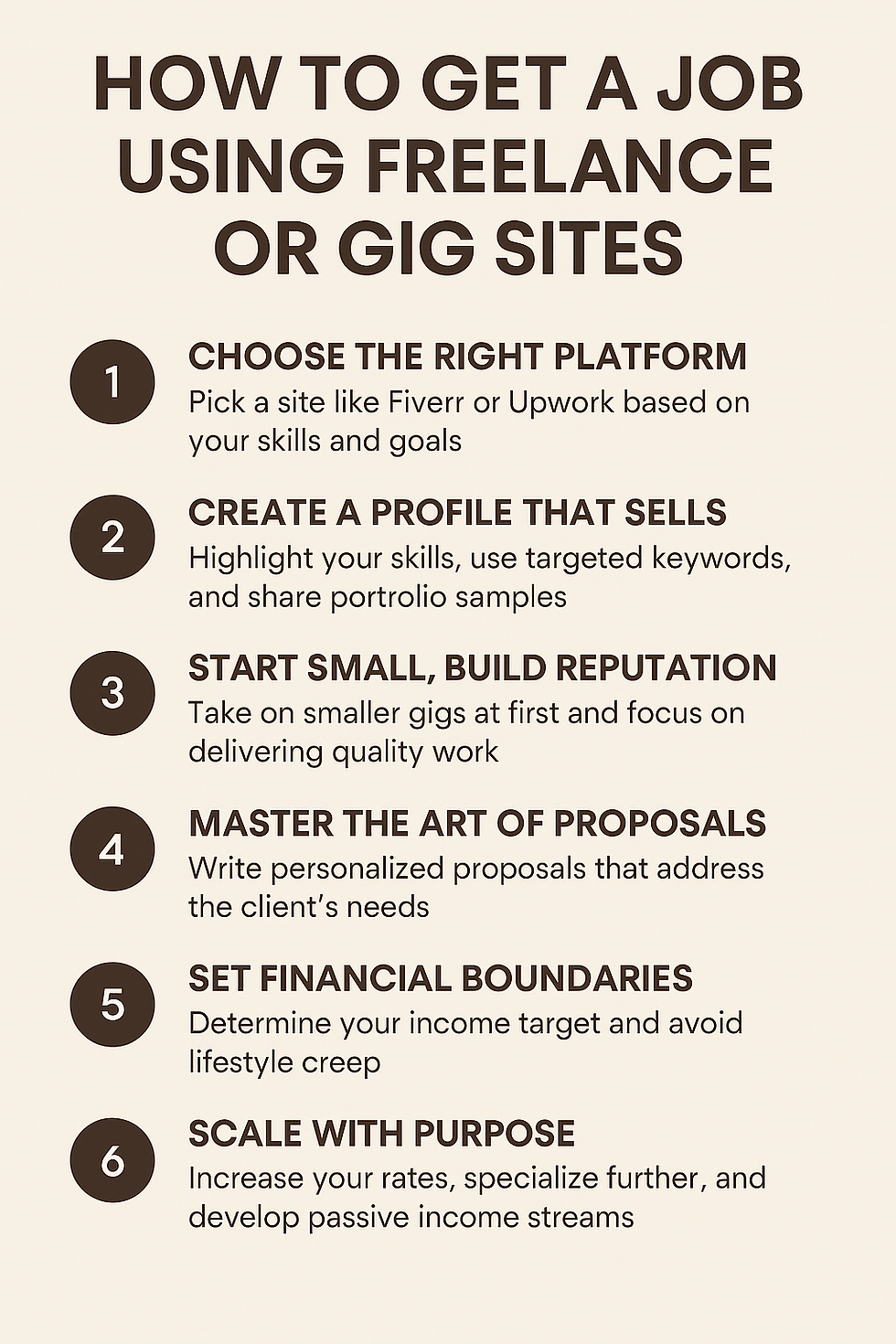
Step 1: Choose the Right Freelance Platform
Not all gig sites are created equal. Picking the right one depends on your skills, income expectations, and long-term financial strategy.
Fiverr
Best for beginners and creatives. You create “gigs” that clients can buy.
Ideal for: Graphic design, content writing, voice-overs, video editing
Pros: Easy entry, passive income potential
Cons: Competitive pricing, smaller initial payouts
Upwork
Best for professionals seeking ongoing projects. You bid on client listings.
Ideal for: Web development, consulting, marketing, project management
Pros: Higher earning potential, long-term client relationships
Cons: Requires strong proposals and time investment
Minimalist Tip: Start on one platform, master it, and only expand once you’ve built a stable client base. Spreading too thin contradicts the minimalist approach.
Step 2: Create a Profile That Sells
Your profile is your storefront. A clean, optimized, and value-driven profile is essential for getting hired.
Key Elements to Include:
Professional Headline – Keep it simple and keyword-rich:“Minimalist Web Designer Helping Small Businesses Thrive”
Compelling Bio – Highlight your unique skills and results. Focus on how you help clients, not just what you do.
Portfolio Samples – Even if you’re new, create mock projects to showcase your skills.
Targeted Keywords – Incorporate relevant search terms like:
“freelance web designer”
“SEO content writer”
“Fiverr gigs for logo design”
Transparent Pricing – Minimalism values simplicity; avoid complicated tiers.
Step 3: Start Small, Build Reputation
When starting out, focus on experience and reviews over immediate high earnings.
Take Small Gigs First → Build a portfolio and establish trust.
Deliver Over Value → Under-promise and over-deliver; it leads to better reviews.
Request Testimonials → Social proof is everything on gig sites.
This initial investment of time compounds: the more positive feedback you earn, the easier it becomes to command higher rates—essential for working less while earning more.
Step 4: Master the Art of Proposals
Especially on platforms like Upwork, a winning proposal can make or break your freelance career.
Formula for Success:
Personalized Greeting → Address the client by name when possible.
Acknowledge the Problem → Show you’ve read their job posting.
Offer a Tailored Solution → Keep it short and focused on results.
Call to Action → Suggest a next step: “I’d love to hop on a quick call to discuss.”
Example:“Hi Sarah, I noticed you’re looking for an SEO content writer to grow your travel blog’s audience. I’ve helped clients increase organic traffic by 120% using keyword-driven storytelling. I’d love to do the same for you. Could we set up a 10-minute chat?”
Minimalist finance emphasizes efficiency: fewer proposals, better quality, and higher ROI on your time.
Step 5: Set Financial Boundaries
One of the biggest pitfalls freelancers face is treating gig work like a financial free-for-all. To stay aligned with minimalist principles:
Set an Income Target → Know exactly how much you need monthly; don’t chase unnecessary earnings.
Automate Savings → Allocate a percentage of every gig to emergency funds and investments.
Avoid Lifestyle Creep → Just because you earn more doesn’t mean you need to spend more.
Minimalist Finance Mindset: Earn what supports your ideal life—not what maximizes consumption.
Step 6: Scale with Purpose
Once you’ve built a solid foundation, scale intentionally:
Raise Your Rates → Fewer clients, higher income.
Specialize Further → Niching down boosts authority and demand.
Leverage Passive Income → Sell templates, guides, or online courses related to your expertise.
This approach allows you to work less, earn more, and free up time for things that truly matter—family, travel, health, or passion projects.
Final Thoughts
Minimalist finance is about aligning income with values—earning enough without sacrificing freedom or peace of mind. Freelance and gig platforms like Fiverr and Upwork make it possible to create a flexible, intentional income stream that supports your life, not the other way around.
With a focused strategy, optimized profile, and value-driven mindset, you can build a sustainable freelance career that respects both your time and financial goals.
Key Takeaways
Start with one platform and master it before expanding.
Create a clean, SEO-optimized profile with value-driven messaging.
Focus on quality over quantity—fewer clients, higher income.
Align your freelance work with minimalist financial principles to avoid burnout and lifestyle creep.


Comments