


Fall Décor Madness: How to Avoid Overspending on Pumpkins and Seasonal Clutter
- jennifercorkum
- Sep 29, 2025
- 4 min read
Every September, the retail world shifts from summer sales to pumpkin overload. Store shelves overflow with faux leaves, ceramic gourds, novelty mugs, scented candles, and decorative signs that shout “Hello Fall!” For many people, fall décor has become just as much of a shopping ritual as back-to-school season.
But here’s the truth: seasonal décor, while marketed as cozy and harmless, can quickly spiral into a money drain and clutter trap. From buying overpriced pumpkins to filling bins with items used for just a few weeks, fall decorating often fuels the exact kind of consumer cycle that minimalism seeks to break.
From a minimalist finance perspective, it’s time to rethink fall décor madness. You can enjoy the season, embrace its beauty, and even decorate—without overspending or drowning in clutter.
The Price of Seasonal Decorating
Seasonal décor is a booming industry. According to surveys, Americans spend over $3.4 billion on fall and Halloween decorations annually, and that number grows every year. The average household spends between $50 and $150 just on seasonal décor—sometimes more if they’re buying large inflatables, themed wreaths, or trendy items marketed as “must-haves.”
Here’s where the money often goes:
Pumpkins (real and faux): $10–$50, depending on size and quantity.
Signs and Ornaments: $10–$30 each.
Yard Décor: $50–$200 for inflatables, lights, or large props.
Scented Candles and Accessories: $10–$40 each.
Individually, these purchases don’t seem outrageous. But when repeated every fall—and stored for years—they become a financial and physical burden.
Why We Overspend on Fall Décor
Seasonal marketing plays directly into emotion. Retailers know we associate fall with comfort, nostalgia, and coziness, so they sell us products that promise those feelings.
Nostalgia Factor: A pumpkin-scented candle reminds us of childhood.
Social Pressure: Instagram and Pinterest encourage picture-perfect autumn homes.
Scarcity Marketing: Seasonal items are “limited edition,” pushing us to buy now.
Impulse Buys: Bright orange displays near store entrances nudge us to add “just one more pumpkin.”
Minimalism asks: Do I need this object to enjoy fall, or am I trying to buy a feeling that already exists outside my door?
The Hidden Costs of Décor Clutter
Overspending on fall décor isn’t just about money—it’s also about what happens after the season ends.
Storage Stress: Plastic bins of pumpkins, wreaths, and knick-knacks take up valuable space.
Environmental Waste: Faux pumpkins and plastic leaves often end up in landfills.
Lost Value: Trendy décor loses appeal quickly, meaning items purchased this year might feel “outdated” next year.
Opportunity Cost: Money spent on clutter could have been invested in meaningful experiences or financial goals.
Minimalism reminds us that our homes should be spaces for living—not warehouses for seasonal consumer goods.
Minimalist Alternatives to Fall Décor Madness
The good news? You don’t need to strip your home bare to stay true to minimalist finance. Instead, you can decorate intentionally, using strategies that save money, reduce waste, and still capture the beauty of the season.
1. Embrace Nature’s Décor
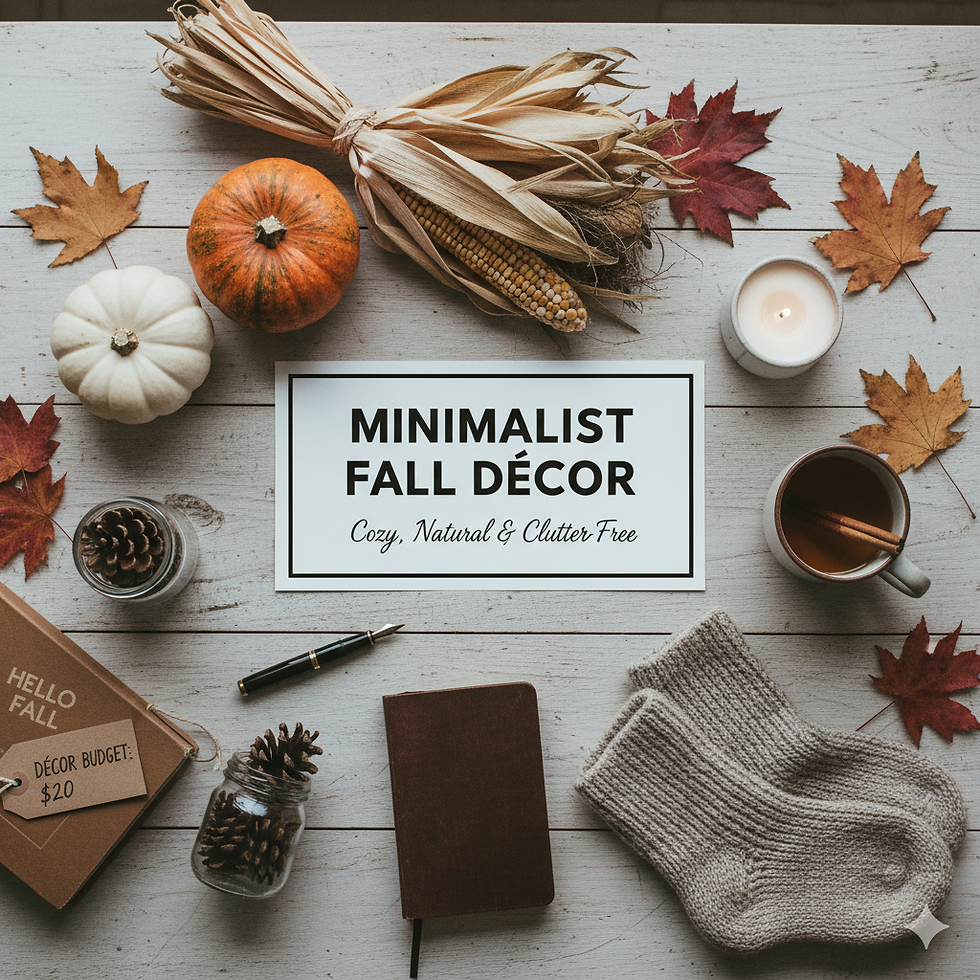
The most stunning fall decorations are free and biodegradable:
Real pumpkins and gourds (buy fewer, use them fully, compost after).
Autumn leaves in a vase or pressed into frames.
Pinecones, branches, or acorns gathered on a walk.
These natural elements bring authentic seasonal beauty—and don’t clutter your storage space.
2. Limit Your Purchases
Decide on a simple boundary: one pumpkin per person, one wreath, or one small bin for all seasonal décor. By setting limits, you avoid the urge to collect endless items.
3. Invest in Timeless Pieces
If you do want reusable décor, choose high-quality items you’ll love year after year: a fabric table runner, a durable lantern, or a handcrafted ceramic piece. Skip trendy phrases or designs that will feel dated next season.
4. DIY Your Decorations
Handmade décor is often more meaningful (and affordable) than store-bought. Ideas include:
Paper garlands in fall colors.
Mason jars with tea lights and leaves.
Chalkboard signs you can reuse for every season.
DIY keeps costs low and creativity high.
5. Rethink Scent and Atmosphere
Instead of buying endless scented candles, create fall coziness through:
Simmer pots with cinnamon, apple, and cloves.
Baking seasonal recipes like pumpkin bread.
Dimming lights and adding warm blankets.
Atmosphere doesn’t require consumer goods—it comes from intentional living.
How to Stay Intentional in Stores
It’s easy to get swept up in seasonal displays. To resist overspending:
Make a List First: Decide what, if anything, you truly need.
Use the 24-Hour Rule: Wait a day before buying seasonal décor to avoid impulse purchases.
Ask the Minimalist Question: Will I still love this next year—or is it just filling a short-term craving?
Avoid Storage Burdens: If it won’t fit into your single seasonal bin, don’t buy it.
Minimalism Reframes the Fall Season
Fall is beautiful without the clutter. The crisp air, golden leaves, and seasonal foods already provide the sensory experience marketers try to sell us. Instead of filling your home with store-bought pumpkins and “cozy” slogans, focus on activities that embody autumn’s spirit: apple picking, hiking through colorful forests, or simply sipping tea by the window.
Minimalism reframes the question: Do I need more things to enjoy fall—or do I just need to slow down and savor it?
Final Thoughts: Escaping the Décor Madness
Fall décor can be fun, but it’s not essential—and it certainly doesn’t have to drain your wallet. Overspending on pumpkins and seasonal clutter is just another form of consumerism disguised as tradition. By adopting a minimalist finance approach, you can enjoy the season fully while saving money, reducing waste, and keeping your home clutter-free.
This fall, resist the pressure to buy endless decorations. Instead, choose simplicity, intention, and authenticity. After all, the most beautiful part of autumn isn’t found in a store—it’s right outside your front door.


Comments