


Emotional Triggers and Habits: How to Break the Cycle of Overspending
- jennifercorkum
- Oct 29, 2025
- 5 min read
You know the feeling. You’ve had a stressful day, you’re scrolling on your phone, and suddenly — there it is. A sale. A gadget. A “must-have” thing you didn’t even know existed 10 minutes ago. One click later, it’s on its way to your doorstep. For a moment, you feel better. Then the dopamine fades, and the quiet “Why did I buy that?” sets in.
This isn’t a lack of discipline. It’s psychology. And if you want to spend less and live more, understanding the emotional triggers and habits behind overspending is one of the most powerful steps you can take.
Minimalist finance isn’t about white-knuckling your way through every temptation. It’s about understanding what drives your behavior — and gently rewiring it to align with your values.
Emotional Spending: A Dopamine Shortcut
Before we can change overspending habits, we need to understand why they exist.
Every purchase delivers a small dopamine hit. This is the brain’s reward chemical — the same one triggered by eating, social interactions, or achieving goals. When you click “Buy,” your brain anticipates a reward. That’s why shopping can feel like stress relief or entertainment. It’s not the item itself — it’s the neurochemical reaction.
Marketers know this well. They design experiences to maximize the emotional payoff:
Limited-time offers create urgency.
“You deserve it” language taps into self-worth.
Perfectly curated images make you imagine a better version of yourself with the product.
The result? Buying becomes less about utility and more about emotion. It’s a shortcut to feel something — excitement, comfort, belonging — even if it’s temporary.
Common Emotional Triggers That Lead to Overspending
While everyone’s triggers are unique, certain patterns show up again and again. Recognizing these is the first step to breaking their power.
1. Stress and Overwhelm
Many people use shopping as a coping mechanism. It provides a sense of control in moments when life feels chaotic. A small purchase can feel like a quick win — “At least I did something for myself.”
Minimalist reframe: Real control comes from stability, not splurges. Instead of buying something new, try grounding practices: a walk, journaling, or tackling a small, manageable task.
2. Boredom
Sometimes we spend not because we need or even want something, but because we’re simply… bored. Shopping provides novelty. It’s stimulation in an otherwise predictable routine.
Minimalist reframe: Novelty doesn’t have to come from consuming. Explore new experiences, not new products — a hobby, a new walking route, or a creative project.
3. Comparison and Social Pressure
Social media is a constant highlight reel. It’s easy to see someone’s new outfit, gadget, or vacation and subconsciously feel behind. This “comparison trap” can push us to spend just to keep up — even if it doesn’t align with our values.
Minimalist reframe: Notice the feeling without reacting. Ask: “Would I want this if I hadn’t seen it?” Often, the answer is no.
4. Sales and Scarcity
“Only 2 left!” “Flash sale ending in 3 hours!” Scarcity tactics trigger our loss aversion — the psychological tendency to fear missing out more than we desire gaining something.
Minimalist reframe: A good deal is only good if you already needed the item. A “bargain” on something unnecessary is still overspending.
5. Identity and Self-Image
Sometimes spending is less about the thing and more about who we want to be. The gym gear that symbolizes a fitter you. The luxury watch that signals success. The decor that promises a magazine-worthy home.
Minimalist reframe: You are not your purchases. Real identity is built through actions, not acquisitions.
Habits: The Invisible Architecture of Overspending
Triggers may spark the impulse, but habits build the pattern. Psychologist Charles Duhigg’s “habit loop” is a useful model here:
Cue → Routine → Reward
Cue: The trigger (e.g., stress, ad, notification)
Routine: The behavior (e.g., online browsing, adding to cart)
Reward: The dopamine hit, sense of relief, or identity boost
Over time, these loops become automatic. You might find yourself on a shopping app without consciously deciding to go there. That’s the power of habit.
To break the overspending cycle, you don’t need to fight the loop — you need to rewire it.
Breaking the Cycle: Practical Minimalist Finance Strategies
Here are effective, psychologically sound techniques to regain control over emotional spending without relying on willpower alone:
1. Identify Your Cues
For one week, keep a quick spending trigger journal. Whenever you feel the urge to buy something, jot down:
Where you were
What you were feeling
What you were doing
Patterns will emerge. Maybe it’s boredom during your lunch break. Maybe it’s stress after meetings. Awareness is the foundation of change.
2. Insert a “Mindful Pause”
Once you’ve identified cues, insert a pause between the cue and the routine.For example:
Close the tab.
Take a deep breath.
Set a 10-minute timer before acting.
This pause breaks the automaticity of the habit loop. Even a brief delay creates space for conscious choice.
3. Create Habit Substitutions
Replace the shopping routine with a different action that gives a similar emotional reward. For example:
If you shop when stressed → go for a short walk, stretch, or call a friend.
If you shop when bored → try reading a few pages of a book or learning something new.
If you shop to feel accomplished → check off a small task on your to-do list.
The key is not to eliminate the reward, but to find healthier ways to meet the underlying emotional need.
4. Make Spending Less Frictionless — and Overspending More Frictionful
Habits thrive on ease. You can reverse this dynamic:
Unsubscribe from marketing emails and turn off push notifications.
Remove saved cards from shopping apps to add extra steps.
Delete shopping apps you don’t need or bury them in folders.
Set a waiting period (e.g., 48 hours) before non-essential purchases.
Conversely, make positive financial behaviors easier — automate savings, track spending simply, or keep a list of meaningful financial goals visible.
5. Reinforce New Rewards
When you successfully navigate a trigger without overspending, celebrate it. Acknowledge the win mentally or physically check it off somewhere. Positive reinforcement builds momentum. Over time, mindful non-spending becomes its own rewarding habit — one tied to pride, clarity, and alignment with your values.
The Deeper Benefit: Emotional Clarity
Breaking the overspending cycle isn’t just about saving money. It’s about reclaiming emotional clarity.
Instead of using purchases to numb discomfort, you learn to face and soothe it in healthier ways.
Instead of letting marketing dictate your desires, you define your own.
Instead of letting habits run the show, you step back into the driver’s seat.
This clarity is the psychological foundation of minimalist finance. When spending becomes intentional, your money flows toward things that genuinely add value — not temporary emotional fixes.
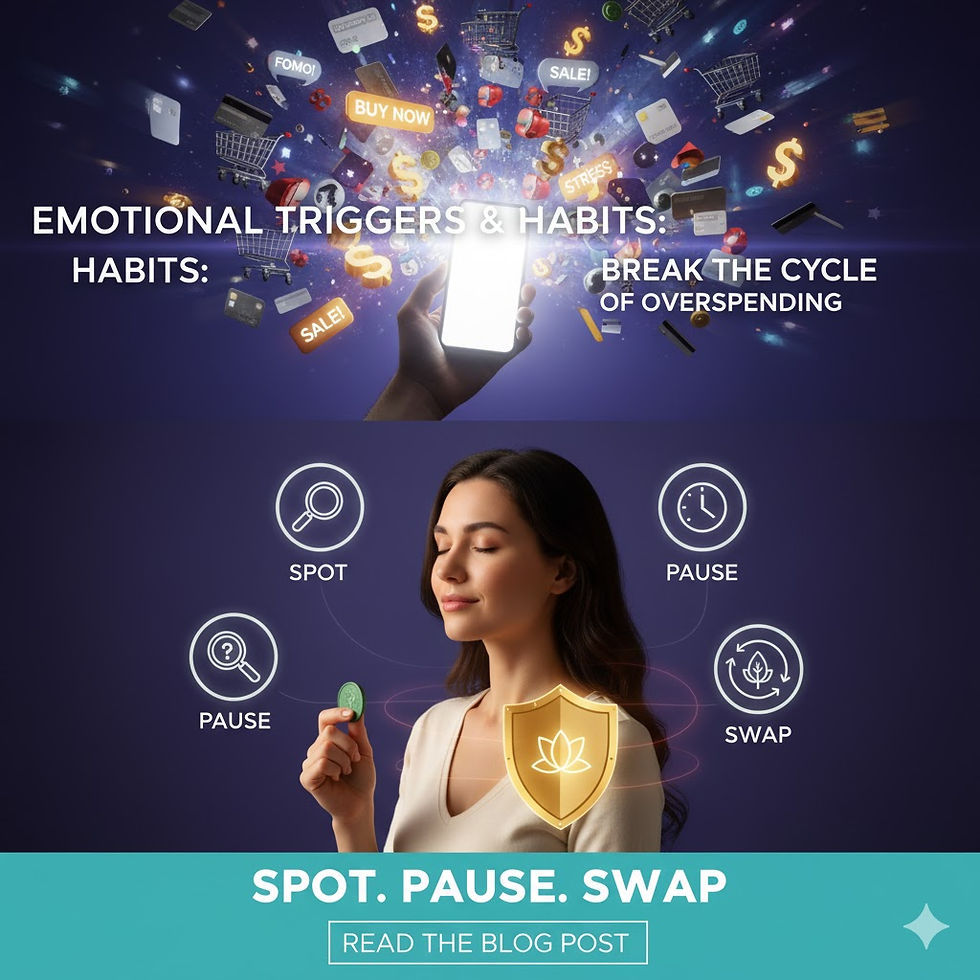
A Gentle Challenge: Spot and Swap One Trigger
This week, pick one common spending trigger you’ve noticed — maybe stress, boredom, or sales pressure. Your challenge is simple:
Spot it when it happens.
Pause, even briefly.
Swap the shopping habit for a healthier action.
No perfection required. Even noticing the trigger is a success. Over time, these micro-moments rewire your financial habits from the inside out.
Final Thoughts
Overspending isn’t about weakness. It’s about well-worn emotional pathways and habit loops that evolved for reasons — comfort, excitement, belonging. The good news? You can redesign those loops.
When you understand your emotional triggers, bring awareness to your habits, and intentionally build new patterns, you free yourself from the cycle. You spend less not because you’re restricting yourself, but because you no longer need spending to fill emotional gaps.
And that’s the heart of minimalist finance: living with clarity, purpose, and peace — not compulsion.


Comments