


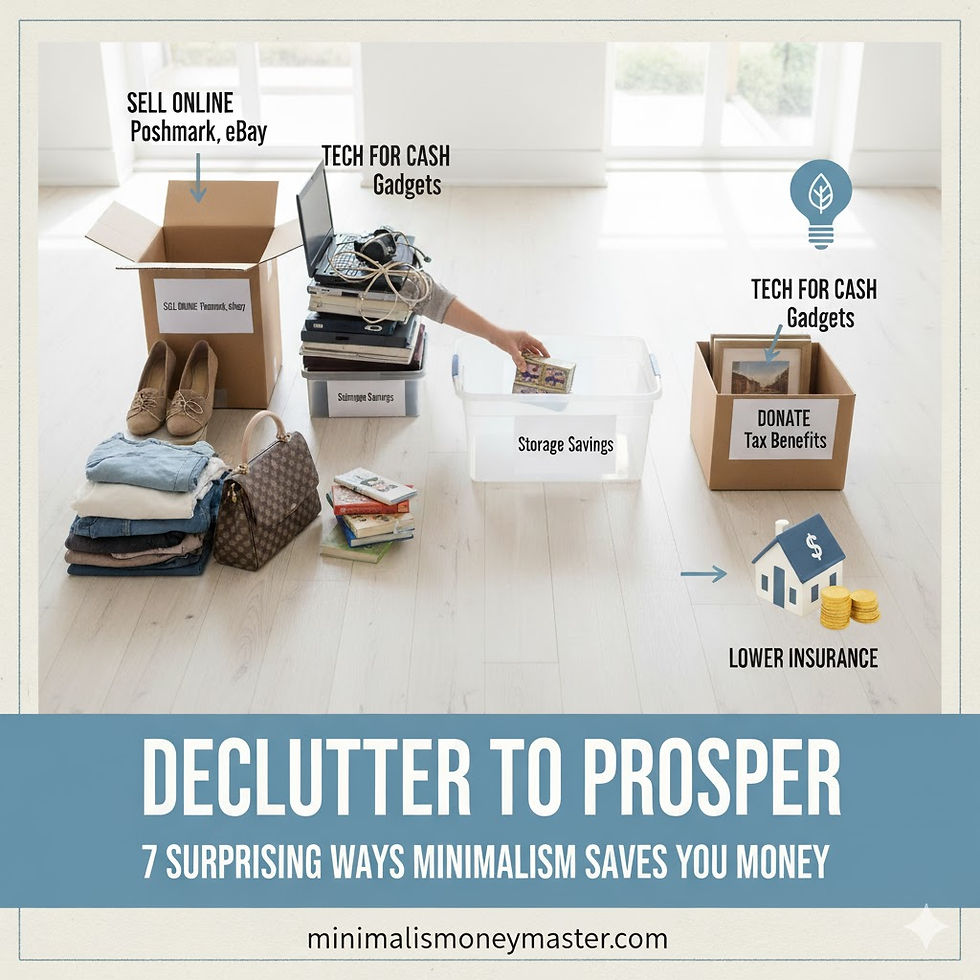
Declutter to Prosper — 7 Surprising Ways Minimalism Saves You Money
- jennifercorkum
- Oct 24, 2025
- 5 min read
Every forgotten item tucked away in a closet, garage, or storage unit is quietly costing you money. Clutter isn’t just a visual nuisance — it carries real financial weight. From hidden maintenance costs to insurance premiums, the items we keep often drain our wallets in ways we don’t even notice.
Minimalism offers a powerful alternative. By embracing a “less is more” philosophy, you can transform clutter into cash, lower recurring expenses, and make room for a more intentional financial life. Below are seven powerful ways that decluttering your home can help you save money, based on minimalist finance principles.
1. Uncover Hidden Wealth in Your Home
One of the fastest ways to boost your bank account is to sell what you no longer use. Most of us have accumulated items that were once valuable but now sit idle — unused exercise equipment, designer clothing, outdated electronics, or kitchen gadgets collecting dust.
Turn Unused Items Into Cash
Online resale platforms have made this process simple and accessible:
eBay, Facebook Marketplace, Craigslist – Ideal for electronics, furniture, and general household items.
Poshmark, Depop, Vinted – Great for clothing, accessories, and shoes.
Specialized resale platforms – Niche items like collectibles or vintage goods often sell for higher prices in targeted communities.
A weekend spent listing items can easily translate into hundreds or even thousands of dollars. For example, selling a treadmill you never use for $300, a few tech gadgets for $200, and a batch of clothes for $100 equals a quick $600 windfall — all from items that were taking up space.
Donations Can Offer Tax Benefits
If selling isn’t appealing, donating items can also yield financial advantages through tax deductions, depending on local regulations. Just remember to keep receipts and document donations properly.
👉 Minimalist Finance Insight: View your home as an inventory, not a storage unit. Unused items are idle assets — and liquidating them can be the first step toward financial clarity.
2. Stop Paying to Store Clutter
One of the most overlooked expenses tied to clutter is storage. Many people spend $100–$200 per month on storage units, which can total $1,200–$2,400 annually — just to house things they rarely use.
Even inside your home, clutter drives storage costs:
Buying extra shelving, containers, and bins to organize things you don’t need.
Paying for off-site storage because your home is overflowing.
Using garages or basements as glorified warehouses rather than functional spaces.
Decluttering eliminates the need for unnecessary storage solutions. By letting go of what you don’t use, you reclaim space and free up money that can be redirected toward savings, debt reduction, or investments.
3. Lower Your Insurance Costs
The more you own, the more you need to insure. Homeowners and renters insurance policies typically factor in the value of personal property. By decluttering, you can:
Lower the total insured value, which may reduce premiums.
Remove high-value items (like jewelry or collectibles) that no longer serve you, simplifying coverage.
Streamline record-keeping in case of a claim.
For example, if your current insurance policy covers $100,000 worth of personal property but you sell and donate enough to reduce that to $70,000, your insurance provider may adjust your premium downward.
Minimalism makes insurance simpler, cheaper, and more reflective of your actual lifestyle.
4. Reduce Utility and Maintenance Bills
Decluttering often leads to living in a more efficient space, which can have a ripple effect on your monthly bills. A home that’s free of unnecessary furniture and possessions is easier to clean, maintain, and optimize.
Energy and Maintenance Savings
Smaller spaces use less energy. If decluttering inspires you to downsize, you’ll save significantly on heating, cooling, and lighting.
Less clutter equals less maintenance. When rooms are packed, cleaning becomes time-consuming and requires more products. With fewer items, maintenance costs drop naturally.
Appliance efficiency improves. Overfilled storage areas can block vents and HVAC systems, making them work harder and driving up utility bills.
Decluttering doesn’t just make your home look better — it can lower your cost of living in tangible, measurable ways.
5. Sharpen Your Spending Awareness
Clutter is a mirror reflecting past spending habits. Sorting through piles of unused purchases can be an eye-opening experience. You might find impulse buys that never served a purpose, trendy gadgets that quickly lost their appeal, or clothing with tags still attached.
This reflection is valuable because it:
Exposes patterns of overspending or emotional buying.
Encourages more mindful purchasing decisions going forward.
Reinforces the connection between consumption and financial goals.
Minimalism encourages you to pause before each purchase and ask:
Does this align with my values and financial priorities?
Will this still bring value to my life six months from now?
Am I buying this out of genuine need or temporary emotion?
By decluttering, you strengthen your financial awareness and prevent future waste.
6. Boost Your Productivity and Earning Potential
Clutter doesn’t only affect your wallet — it affects your mind. Studies show that disorganized spaces increase stress, reduce focus, and lower productivity. In contrast, a clean, uncluttered environment promotes clarity and efficiency.
Financial Benefits of a Clear Space
More time saved: You’ll spend less time searching for misplaced items or cleaning around clutter.
Better focus: A calm environment allows you to concentrate on tasks that matter — including career development or side hustles.
Improved decision-making: A clear space often leads to a clear mind, which supports smarter financial choices.
When you spend less time managing clutter, you free up time and mental energy to earn, plan, or simply rest — all of which contribute to financial well-being.
7. Emotional Clarity Leads to Financial Clarity
Not all clutter is physical; some of it is emotional. Many people hold onto items out of guilt, sentimentality, or “just in case” thinking. These emotional attachments can spill into spending habits, leading to emotional shopping or financial avoidance.
Decluttering helps you process those emotional ties. Letting go of unnecessary items often mirrors the process of letting go of unnecessary expenses. You begin to differentiate between true value and emotional noise.
When your home feels lighter, your financial priorities often become sharper. You stop spending to fill voids and start investing in what genuinely matters — whether that’s future goals, experiences, or security.
Conclusion: Declutter Today, Save for Tomorrow
Decluttering isn’t just about making your home look neat — it’s about reclaiming financial control. By selling unused items, eliminating storage costs, lowering insurance and utility bills, and fostering mindful spending habits, you can create a lifestyle that supports wealth-building rather than waste.
Minimalist finance is not about restriction. It’s about aligning your environment with your financial values, so every dollar and every item has a purpose. Decluttering is the first, and often easiest, step toward that alignment.
Start with one drawer, one closet, or one storage unit. Each item you let go of brings you closer to financial clarity and freedom.


Comments