


Creating a Mindful Environment That Supports Minimalist Finances
- jennifercorkum
- Dec 3, 2025
- 4 min read
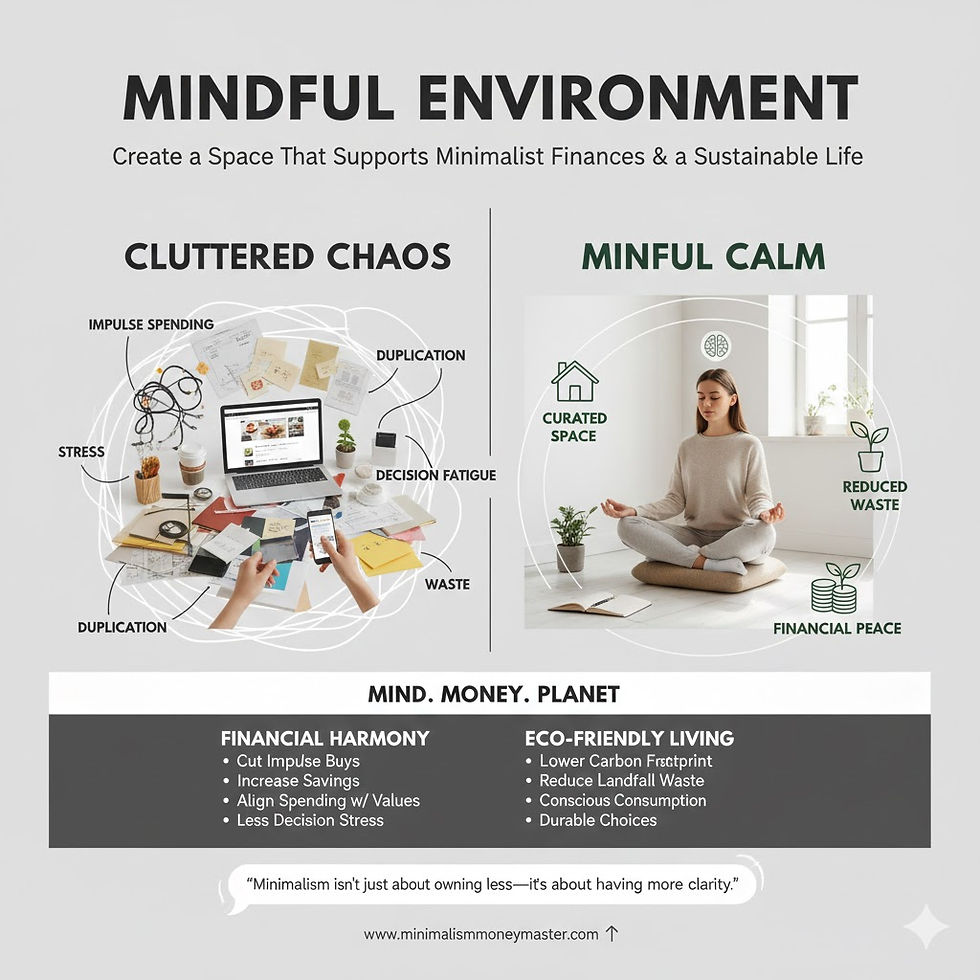
Your environment influences your behavior far more than motivation does.And a cluttered space encourages:
impulse spending
duplication
emotional buying to compensate for stress
waste through forgotten items
environmental harm through constant replacement
A mindful, minimalist environment does the opposite—it calms your nervous system, reduces decision fatigue, and supports mindful consumption.
Here’s how to build an environment that naturally aligns with your money and sustainability goals.
1. Curate Visual Calm
Visual noise leads to emotional noise.Emotional noise leads to financial noise.
Cutting visual clutter helps you:
spend less
buy less
waste less
feel more grounded
You don’t need a magazine-perfect aesthetic—you just need spaces that feel spacious, not crowded.
Try:
clearing counters
limiting decor to pieces you love
organizing items by frequency of use
keeping surfaces intentionally simple
This mirrors the clarity you’re building internally through meditation and journaling.
2. Build “Mindful Zones” in Your Home
Create small, designated areas that reinforce your mindful financial habits.
Examples:
a calm space for meditation
a small desk or corner for journaling
a clear table for meal planning
a clutter-free “money corner” for bills or budgeting
a sustainable living station with reusable bags or jars
These zones reinforce your identity:You are someone who lives intentionally.
3. Declutter with Purpose, Not Panic
Decluttering is not about emptying your home quickly. It’s about examining your relationship with every item and choosing mindfully.
Decluttering mindfully:
prevents future waste
reduces the desire to re-clutter
helps you understand what you actually value
builds gratitude and appreciation
reduces environmental impact
Donate thoughtfully. Recycle responsibly. Repurpose creatively.
Minimalism is not about tossing—it’s about transforming.
Mindful Financial Integration Through Daily Routines
Mindfulness stays alive through repetition.
Here are daily integration habits that connect your inner practices with your financial and environmental lifestyle.
1. The Morning Grounding Ritual (2–5 minutes)
Sit quietly
Breathe intentionally
Set your intention for the day:“Today I choose clarity, simplicity, and enough.”
This anchors your decisions before the world’s noise reaches you.
2. The Mindful Workday Break
Take one intentional pause during the day to:
check in with your emotions
note any urges to spend
take 3 slow breaths
remind yourself of your minimalist values
This is especially useful during online browsing, breaks, or stressful moments.
3. The Evening Reflection
Spend 5 minutes writing:
one thing you’re grateful for
one mindful choice you made
one way you honored your values
one thing you want to improve tomorrow
This reflection keeps mindfulness fresh and aligned with your long-term goals.
How Financial Mindfulness Deepens Relationships
Money affects relationships more than almost any other factor.Mindfulness softens financial tension and fosters healthier connection.
Here’s how integrated financial mindfulness improves your relationships:
1. You communicate without fear
Mindfulness reduces emotional reactivity. Conversations become:
calmer
clearer
less defensive
less fearful
Minimalist financial values become shared goals instead of sources of conflict.
2. You stop competing through consumption
Mindfulness reduces comparison and consumer pressure.You become content with enough, reducing:
lifestyle inflation
status-driven spending
the need to prove your worth through purchases
This increases relational confidence and reduces financial resentment.
3. You make sustainable choices together
Minimalist couples or families naturally:
reduce waste
share resources
spend intentionally
collaborate on goals
Financial mindfulness strengthens emotional intimacy and mutual trust.
Integrating Financial Mindfulness Into Long-Term Planning
Minimalism doesn’t just shape your day-to-day life—it shapes your financial future.
Here’s how mindful minimalism aligns with long-term goals.
1. You save money effortlessly
Mindful spending reduces:
impulse buys
emotional shopping
unnecessary clutter
forgotten subscription fees
wasteful upgrades
Savings become a natural byproduct of mindfulness.
2. You invest more intentionally
When clarity replaces impulsivity, long-term choices like:
retirement savings
emergency funds
sustainable investments
future planning
…become easier, calmer, and more aligned with your values.
3. You plan for a simpler, sustainable future
Mindful minimalism encourages:
sustainable living
downsizing
eco-conscious long-term goals
values-based financial freedom
Every mindful decision today becomes long-term relief tomorrow.
Environmental Integration: Daily Choices That Reduce Your Footprint
Financial mindfulness and environmental mindfulness are deeply connected.
Here’s how integration affects the planet:
1. You buy less → waste less
Minimalist habits naturally reduce:
packaging waste
product turnover
landfill volume
carbon footprint
2. You repair more → consume less
Mindfulness teaches resourcefulness:
repairing
repurposing
borrowing
sharing
This reduces consumption-heavy manufacturing demand.
3. You choose intentionally → invest in sustainability
You begin to prefer:
durable goods
secondhand items
reusable alternatives
low-waste foods
ethical brands
Your money becomes a vote for a healthier planet.
Building Your Own Financial Mindfulness Blueprint
Integration is personal. No one’s “mindful life” looks identical.
Here’s how to build your unique blueprint:
1. Identify your top values
Is it:
freedom?
peace?
sustainability?
security?
simplicity?
Minimalist money works best when anchored in your own values.
2. Create a guiding financial mantra
Examples:
“I choose enough.”
“I buy with intention.”
“My money aligns with my values.”
“Slower spending, deeper living.”
Use it during purchases or stressful moments.
3. Build a monthly mindfulness checkpoint
Once a month:
review your spending
reflect on your values
track waste reduction
update your environmental goals
journal wins + challenges
This keeps your financial mindfulness alive.
Final Thoughts: Integration Is Where You Become the Mindful Minimalist You’ve Been Practicing To Be
Blog Post 1 quieted your mind.Blog Post 2 clarified your patterns.Blog Post 3 strengthened your habits.Blog Post 4—this post—brings all your practices into harmony.
Financial mindfulness is not a task.It’s not a challenge.It’s not a project.
It’s a lifestyle—one that:
saves you money
reduces your environmental impact
deepens your sense of peace
simplifies your home
strengthens your relationships
aligns you with your values
supports your long-term future
Minimalism gives your financial life simplicity.Mindfulness gives it intention.Environmental awareness gives it purpose.
Together, they create a life of clarity, purpose, and sustainable abundance.


Comments