


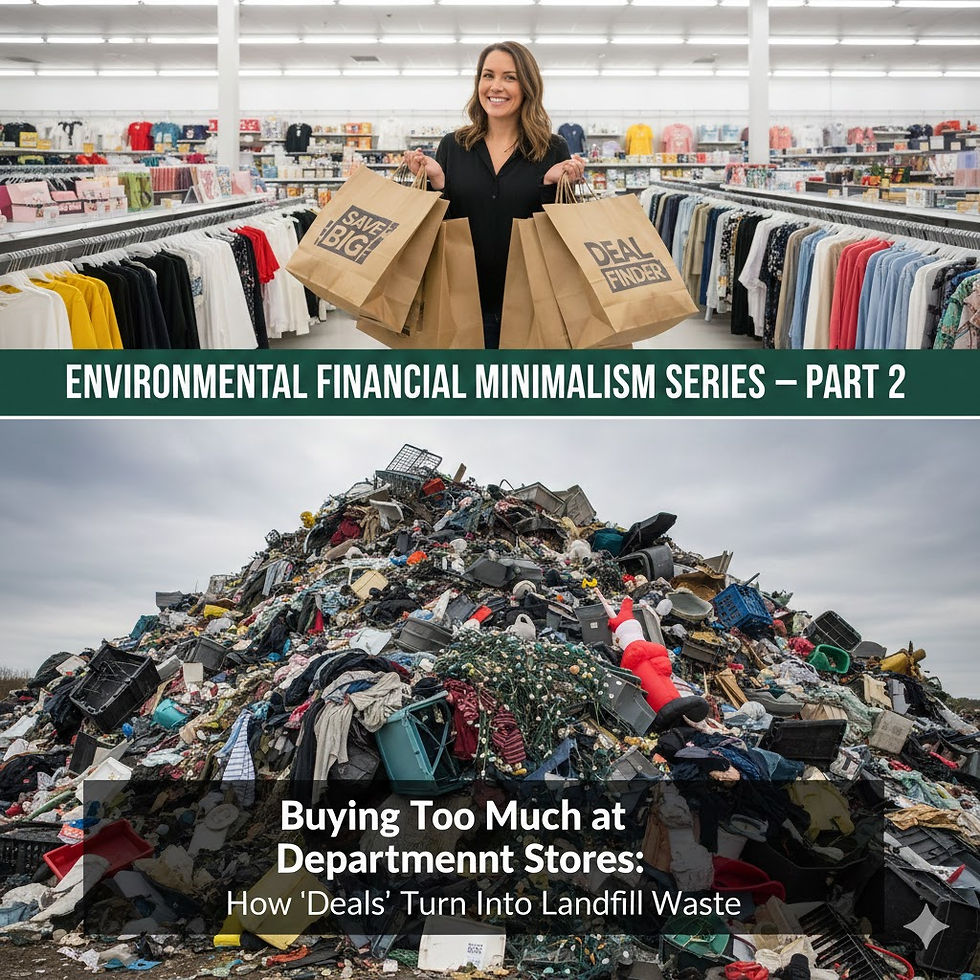
Buying Too Much at Department Stores: How “Deals” Turn Into Landfill Waste
- jennifercorkum
- Dec 28, 2025
- 4 min read
Environmental Financial Minimalism Series — Part 2
The Store Where Overspending Looks Responsible
Department stores don’t feel wasteful.
They feel practical. Organized. Budget-conscious. Full of “smart buys” and “good deals.” But beneath the racks of clothing, aisles of home goods, and endcaps of seasonal items is one of the most persistent pipelines to landfills in modern consumer life.
Unlike groceries, where waste feels obvious when food spoils, department store waste is delayed. It shows up later — in closets, garages, donation bins, and eventually dumpsters.
From an environmental financial minimalism perspective, this kind of waste is especially dangerous because it hides behind usefulness.
The Scale of the Problem: What Happens to What We Buy
Clothing and Textiles
Clothing is one of the fastest-growing waste streams in the United States.
Millions of tons of textiles — including clothing, linens, towels, and shoes — are discarded every year. The majority of these items are landfilled or incinerated, not recycled.
While donation feels like a solution, the reality is sobering:
Only a fraction of donated clothing is resold locally
Lower-quality fast fashion is often unsellable
Excess donations are exported, shredded, or dumped
Recycling textiles is technically possible, but infrastructure is limited and fabrics are often blended, treated, or contaminated — making recovery difficult and expensive.
Translation: Buying clothes you don’t wear is not a neutral act. It’s deferred disposal.
Plastics and Synthetic Goods
Department stores sell enormous volumes of plastic:
storage bins
hangers
kitchen gadgets
toys
seasonal décor
packaging itself
Despite “recyclable” labels, most plastics are never recycled. National recycling rates for plastics remain in the single digits, meaning the vast majority ends up landfilled or burned.
Cheap plastics are particularly problematic:
they crack, warp, or discolor quickly
they’re rarely worth recycling
they’re often made from mixed resins
Plastic clutter is not just clutter — it’s fossil fuel waste with a long afterlife.
Seasonal and Disposable Goods
Holiday décor, themed kitchen towels, novelty organizers, party supplies, and trend-based home items flood department stores year-round.
These items share common traits:
short useful lifespan
low durability
low emotional attachment
high likelihood of disposal
They are designed to be replaced, not maintained — and replacement is where environmental and financial costs multiply.
Why Department Store Overbuying Happens
1. The Psychology of the Deal
Sales create urgency and override intentionality:
“It’s too cheap not to buy.”
“I might need this someday.”
“I’ll figure it out later.”
But buying something you don’t use is never a deal. It’s a delayed expense — financially and environmentally.
2. Identity and Aspirational Shopping
Department stores sell versions of ourselves:
the organized person
the stylish person
the prepared host
the minimalist with better storage
We buy for the person we hope to be, not the person we actually are — and unused items accumulate quietly.
3. Low Cost Masks Low Value
When items are inexpensive, we treat them as disposable. That mindset doesn’t reduce waste — it accelerates it.
Cheap goods create permission to overbuy.
What to Buy Less Of (Highest Impact Categories)
1. Fast Fashion and “Maybe” Clothing
Clothes purchased without a clear role are the largest source of department store waste.
Cutback rule:If you wouldn’t wear it weekly or for years, don’t buy it — no matter how good the sale is.
2. Cheap Plastics and Storage Solutions
Buying bins to manage clutter is a common cycle:
buy too much
create clutter
buy containers
repeat
Most storage solutions don’t solve overconsumption — they hide it.
3. Seasonal and Trend-Based Items
Décor tied to trends or holidays has one of the shortest lifespans of any retail category.
Cutback rule:Choose neutral, reusable items that can adapt across seasons.
4. Disposable Household Products
Single-use plates, wipes, novelty cleaners, and temporary fixes create recurring waste and recurring expenses.
What Actually Gets Recycled (and What Usually Doesn’t)
More Likely to Be Recycled
cardboard boxes
paper packaging
some metals
Rarely Recycled
clothing and textiles
plastics (especially mixed or low-grade)
composite household goods
décor and novelty items
The environmental impact of department store shopping is less about packaging and more about product lifespan.
The Environmental Financial Minimalism Filter (Use It in Store)
Before buying, ask:
Will I use this at least 30 times?
Do I already own something that does this?
Would I pay full price for this?
If this broke in a year, would I replace it?
If the answer is “no,” the item is likely clutter-in-waiting.
How Cutting Back Saves the Most Money
Department store spending leaks money slowly:
$20 here
$15 there
“It was on sale”
Over a year, this can add up to hundreds or thousands of dollars in items that provide little long-term value.
The biggest savings come from:
fewer clothing purchases
avoiding impulse décor
buying durable goods less often
eliminating duplicate household items
Less shopping doesn’t mean less comfort — it means fewer replacements.
A Better Alternative: Fewer, Better, Longer
Environmental financial minimalism favors:
quality over quantity
repair over replace
secondhand when possible
neutral over trendy
function over fantasy
This approach reduces:
landfill contributions
repeat spending
decision fatigue
clutter anxiety
And it increases:
satisfaction
financial resilience
environmental alignment
A Simple Challenge to Try This Month
Commit to a 30-Day No Department Store Challenge:
no new clothes (except true replacements)
no décor
no storage containers
no “just in case” items
Keep a list of what you almost bought. That list reveals your biggest money and waste leaks.


Comments