


Building Long-Term Financial Habits to Beat Impulse Spending
- jennifercorkum
- Sep 26, 2025
- 3 min read
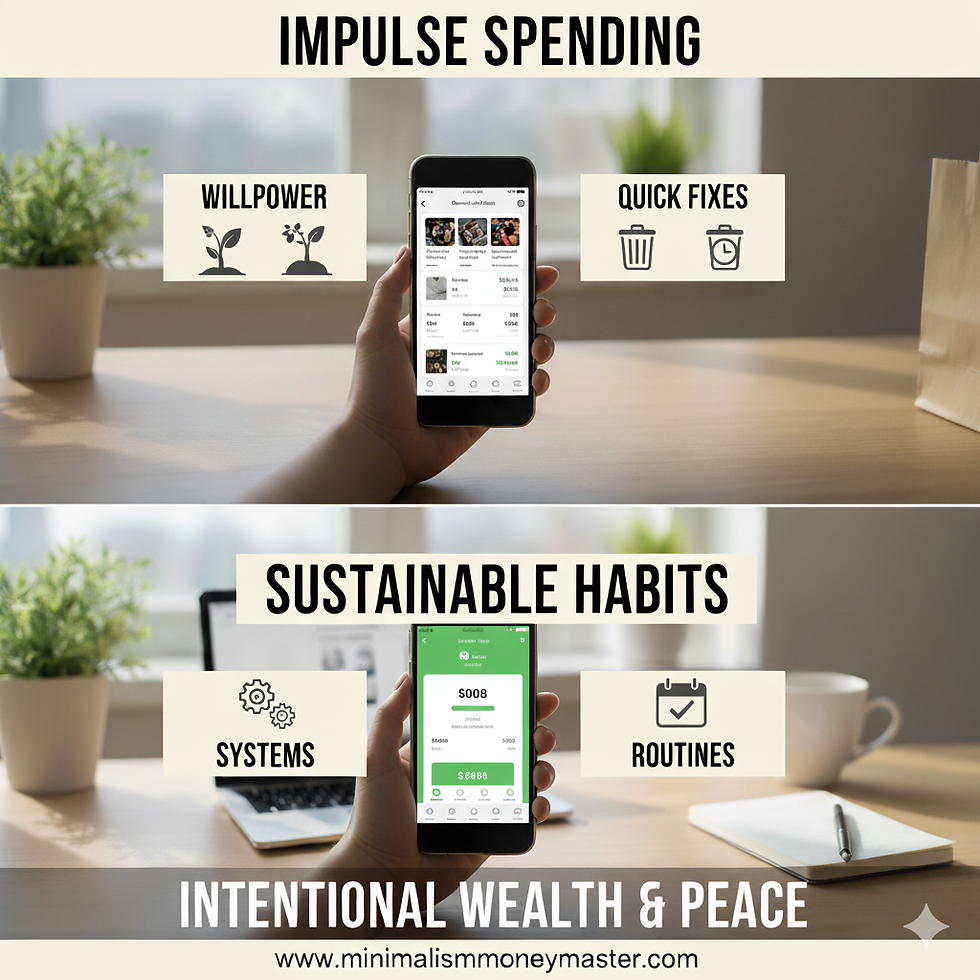
Impulse spending doesn’t disappear with quick fixes. Unsubscribing from emails, deleting shopping apps, and using the 24-hour rule are excellent first steps — but they only go so far. To truly overcome digital overspending, you need something deeper: sustainable financial habits.
From a minimalist finance perspective, beating impulse spending isn’t about restriction or deprivation. It’s about building systems that naturally align with your values, simplify your financial life, and make intentionality your default mode. When your habits work for you, resisting impulse purchases becomes effortless.
Why Habits Matter More Than Willpower
Willpower fades. Late-night boredom, stress, or a “flash sale” notification can override even the strongest intentions. But habits work on autopilot. When you build routines that reduce temptation and support your goals, you don’t have to fight every decision.
Minimalism reinforces this by encouraging systems that simplify life: fewer choices, fewer triggers, more clarity.
Long-Term Financial Habits That Replace Impulse Spending
1. Create and Stick to a Values-Based Budget
Budgets often fail when they feel like punishment. Instead, design a budget around what matters most.
Action: Allocate money intentionally to essentials, savings, and a small “fun” category.
Result: You’ll enjoy guilt-free spending within limits, while cutting wasteful impulse buys.
Minimalist angle: Aligns your money with your values, not with marketing tactics.
2. Automate Your Savings
Every dollar that goes straight to savings or investments is a dollar you can’t spend impulsively.
Action: Set up automatic transfers on payday to savings, retirement, or debt payoff.
Result: You save without thinking — and reduce disposable cash available for impulse buys.
Minimalist angle: Automating simplifies your finances and reduces decision fatigue.
3. Practice Mindful Spending
Impulse spending thrives on autopilot. Flip the script by making every purchase a conscious choice.
Action: Before buying, ask: Does this bring long-term value? Does it align with my goals?
Result: Purchases become intentional, not emotional.
Minimalist angle: Mindfulness is at the core of both minimalism and financial freedom.
4. Build a “Joyful Alternatives” List
Impulse spending often fills emotional gaps: boredom, stress, or the need for novelty. Replace the habit, don’t just remove it.
Action: Create a list of free or low-cost alternatives: walk, read, call a friend, declutter, cook a meal.
Result: You address the root cause without spending.
Minimalist angle: More joy from less stuff.
5. Track Progress and Celebrate Wins
Without measuring progress, it’s easy to slip back into old habits.
Action: Track how much you save each month by avoiding impulse buys. Use apps, journals, or spreadsheets.
Result: Motivation grows as you see results.
Minimalist angle: Tracking helps you focus on what matters and cut the rest.
6. Surround Yourself With Simplicity
Your environment shapes your habits. Simplify your digital and physical spaces to reduce temptation.
Action: Declutter your phone (remove shopping apps), your inbox (unsubscribe), and your home (donate unused items).
Result: Fewer triggers mean fewer opportunities to overspend.
Minimalist angle: A clean space supports a clean budget.
The Ripple Effects of Long-Term Habits
When you replace impulse spending with sustainable habits, the benefits multiply:
Financial security: More savings, less debt.
Emotional freedom: Less guilt, more clarity.
Physical simplicity: Fewer possessions cluttering your home.
Lifestyle alignment: Spending reflects who you are, not what ads tell you to be.
From a minimalist finance perspective, these ripple effects are the true rewards of intentional living.
Building Habits That Stick
Start Small: Focus on one habit at a time, like automating savings or deleting one app.
Use Triggers: Tie habits to existing routines (e.g., move money to savings right after payday).
Reward Yourself: Celebrate progress with experiences, not purchases.
Stay Consistent: Small habits compound into massive results over time.
Final Thoughts: Sustainable Spending, Sustainable Freedom
Impulse spending thrives in the digital age — but you don’t have to let it control your life. Quick fixes help, but long-term habits are what create lasting change.
From a minimalist finance perspective, the path forward is clear: simplify your systems, align your spending with your values, and let intentional habits replace impulsive ones.
The truth is simple: when you build habits that save money, reduce stress, and eliminate clutter, you don’t just stop impulse spending — you create a life of freedom. A life where every dollar has purpose, and every choice reflects what truly matters.


Comments