


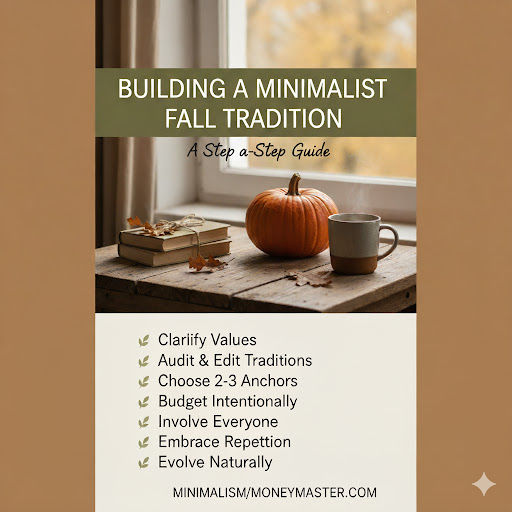
Building a Minimalist Fall Tradition: A Step-by-Step Guide
- jennifercorkum
- Oct 14, 2025
- 5 min read
Every fall, the world turns cozy — and commercial. The shift from summer to autumn brings not just crisp air and colorful leaves, but also a flood of marketing urging you to buy, decorate, and do more. New seasonal collections, themed events, and “must-have” experiences can make the season feel like a to-do list rather than a time of rest and reflection.
But here’s the truth: you don’t need more stuff or more spending to create meaningful fall traditions. In fact, the most memorable traditions are usually the simplest ones — repeated with intention, year after year.
Minimalism isn’t about skipping joy; it’s about building traditions that last, without the financial or mental clutter. Here’s a step-by-step guide to creating minimalist fall traditions your family and friends will actually look forward to.
🧭 Step 1: Identify Your Core Seasonal Values
Before you buy a single pumpkin or plan another overbooked weekend, pause and ask:👉 What does fall actually mean to me (or us)?
For some, it’s about connection — slow dinners with loved ones. For others, it’s nature — walks under fiery leaves. It might be creativity, reflection, or simple pleasures like warm drinks and quiet mornings.
Minimalist traditions work best when they flow from your values, not from social pressure or marketing trends. Sit down with your family, partner, or even just a notebook, and list:
Your favorite memories from past falls
What activities made you feel happiest
What felt rushed, expensive, or overwhelming
2–3 words that capture the ideal fall feeling for you (e.g., cozy, connected, calm, grateful)
This clarity becomes your compass. Everything else will build around it.
📝 Step 2: Audit Your Current Traditions
Most of us carry fall traditions by inertia. We do what our families did, what our neighborhoods do, or what social media tells us to do — without questioning if those traditions still fit our lives, budgets, or values.
Do a quick audit of your current seasonal habits. For each tradition or activity, ask:
Does this genuinely bring joy and meaning?
Or is it just habit, obligation, or comparison?
How much money, time, or energy does it take?
Does it align with the values I listed in Step 1?
Traditions that no longer fit don’t need to be kept. Releasing them isn’t “skipping fall” — it’s making space for traditions that actually matter.
For example:
Hosting an elaborate annual Halloween party that leaves you stressed and broke → ✂️ rethink or scale back.
Baking pies with friends every October weekend → ✅ keep and maybe even highlight more.
Buying new décor every year → 🌀 replace with a single timeless piece.
This step is about intentional editing, not eliminating joy.
🌿 Step 3: Choose 2–3 Meaningful Anchor Traditions
Here’s where minimalism shines: you don’t need a long list of fall traditions to make the season feel rich. Two or three deeply meaningful “anchor” traditions, done consistently, create stronger memories than dozens of scattered activities.
Examples of minimalist anchor traditions:
Family pumpkin carving night every October, with homemade snacks and music.
Annual fall nature walk to collect leaves and reflect on the season’s changes.
Thanksgiving gratitude circle, where everyone shares something they appreciated about the year.
“Soup Sunday” — one cozy meal shared with neighbors or family in mid-fall.
Decorating the house with natural materials on the same weekend each year.
These anchors act like seasonal milestones — simple, meaningful moments that mark the passage of fall without overwhelming your calendar or your wallet.
💰 Step 4: Budget for Traditions, Not Trends
Seasonal marketing thrives on impulse spending: new décor, themed outfits, trendy events. Minimalist fall traditions thrive on planned, intentional spending.
Set a modest seasonal budget and allocate it to the traditions that actually matter to you. For example:
$30 for pumpkins and baking ingredients for the annual carving night
$50 for one meaningful outing (e.g., apple picking or a local fall festival)
$20 for a reusable décor item that fits your aesthetic long-term
When you align your budget with your chosen traditions, you eliminate guilt spending — those little “extras” that add up without bringing real joy. You’ll also notice your financial stress around the holidays goes way down.
💡 Pro Tip: Create a small “fall traditions” envelope (digital or physical) in your budget each year. When it’s time for your chosen activities, the money is ready — no last-minute credit card scrambles.
🧍♀️ Step 5: Get the Whole Household Involved
Minimalist traditions stick when everyone feels ownership and excitement. Instead of planning everything solo, invite your household — kids, partner, roommates — to co-create the traditions.
You might:
Let kids pick one tradition to keep or start.
Share the responsibility for preparation or hosting.
Make certain tasks (like setting the fall table or gathering nature décor) their annual role.
Rotate who chooses the special seasonal outing each year.
This turns traditions into shared experiences, not chores, and builds lasting emotional connections around them.
🌳 Step 6: Embrace Repetition and Simplicity
One of the most powerful things about traditions is their predictability. Doing the same simple activity each year builds comfort, nostalgia, and a sense of continuity.
Minimalist traditions are intentionally repeatable. You don’t need to reinvent the wheel annually. A nature walk, a special dinner, or one decorating day can become a family touchstone precisely because it’s familiar.
And because you’re not chasing trends or piling on new activities, you’ll have more time to be present — which is the whole point.
✨ Step 7: Let Traditions Evolve Naturally
Minimalism isn’t rigid. Over time, your family, circumstances, and interests will change — and so will your traditions. The beauty of keeping things simple is that you can adapt easily without major costs or upheaval.
If a tradition no longer fits, let it go gracefully. If something new brings joy, add it thoughtfully. Minimalism gives you permission to shape the season to your life, not the other way around.
📝 Minimalist Fall Tradition Checklist
✅ Clarify your seasonal values — what matters most?✅ Audit existing traditions — keep, edit, or release.✅ Choose 2–3 anchor activities that bring genuine joy.✅ Budget intentionally for traditions, not trends.✅ Involve your household to build shared ownership.✅ Repeat simply — let tradition build meaning through consistency.✅ Evolve over time as your life changes.
🍂 Key Takeaways
Fall doesn’t need to be packed with activities or purchases to feel meaningful.
Minimalist traditions focus on depth, not quantity, creating stronger emotional connections.
Budgeting around a few key traditions saves money and stress, while amplifying joy.
Involving your household makes traditions shared experiences, not obligations.
Over time, simple, intentional traditions become the heartbeat of the season.
You don’t need to buy every candle, attend every event, or reinvent the season annually. By focusing on a handful of meaningful, sustainable traditions, you’ll create a fall that feels calmer, cozier, and more connected — year after year.


Comments