


Building a Capsule Wardrobe: The Minimalist’s Guide to Saving Money and the Planet
- jennifercorkum
- Sep 20, 2025
- 4 min read
Introduction: Why Your Closet Feels Overwhelming
If you’ve ever stood in front of your closet thinking, “I have nothing to wear,” while staring at dozens of clothes, you’re not alone. The paradox of fast fashion is that the more options we have, the harder it becomes to choose.
Minimalists have found a solution: the capsule wardrobe. It’s a smaller, intentional collection of clothing that works together, saves you money, and drastically reduces your environmental impact. Let’s explore how you can build your own.
What Is a Capsule Wardrobe?
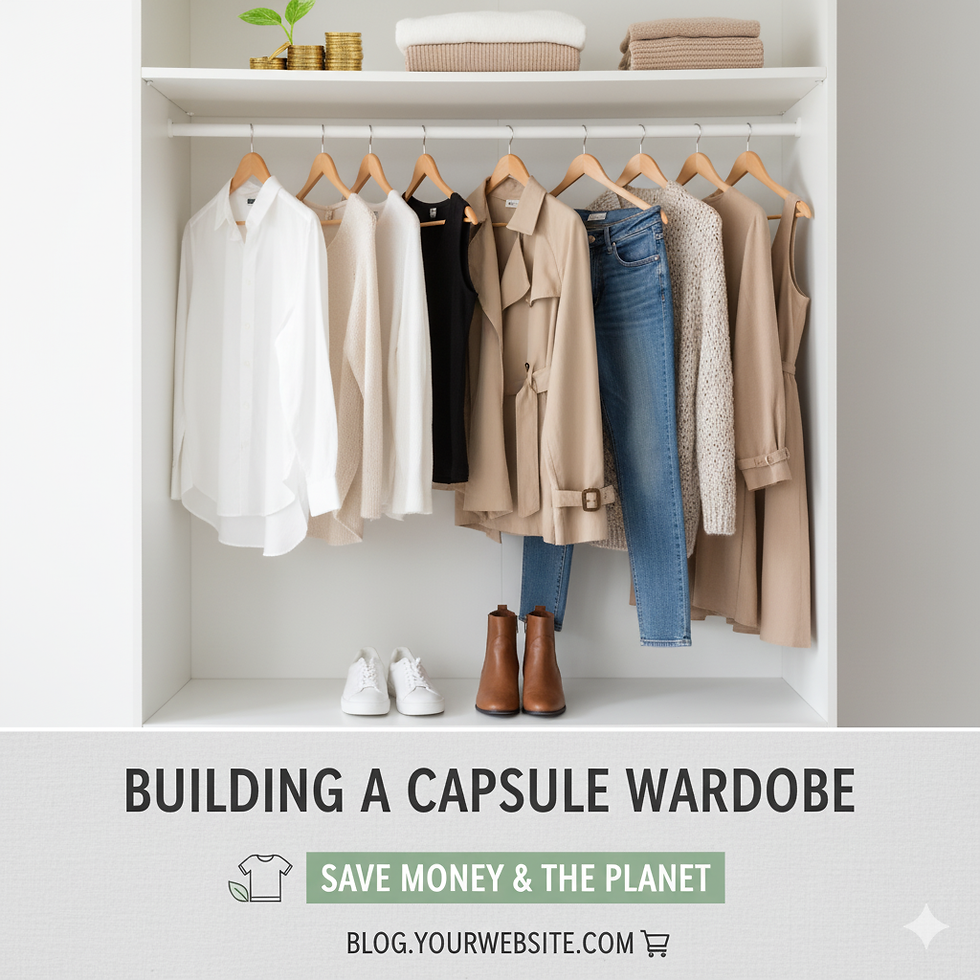
A capsule wardrobe is a curated collection of versatile pieces that can be mixed and matched to create multiple outfits. Typically, it includes 25–40 items per season, covering tops, bottoms, shoes, and outerwear.
Instead of buying into endless trends, you focus on timeless, high-quality basics. The goal? Do more with less.
The Financial Benefits of a Capsule Wardrobe
1. Spending Less on Clothes
Fast fashion encourages frequent shopping, but with a capsule wardrobe, you invest in fewer, higher-quality items. This reduces the constant cycle of spending, saving you hundreds (or even thousands) each year.
2. Better Value Per Wear
When you own fewer items, you wear each piece more often. A $120 blazer worn 120 times costs $1 per wear. Compare that to a $25 shirt you wear twice—that’s $12.50 per wear. The math proves quality beats quantity.
3. Eliminating “Impulse Shopping” Debt
Many people overspend on clothing with credit cards. A capsule wardrobe puts intentionality at the center, helping you avoid unplanned purchases that hurt your financial health.
The Environmental Benefits of a Capsule Wardrobe
1. Reducing Clothing Waste
By choosing fewer, longer-lasting pieces, you reduce your contribution to the 11 million tons of textile waste Americans throw away each year.
2. Lower Carbon Footprint
Fewer clothes purchased means fewer resources consumed. From water usage to transportation emissions, every avoided purchase is a small but real step toward sustainability.
3. Supporting Ethical Brands
When you buy fewer items, you can redirect your budget to ethical or sustainable brands. Instead of funding fast fashion giants, your dollars support better practices.
How to Build Your Capsule Wardrobe
Step 1: Audit Your Closet
Start by laying everything out. Ask yourself:
Do I love this piece?
Do I wear it often?
Does it fit both my body and my lifestyle?
Be honest. If the answer is “no,” consider donating, selling, or repurposing it.
Step 2: Define Your Style
Capsule wardrobes work best when they reflect your real life. Consider your daily activities: work, casual outings, exercise, or formal events. Build around what you actually need—not aspirational clothing that gathers dust.
Step 3: Choose a Neutral Color Palette
Neutral tones (black, white, navy, beige, gray) are the backbone of a capsule wardrobe. They mix and match effortlessly. Add 2–3 accent colors for variety.
Step 4: Invest in Versatile Basics
Think timeless, high-quality pieces such as:
A well-fitted pair of jeans
A classic blazer
Neutral T-shirts
A little black dress (LBD)
A pair of versatile sneakers and dress shoes
These essentials can form dozens of combinations.
Step 5: Limit Accessories and Shoes
Accessories and footwear often multiply without notice. Stick to a few versatile options that complement your wardrobe.
Step 6: Create Seasonal Rotations
You don’t need to own every item year-round. Store out-of-season clothes and rotate them every few months. This keeps your wardrobe fresh without requiring new purchases.
Tips to Maintain Your Capsule Wardrobe
Adopt a “One In, One Out” RuleEvery time you add a new piece, remove one. This prevents clutter.
Buy with IntentionAsk yourself: Does this fill a gap in my wardrobe, or am I just chasing a trend?
Focus on Quality CareWashing clothes in cold water, air-drying, and repairing small damages can extend their life dramatically.
Resist Seasonal MarketingBrands thrive on creating artificial urgency with “new season” lines. Minimalists resist this by sticking to their core wardrobe year after year.
A Sample 30-Piece Capsule Wardrobe
To help visualize, here’s an example:
Tops (8): 4 neutral T-shirts, 2 button-downs, 1 sweater, 1 blouse.
Bottoms (6): 2 jeans, 2 trousers, 1 skirt, 1 pair of shorts.
Outerwear (3): 1 blazer, 1 coat, 1 casual jacket.
Shoes (4): 1 sneakers, 1 dress shoes, 1 boots, 1 sandals.
Dresses (2): 1 casual, 1 formal.
Accessories (7): 2 belts, 3 scarves, 1 watch, 1 bag.
This compact collection can yield 100+ outfits, proving that you don’t need a bursting closet to feel stylish.
The Bigger Picture: Minimalism Beyond Clothes
A capsule wardrobe isn’t just about clothing—it’s a mindset shift. It encourages intentionality, reduces waste, and aligns your spending with your values. The benefits spill into other areas of life too, from grocery shopping to home decor.
When you stop chasing “more,” you open space for what matters: financial freedom, peace of mind, and a lighter footprint on the planet.
Conclusion: Less Clothes, More Freedom
A capsule wardrobe is more than a fashion trend—it’s a financial and environmental strategy. By curating a small, versatile collection of clothing, you save money, simplify your mornings, and step away from the wasteful cycle of fast fashion.
Minimalism isn’t about giving up style—it’s about redefining it. With fewer but better clothes, you create a wardrobe that works for you, your wallet, and the planet.


Comments