


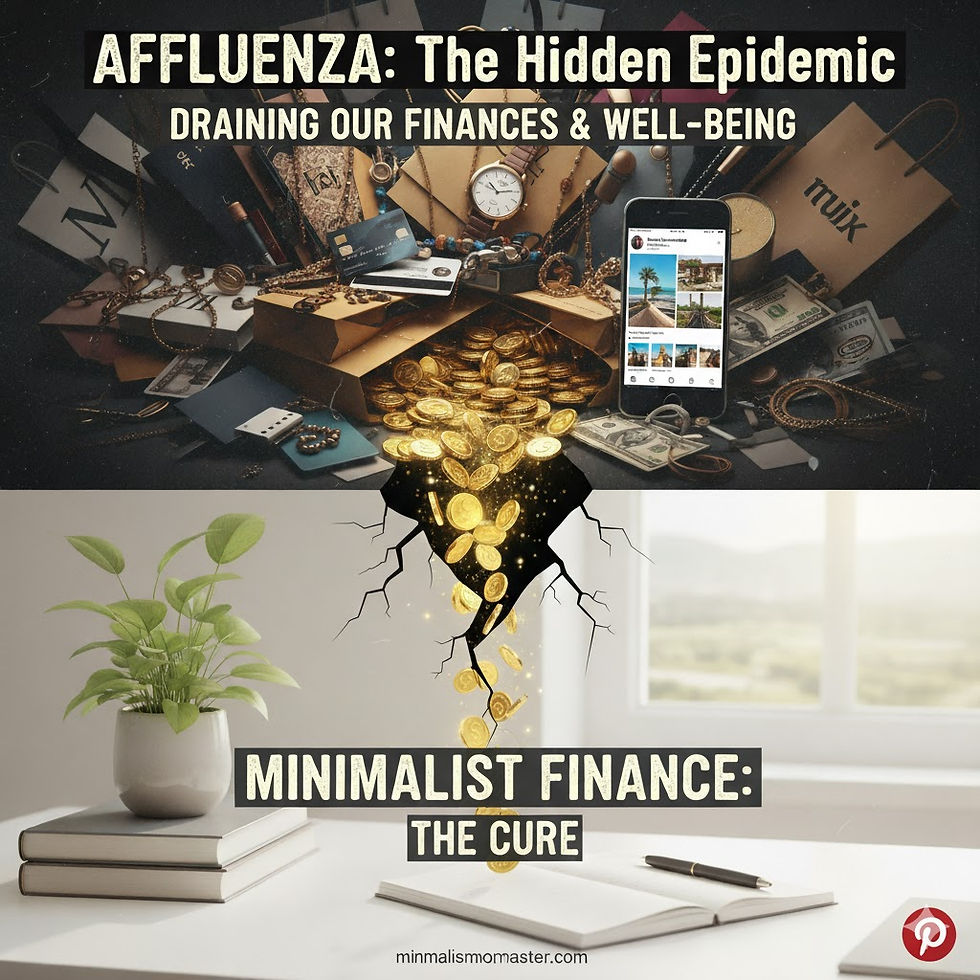
Affluenza — The Hidden Epidemic Draining Our Finances and Well-Being
- jennifercorkum
- Oct 23, 2025
- 5 min read
Affluenza might sound like a buzzword from a self-help book, but it describes something very real: a cultural illness that convinces us to chase more, spend more, and still feel like we never have enough.
Unlike the flu, affluenza doesn’t come with coughing or fever. Its symptoms show up in credit card bills, restless scrolling through shopping apps, and the quiet anxiety that we’re falling behind. It spreads not through germs, but through advertising, peer pressure, and comparison.
From a minimalist finance perspective, affluenza is one of the biggest barriers to financial freedom — not because of what we earn, but because of what we believe we must spend to keep up.
What Exactly Is Affluenza?
The term affluenza is a blend of “affluence” and “influenza.” It refers to the social pressure to accumulate wealth and possessions combined with the emotional dissatisfaction that often follows.
In cultures where success is measured by income, square footage, or the car in the driveway, affluenza spreads easily. It tells us:
If you don’t have the latest gadget, you’re behind.
If your house doesn’t look like a design magazine, you’re failing.
If your clothes aren’t on trend, you’re invisible.
This belief system fuels a cycle of compulsive consumption, regardless of whether we can afford it — and regardless of whether it actually brings us joy.
SEO keywords: affluenza, minimalist living, financial stress, consumer debt, social media comparison.
The Financial Impact of Affluenza
Affluenza doesn’t just affect how we feel; it directly impacts our financial well-being. Many people with high incomes still live paycheck to paycheck, not because they lack money, but because their spending grows in step with their earnings — a phenomenon known as lifestyle inflation.
Some common financial symptoms include:
Rising credit card debt to maintain a curated image.
Underfunded savings despite solid salaries.
Impulse spending on luxury goods as a way to signal success.
Minimal investing because funds are tied up in consumption.
This pattern creates fragile personal economies. A single job loss, medical bill, or market downturn can expose just how thin the financial safety net is.
By contrast, minimalist finance prioritizes security over status. It focuses on what lasts: savings, investments, and intentional spending that supports your actual life goals, not society’s script.
Emotional Burnout Behind the Gloss
While the financial costs of affluenza are obvious, the emotional costs are often hidden — and profound.
When your identity is built on possessions, satisfaction becomes fleeting. You’re always chasing the next upgrade, trend, or purchase to maintain the image. Psychologists call this the hedonic treadmill: the more we acquire, the more we adapt, and the less lasting happiness we derive.
This constant striving can lead to:
Anxiety, from trying to keep up appearances.
Burnout, from working harder to fund a lifestyle that doesn’t actually fulfill you.
Low self-esteem, from comparing yourself to carefully curated highlight reels on social media.
Emptiness, when possessions fail to deliver meaning.
Minimalism offers a different foundation: self-worth rooted in values, not valuables. When you stop measuring your success by what you own, you can finally breathe.
Social Media and the Comparison Trap
Social media is one of affluenza’s most powerful accelerants. Platforms are designed to trigger comparison, showing us polished, filtered versions of other people’s lives.
The effect is subtle but powerful. Even if we logically know that someone’s vacation photos or designer wardrobe don’t reflect their whole reality, emotionally we still feel the pull to “catch up.”
This pressure often translates into spending behaviors: booking trips to post about, buying clothes for the aesthetic, upgrading gadgets to match peers. It’s not about the thing itself — it’s about the signal.
A minimalist finance approach interrupts this cycle by questioning the signal itself. Do you actually want that item or experience, or are you seeking validation? When you detach spending from comparison, financial peace follows.
How to Immunize Yourself Against Affluenza
Escaping affluenza doesn’t mean rejecting all modern comforts or living in a cabin off-grid. It means living intentionally, not reflexively. Here are practical ways to build your immunity:
1. Redefine Success
Take time to articulate your personal definition of success. Maybe it’s financial independence, creative freedom, family time, or travel. Anchor your financial decisions to that vision, not society’s defaults.
2. Limit Comparison Triggers
Curate your media environment intentionally. Unfollow influencers or accounts that stir envy rather than inspiration. Remember, what you consume online shapes your financial desires more than you realize.
3. Automate Savings and Investments
By setting up automatic transfers to savings and investment accounts, you remove willpower from the equation. Wealth-building becomes your default behavior, not the leftover after lifestyle spending.
4. Practice Gratitude Daily
Gratitude isn’t just feel-good fluff — it’s a psychological counterforce to consumerism. When you regularly acknowledge what you already have, the urgency to acquire more diminishes.
5. Build “Enough” Into Your Finances
Minimalist finance revolves around the idea of enough. Define what “enough” looks like for your lifestyle — the level of comfort and security that satisfies your needs without chasing endless upgrades. Once you reach it, direct additional income toward freedom, not more consumption.
A Real-World Illustration
Consider someone earning $150,000 a year who still feels constantly stressed about money. They drive a luxury car with a lease payment larger than most people’s mortgages. Their designer wardrobe is impressive, their vacations Instagrammable, and their home filled with expensive furniture.
On the surface, they “have it all.” But behind the scenes, they carry credit card debt, have little in emergency savings, and are one missed paycheck away from panic. This is affluenza in action.
Now imagine someone earning half that amount but living intentionally. Their home is modest but paid off. Their wardrobe is functional and timeless. They invest consistently and spend on experiences that align with their values. Financial stress is low, not because of income, but because of intentional choices.
Affluenza isn’t about numbers — it’s about mindset.
Minimalism: The Antidote to Affluenza
Minimalism provides a practical, emotionally grounding way to step off the hedonic treadmill. By stripping away excess, you can focus on what genuinely matters:
Time — because you’re not overworking to fund a lifestyle you don’t need.
Freedom — because financial buffers replace constant spending.
Clarity — because your choices reflect your values, not trends.
Minimalist finance isn’t anti-wealth. It’s pro-freedom. It allows wealth to serve your life, not the other way around.
Final Thoughts
Affluenza is an invisible epidemic. It thrives in unconsciousness, in comparison, in the quiet assumption that more is always better. But when you bring awareness to it, you can choose a different path.
Minimalist finance offers a sustainable cure: spend intentionally, define your own version of success, and build financial resilience from the inside out.
Freedom doesn’t come from the next purchase. It comes from realizing you already have enough.


Comments