


30 Minimalist Money Habits to Simplify Your Finances This Year
- jennifercorkum
- Oct 25, 2025
- 5 min read
When it comes to personal finance, most people focus on earning more — chasing promotions, side hustles, or investment strategies. But what often matters more than income is how you use and manage the money you already have.
Minimalists approach money differently. Instead of trying to control everything through sheer effort, they design simple, intentional systems that reduce friction and align their financial lives with their values.
The good news? You don’t need to overhaul your entire financial life overnight. By consistently applying small, thoughtful habits, you can transform your relationship with money — and make it a tool that supports the life you want, not one that controls you.
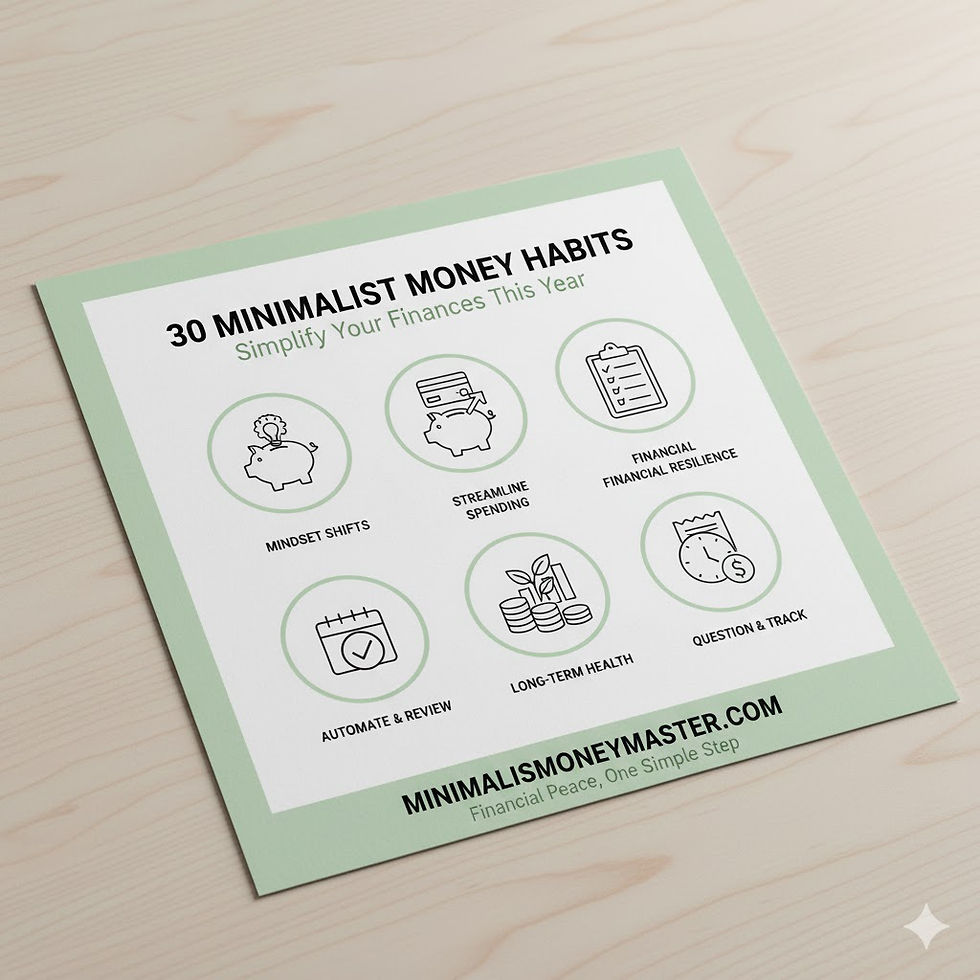
Here are 30 minimalist money habits to adopt this year that will bring clarity, calm, and control to your finances.
🧠 1–5: Mindset Shifts That Build the Foundation
1. Define Your “Enough” Number
Minimalism begins with clarity. Calculate the amount of income you truly need to live comfortably and fund your values — not someone else’s version of success. Knowing your “enough” number prevents endless lifestyle chasing and helps you focus on what matters.
2. Question Every Expense
Before every purchase, ask: “Does this add real value to my life?” This simple habit cuts emotional and impulsive spending at the root.
3. Value Time Over Things
Start reframing purchases in terms of time. If a $300 gadget costs you 10 hours of work, is it worth it? This mindset naturally slows consumption.
4. Detach Self-Worth from Spending
Minimalists don’t buy things to prove their success. Financial confidence comes from alignment with your values, not your possessions.
5. Embrace “Less but Better”
Quality trumps quantity. Owning one excellent item that lasts is better — financially and mentally — than constantly replacing cheap versions.
💳 6–10: Streamline Your Spending
6. Track Every Dollar for 30 Days
Awareness is the first step to change. Track all your expenses for one month. Most people find surprising leaks they didn’t even know existed.
7. Automate Fixed Bills
Automate rent, utilities, insurance, or other recurring payments. This reduces mental load, prevents late fees, and keeps your financial life running smoothly in the background.
8. Cancel Unused Subscriptions
Streaming services, apps, gyms — subscriptions creep in silently. Audit them quarterly and cancel anything you’re not actively using.
9. Use One Primary Card
Multiple cards make tracking harder and increase annual fees. Consolidating to one or two main accounts simplifies everything from budgeting to tax time.
10. Shop With a List Only
Impulse buying often happens when we wander. Whether grocery shopping or browsing online, sticking to a list keeps spending intentional.
💰 11–15: Build Simple Saving Systems
11. Automate Savings on Payday
Treat savings like a non-negotiable bill. Set up automatic transfers to savings or investment accounts the day you get paid. What you don’t see, you won’t spend.
12. Create Separate Savings Buckets
Use separate accounts or labeled sub-accounts for specific goals — like emergency funds, travel, or investments. Purposeful separation increases clarity and motivation.
13. Set “No-Spend” Days
Pick one or two days each week where you intentionally spend nothing. It resets habits, curbs unnecessary purchases, and makes spending more mindful.
14. Use Round-Up Savings Apps
Small, automatic savings from rounding up purchases can quietly build your savings over time without requiring effort.
15. Save Windfalls Instead of Inflating Lifestyle
When you receive bonuses, tax refunds, or unexpected income, save or invest most of it rather than upgrading your lifestyle.
📝 16–20: Simplify Your Budgeting
16. Adopt a One-Page Budget
Budgeting doesn’t have to be complicated. A simple one-page system that tracks income, fixed costs, variable spending, savings, and goals is often all you need.
17. Use Percentage Rules
Rules like 50/30/20 (needs/wants/savings) provide structure without complexity. Adapt the percentages to fit your life.
18. Review Monthly, Not Daily
Daily micromanagement leads to burnout. A monthly budget check-in gives you enough information to stay on track while keeping things light.
19. Use Cash for Problem Categories
For categories where you overspend — like dining out or shopping — switching to cash can bring immediate awareness and set clear boundaries.
20. Budget for Joy Intentionally
Minimalism is not deprivation. Set aside guilt-free money for things that truly bring you joy. The key is to be intentional, not impulsive.
📈 21–25: Strengthen Financial Resilience
21. Build a 3–6 Month Emergency Fund
An emergency fund is a minimalist’s financial safety net. It gives you breathing room and confidence, making financial setbacks less stressful.
22. Live on Less Than You Earn
This single habit underpins all financial stability. Consistently spending below your income creates space for savings, investing, and freedom.
23. Avoid Lifestyle Creep When You Get Raises
When your income increases, resist the urge to inflate your lifestyle. Keep expenses stable and direct the difference to savings or investments.
24. Use Debt Sparingly and Strategically
Not all debt is bad — but every loan should have a clear purpose and a plan for repayment. Avoid using debt to fund temporary desires.
25. Practice Saying “No”
Financial minimalism often means declining unnecessary upgrades, trends, or social spending. Saying “no” protects your goals.
🌱 26–30: Build Long-Term Financial Health
26. Invest Automatically
You don’t need to time the market. Automating regular investments in diversified, low-cost funds is one of the most powerful wealth-building habits available.
27. Set Yearly Financial Goals
Choose one to three clear priorities each year, such as “build a $10k emergency fund” or “max out my Roth IRA.” Focus beats scattered intentions.
28. Review Your Financial Life Annually
Take one “money day” per year to review everything: subscriptions, insurance, investment performance, goals, and lifestyle alignment. Simplify what’s become cluttered.
29. Teach and Share What You Learn
Minimalists reinforce their habits by helping others. Share what works with friends, family, or your community — it strengthens your own commitment.
30. Celebrate Progress, Not Perfection
Financial growth is a journey. Celebrate the habits you’ve built and the progress you’ve made rather than striving for perfection. Sustainable success is built step by step.
✨ Conclusion: Small Habits, Big Freedom
Minimalist finance isn’t about living with the bare minimum or obsessing over every penny. It’s about intentional design — creating systems and habits that make your financial life simpler, calmer, and more aligned with your real priorities.
You don’t need to adopt all 30 habits at once. Start with one or two that resonate most. Over time, layer in more as they become natural. As these habits compound, you’ll find that financial clarity emerges almost effortlessly — and with it comes real freedom.
The goal isn’t to be perfect with money. The goal is to make money uncomplicated, so you can spend less time worrying and more time living.


Comments