


30 Minimalist Money Habits That Will Transform Your Finances This Year
- jennifercorkum
- Oct 25, 2025
- 4 min read
In a world that glorifies more — more income, more possessions, more complexity — it’s easy to feel like personal finance is a race you can never win. Every day brings new products, new budgeting methods, and new “must-have” financial tools. But minimalists know something powerful: simplicity is often the fastest route to lasting financial freedom.
Minimalism isn’t about deprivation. It’s about clarity — focusing on what matters most and removing what doesn’t. When applied to money, minimalist habits can help you cut through noise, reduce stress, and build a financial life that supports your values.
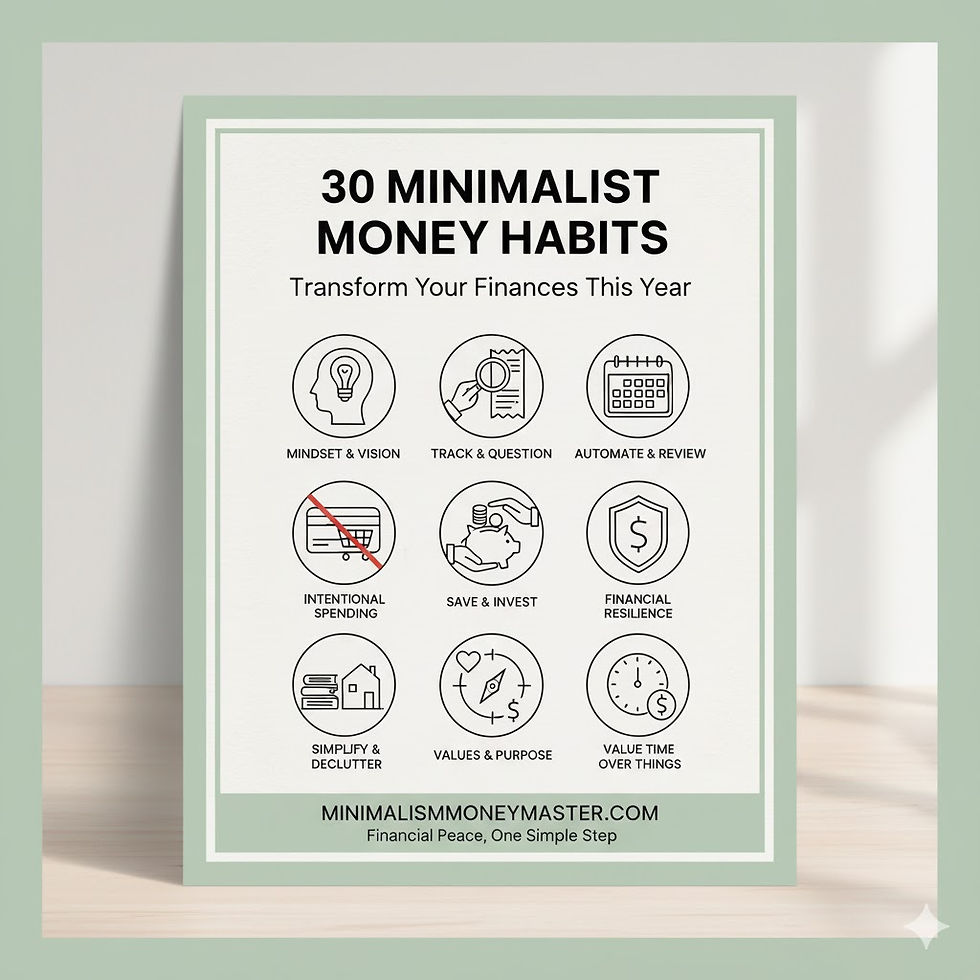
Here are 30 minimalist money habits to adopt this year that will transform the way you earn, spend, save, and think about money.
🧠 Mindset & Awareness (1–10)
1. Start With a Financial Vision
Before spreadsheets and apps, ask yourself: What kind of life do I want my money to support? Your financial plan should reflect your values and goals, not someone else’s.
2. Know Your “Enough” Number
Figure out the amount you actually need to live well and reach your goals. This number acts as a compass, helping you avoid lifestyle inflation and unnecessary stress.
3. Detach Status from Spending
Your worth isn’t measured by your car, clothes, or square footage. Minimalists consciously separate self-worth from net worth.
4. Track Every Expense for 30 Days
One month of honest tracking often reveals more insight than years of vague budgeting. Awareness is the first step toward control.
5. Do a Monthly “Money Reset”
Set aside time once a month to check in: review spending, cancel waste, and realign your budget. A little consistency goes a long way.
6. Avoid Comparison Traps
Comparing your life to others’ highlight reels is financially draining. Focus on your journey, your numbers, and your goals.
7. Value Simplicity Over Optimization
A simple plan you follow consistently beats a complex system you abandon. Don’t chase financial perfection — aim for clarity and consistency.
8. Automate Good Decisions
Minimalists love systems. Automating savings, bill payments, and investments removes friction and makes good habits effortless.
9. Practice Gratitude Daily
Regular gratitude shifts focus from “what’s missing” to “what’s already enough.” This mindset naturally curbs impulse spending.
10. Question All “Deals”
Minimalists know that sales often exist to make us buy things we never needed. A “deal” is only good if you were already planning the purchase.
💳 Spending & Consumption (11–20)
11. Shop Intentionally
Before buying, pause. Use lists, set budgets, or apply a 24-hour waiting rule for non-essential purchases to avoid impulse spending.
12. Declutter Before You Buy
Clutter often hides forgotten value. Clearing out your space regularly reminds you how much you already own and reduces the urge to buy more.
13. Limit Choice Overload
Multiple bank accounts, dozens of apps, five credit cards — complexity breeds stress. Simplify payment methods and tools to regain control.
14. Embrace Multipurpose Purchases
Choose items that serve multiple functions and last over time. This reduces both spending and clutter.
15. Use Cash for Weak Spots
For categories where you tend to overspend — like dining out, hobbies, or shopping — switch to cash. Physical money provides instant accountability.
16. Cancel Unused Services
Audit subscriptions every few months. If you haven’t used it in 90 days, cancel it.
17. Set Spending Boundaries
Define where you spend freely and where you keep things lean. This gives you structure without feeling restrictive.
18. Avoid Recreational Browsing
“Just looking” often turns into “just bought.” Limit online browsing and in-store wandering to reduce temptation.
19. Repair, Don’t Replace
Before buying something new, see if you can fix what you have. This mindset saves money and reduces waste.
20. Buy Once, Buy Well
Investing in durable, quality items often costs more upfront but saves time and money over the long run.
💰 Saving & Investing (21–30)
21. Automate Savings & Investments
Treat saving and investing like bills. Automate contributions to savings accounts, retirement funds, or investment platforms.
22. Create Purpose-Driven Funds
Minimalists love clarity. Instead of one giant savings account, create separate funds for emergencies, travel, long-term goals, or big purchases. Each dollar has a job.
23. Set No-Spend Challenges
A week or month of no-spend living can reset habits, increase awareness, and spark creativity in how you use what you already have.
24. Avoid Windfall Inflation
Tax refunds, bonuses, or side income don’t need to disappear into lifestyle upgrades. Direct unexpected money toward savings or investments.
25. Live on Last Month’s Income
Building a one-month buffer between earning and spending creates stability and breathing room — hallmarks of minimalist finance.
26. Keep Investments Simple
You don’t need to be a market expert. Index funds, ETFs, or robo-advisors provide low-cost, effective paths for long-term growth.
27. Prioritize Debt Strategically
Pay off high-interest debt first, but avoid overcomplicating your repayment plan. A clear, focused strategy beats juggling multiple gimmicks.
28. Review Annually, Not Constantly
Minimalists don’t obsess daily. One thorough annual review of your financial life — investments, insurance, goals — is often enough.
29. Plan for Joy Too
Minimalism is about intentionality, not austerity. Set aside money for what genuinely brings you joy, whether that’s travel, art, or experiences.
30. Share Your Journey
Teaching others what you’ve learned reinforces your habits, keeps you accountable, and builds a supportive community.
✨ Conclusion: Simplicity Creates Power
You don’t need a complicated financial system to achieve stability, security, or even wealth. What you need are clear priorities and consistent habits.
Minimalist money habits strip away the unnecessary layers — the noise, the clutter, the performative spending — and focus your attention on what actually creates financial strength: clarity, discipline, and values-driven choices.
Start small. Pick two or three habits from this list and put them into practice this month. Over time, these small, simple steps will compound, transforming not just your finances, but your relationship with money itself.
In the end, minimalism isn’t about living with less — it’s about living with more intention.


Comments